

Boundaries as Self-Expression: A Guide to Reclaiming Your Voice and Intimacy #HealthyBoundaries #SelfRespect
Boundaries for women are not emergency tools to deploy only when relationships become painful—they are daily expressions of self-respect that shape how intimacy, confidence, and trust grow in your life.
Do you ever say yes outwardly while your body quietly says no inside? You smile, agree, keep the peace, and suppress your inner voice—only to feel distant from yourself afterward. That quiet split between what you say and what you feel is exactly why boundaries matter so deeply.
Healthy boundaries are not walls against love. They are ‘clear doors’ that communicate how closeness can feel safe, where your body can relax, and where love and self-respect can stand together. This guide will show you how to express your limits without shame, using a simple formula and practical scripts you can start using today. If you are looking for a comprehensive framework, The Confidence & Intimacy Reset for Women offers a structured pathway to rebuild this foundation.
What Does “Boundaries as Self-Expression” Mean?
Boundaries as self-expression means your limits are not random reactions; they reveal what you value. When you set a limit, you are not rejecting the other person. Instead, you are communicating your needs clearly to protect your well-being and maintain emotional safety.
A healthy boundary may protect your:
- Rest and recovery time
- Privacy and personal space
- Emotional safety in conversations
- Body choice and physical autonomy
- Need for a slower pace
- Clear, respectful communication
- Personal dignity
- Honest desire and authentic connection
- Time and mental energy
Women’s Confidence & Intimacy resources often highlight that boundaries are not walls against love. They are “clear doors” that communicate how intimacy becomes safe, where the body can relax, and where love and self-respect can stand together. For more on the psychological foundations of this concept, Psychology Today provides excellent insights into how healthy boundaries function in relationships.
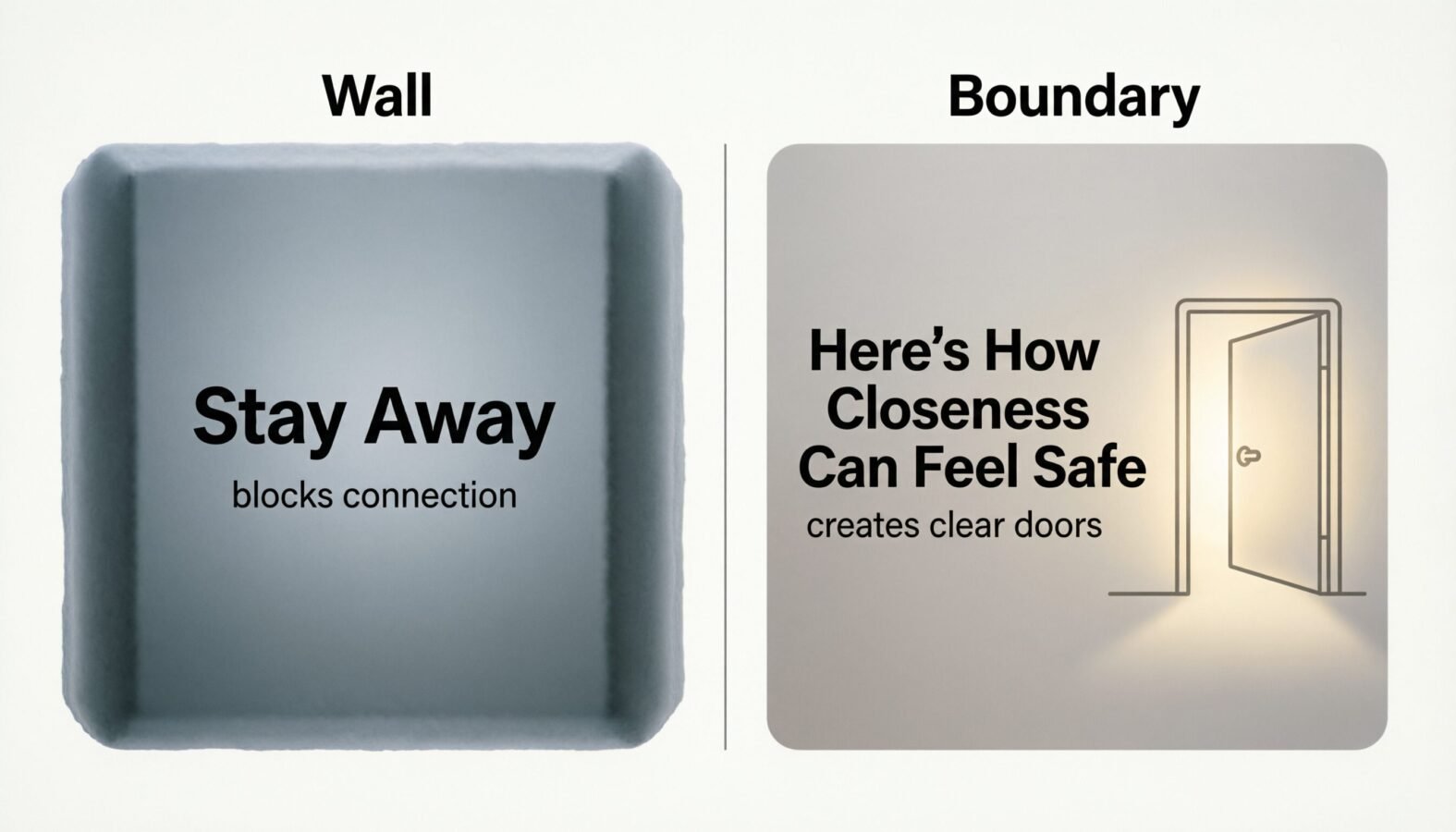 INFOGRAPHIC: Side-by-side comparison showing “Wall” (says “Stay Away,” blocks connection) vs. “Boundary” (says “Here’s How Closeness Can Feel Safe,” creates clear doors)
Alt text: Infographic comparing walls that block intimacy versus healthy boundaries for women that create safe connection
The Difference Between Walls and Boundaries
It is common to confuse boundaries with walls, but they serve entirely different purposes. A wall is built out of fear. It says, “Stay away,” and it blocks all connection, keeping you isolated but “safe” from potential hurt.
A boundary, however, is built out of self-respect. It says, “Here is how closeness can feel safe.” It creates clear doors. It allows love and connection to flow in, but only under conditions that honor your dignity and comfort. For women rebuilding confidence, this distinction is vital. You do not need to become harsh to have boundaries. You only need to become clear.
What Your Boundaries Reveal About Your Values
Every limit you set is a mirror reflecting your core values. When you say, “I need to end this call now,” you are revealing that you value your time and energy. When you state, “I am not comfortable discussing my body,” you are revealing that you value your bodily autonomy and dignity. Recognizing this shift helps reframe boundary-setting from an act of rejection to an act of profound self-honesty.
Why Is It So Hard for Women to Set Boundaries?
If boundaries are so beneficial, why do they feel so difficult to implement? The answer often lies in deep-seated social conditioning. Many women are taught from a young age to be kind, agreeable, patient, helpful, and emotionally aware of others’ needs.
While these qualities are beautiful, the problem begins when a woman is taught to care for everyone else but is never taught ownership over her own body, emotions, opinions, discomfort, and right to say no. As explored in our article on Why Women Silence Their Needs, when this ownership is missing, empathy can slowly morph into self-abandonment.
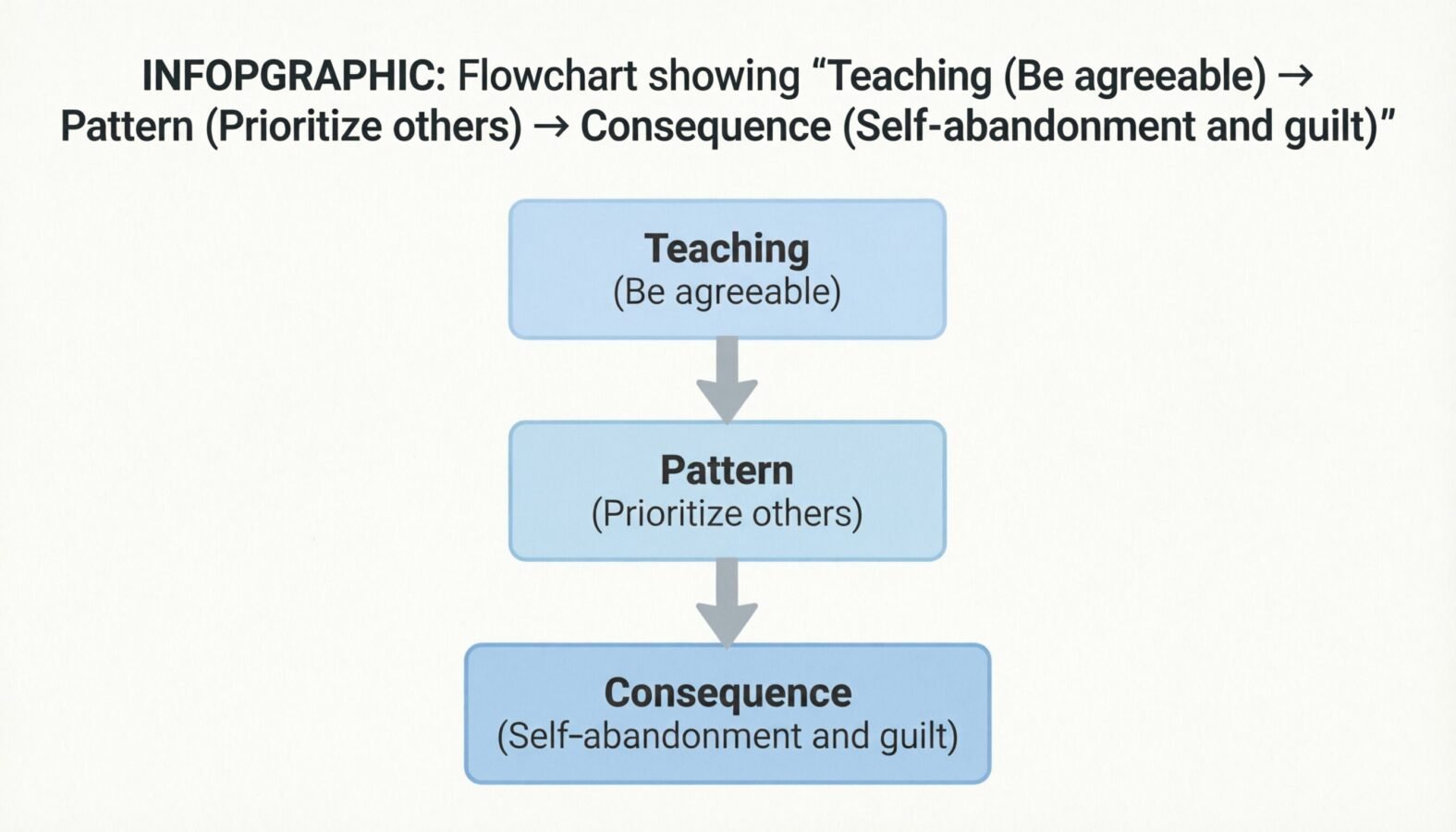 INFOGRAPHIC: Flowchart showing “Teaching (Be agreeable) → Pattern (Prioritize others) → Consequence (Self-abandonment and guilt)”
Alt text: Flowchart illustrating how gender socialization leads to people-pleasing and boundary struggles for women
The Socialization of Agreeableness in Women
Societal expectations often reward women for being accommodating. Academic research on gender socialization consistently shows that girls are praised for compliance and self-sacrifice, while boys are often encouraged to assert their needs. This creates a psychological trap where a woman may fear that speaking her truth will make her less lovable, less kind, or less “good.”
When Empathy Becomes Self-Abandonment
In daily life, this internal conflict manifests in predictable patterns. A woman may not simply be afraid to speak; she may be terrified that speaking will disrupt the peace.
| Situation | Inner Pattern |
|---|---|
| Your partner wants to talk late at night | “I should stay available, even if I am exhausted.” |
| You are touched before you feel ready | “I don’t want to hurt their feelings or seem cold.” |
| A family member asks intrusive personal questions | “I should answer to avoid tension or drama.” |
| Someone makes an uncomfortable comment on your body | “Maybe I am being too sensitive or overreacting.” |
| You desperately need rest | “If I say no, I am being selfish and unhelpful.” |
This is exactly how shame enters the boundary-setting process. But remember: a woman’s truth is not the enemy of love. Silence may keep the peace for a moment, but it often creates profound distance inside.
The Psychology Behind Boundary Struggles
Understanding the psychological factors that make boundaries difficult can remove the burden of self-blame. It is not a character flaw; it is a learned response. Experts like Nedra Glover Tawwab, a licensed therapist and boundary expert, emphasize that boundary struggles are often rooted in relational trauma and fear of rejection.
For a deeper dive into reclaiming your personal power, explore our guide on Reclaiming Inner Authority.
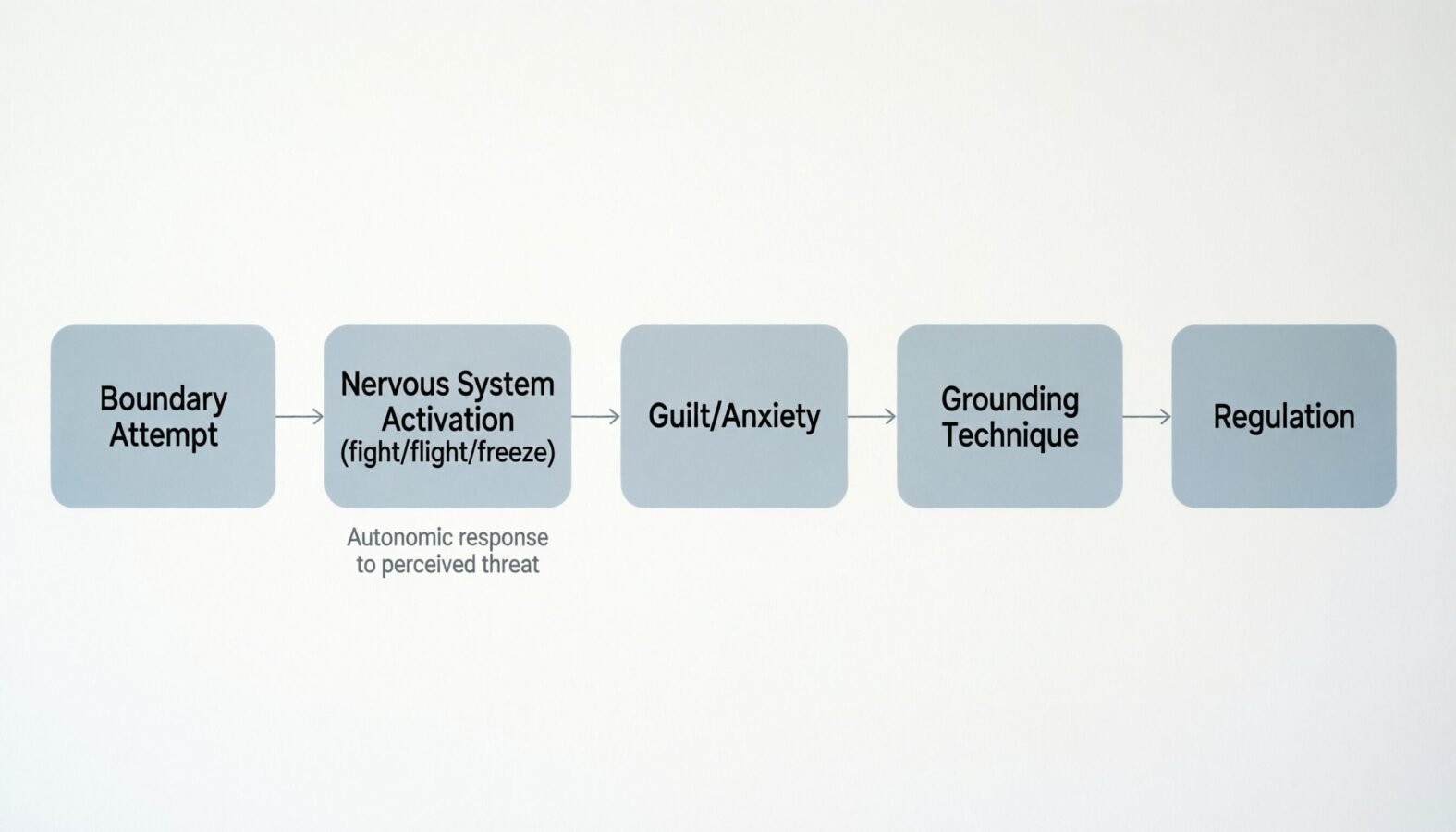 DIAGRAM: Simple flowchart showing: Boundary Attempt → Nervous System Activation (fight/flight/freeze) → Guilt/Anxiety → Grounding Technique → Regulation
Alt text: Diagram showing how the nervous system responds when setting boundaries for women and how to regulate
How Your Nervous System Responds to Boundary-Setting
When you attempt to set a boundary for the first time, your nervous system may perceive it as a threat to your relational safety. This can trigger a fight, flight, or freeze response. You might feel a sudden rush of anxiety, a tight chest, or overwhelming guilt. This is a somatic response, not a sign that you are doing something wrong. Learning nervous system regulation techniques is crucial for staying grounded when you assert your needs. Resources on Polyvagal theory can help explain how to safely navigate this physiological reaction.
Attachment Styles and Boundary Challenges
Your attachment style also plays a significant role. Those with an anxious attachment style may fear that setting a boundary will cause abandonment, leading to intense people-pleasing. Those with an avoidant attachment style might use rigid boundaries as walls to keep others at a distance, rather than as clear doors for safe connection. Recognizing your attachment style helps you tailor your boundary-setting approach with self-compassion.
How Boundaries for Women Build Confidence
Confidence is not always loud or performative. Sometimes, confidence is one quiet sentence spoken right before self-betrayal begins.
The wider confidence framework teaches that women often need language, safety, and education instead of pressure or self-blame. It emphasizes that both your “no” and your “yes” are deeply important. This connects directly to boundary work. For more strategies, read our piece on Communication Confidence for Women.
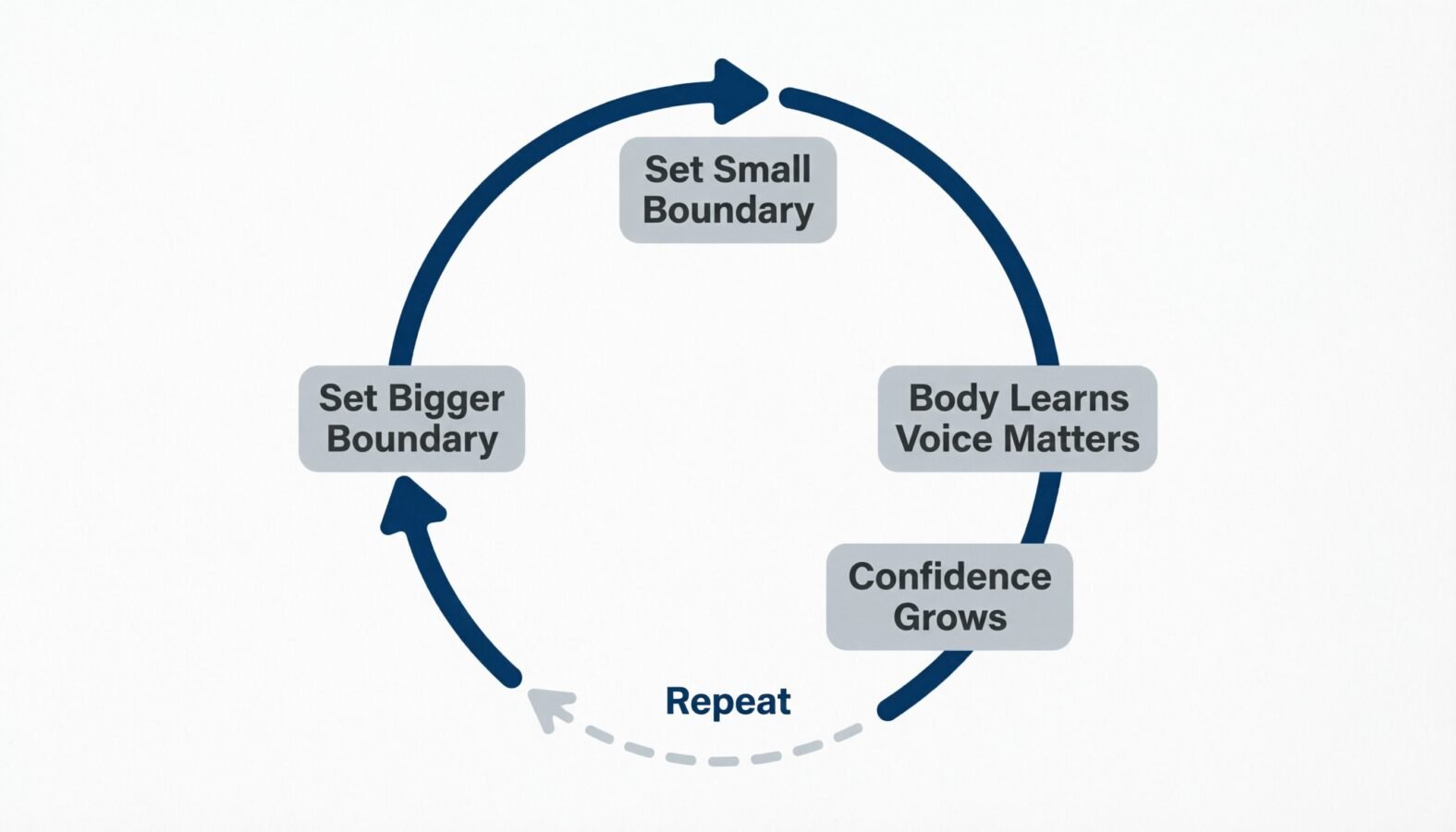 INFOGRAPHIC: Circular diagram showing: Set Small Boundary → Body Learns Voice Matters → Confidence Grows → Set Bigger Boundary → Repeat
Alt text: Cycle showing how boundaries for women build confidence through practice and self-trust
The Connection Between Saying No and Self-Trust
Every time you pause before automatically agreeing, you practice confidence. Every time you name a limit without attacking yourself, you practice confidence. Every time you choose honesty over people-pleasing, you practice confidence. Confidence grows when your body learns a new truth: “My signals matter. My comfort matters. My voice matters. My no is allowed. My yes should be honest.”
Small Boundaries, Big Confidence Shifts
You do not need to start with massive, life-altering declarations. Small boundaries create incremental change. Saying, “I need five minutes to think about that before I answer,” is a powerful confidence-building exercise. It proves to your nervous system that you have the right to take up space and time.
How Healthy Boundaries Deepen Intimacy
Many women fear that relationship boundaries will create emotional distance or push their partner away. However, healthy boundaries can do the exact opposite.
Research on boundaries and relationship satisfaction consistently shows that clear limits foster deeper trust. A false yes may keep a moment smooth, but later it creates resentment and distance. A true no allows both people to stand in truth.
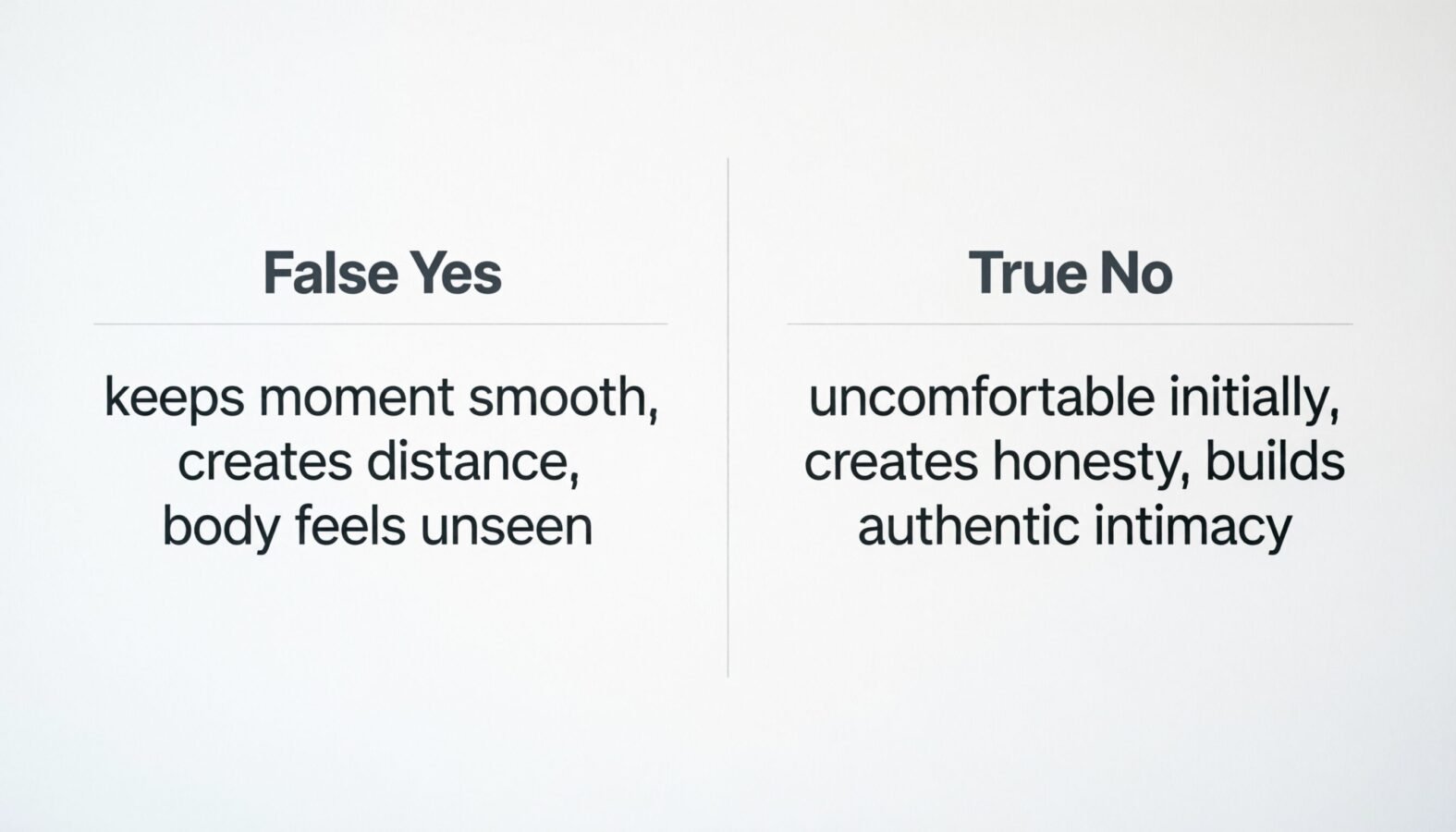 CHART: Two-column comparison: False Yes (keeps moment smooth, creates distance, body feels unseen) vs. True No (uncomfortable initially, creates honesty, builds authentic intimacy)
Alt text: Comparison chart showing how false yes harms intimacy versus true no builds honest connection for women
Why False Yes Creates Distance
A false yes may sound loving on the surface, but it leaves the body feeling unseen and unheard. When you agree to something you do not want, you are engaging in a performed agreement. Over time, this erodes enthusiastic consent and replaces it with obligation, making genuine intimacy impossible.
True No as an Invitation to Honest Connection
A true no may feel uncomfortable in the moment, but it creates radical honesty. When you say no, you are inviting your partner to connect with the real you, not a compliant version of you. Honest intimacy is always stronger than performed agreement.
The Shame-Free Boundary Formula
A healthy boundary does not need to be long, dramatic, or overly justified. In fact, over-explaining often invites negotiation. Instead, use a simple, structured approach.
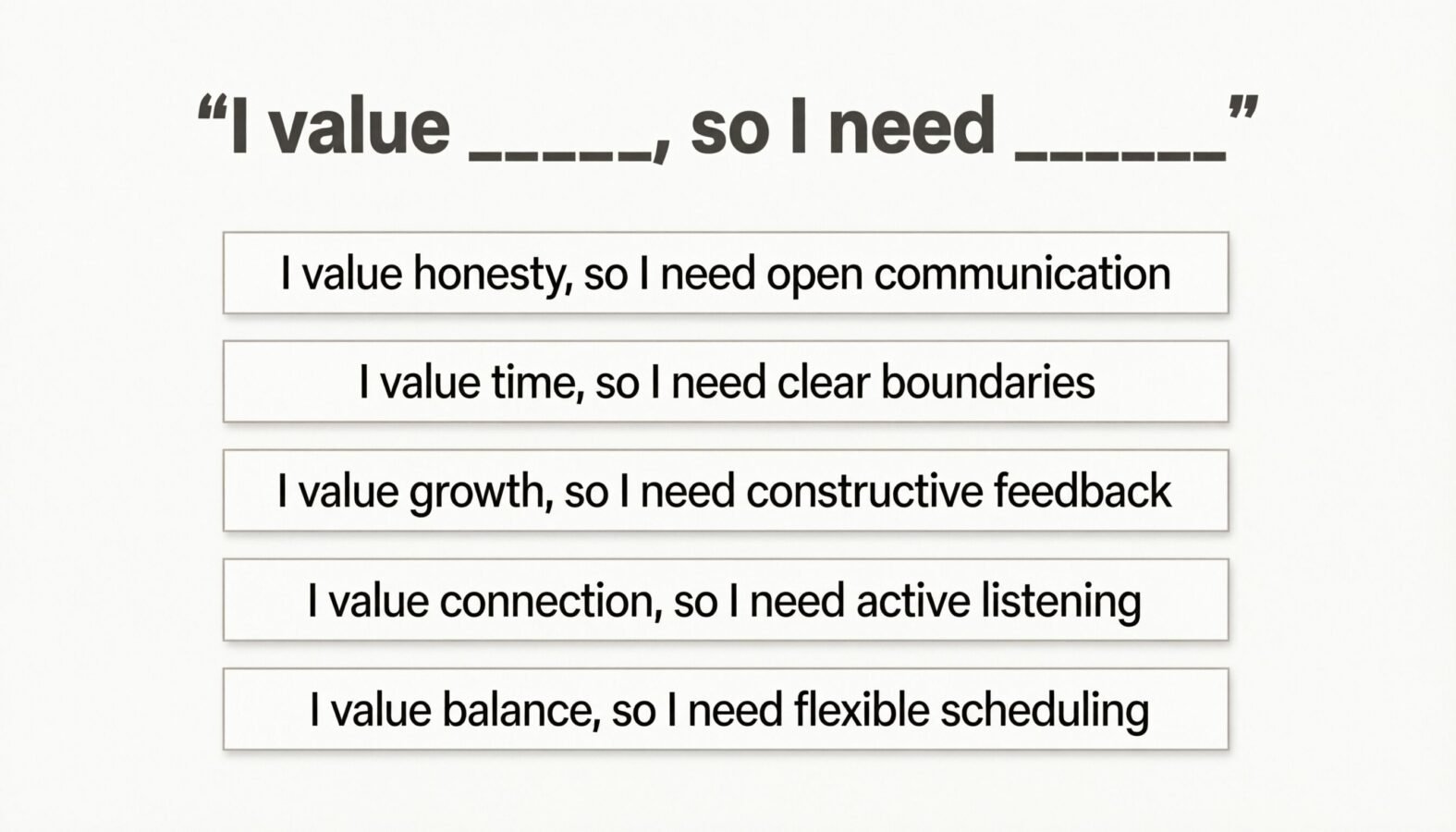 TEMPLATE: Visual template showing “I value ______, so I need ______” with 5 filled examples below
Alt text: Shame-free boundary formula template: I value [blank] so I need [blank] with examples
The Formula: I Value ___, So I Need ___
This formula connects your limit directly to your core values. Here are five practical examples:
- “I value rest, so I need to continue this conversation tomorrow.”
- “I value emotional safety, so I need us to lower our voices.”
- “I value body choice, so I need permission before touch when I am upset.”
- “I value honest closeness, so I want affection without pressure.”
- “I value privacy, so I am not discussing this topic with family.”
Why This Formula Works
This structure works because it shifts the focus from what you are rejecting to what you are protecting. You are not just saying no; you are communicating your underlying value. This reduces shame, increases clarity, and makes it harder for the other person to argue with your internal experience.
Practical Boundary Scripts for Every Situation
Having pre-planned language reduces the cognitive load in stressful moments. Here are practical scripts you can adapt to your specific needs.
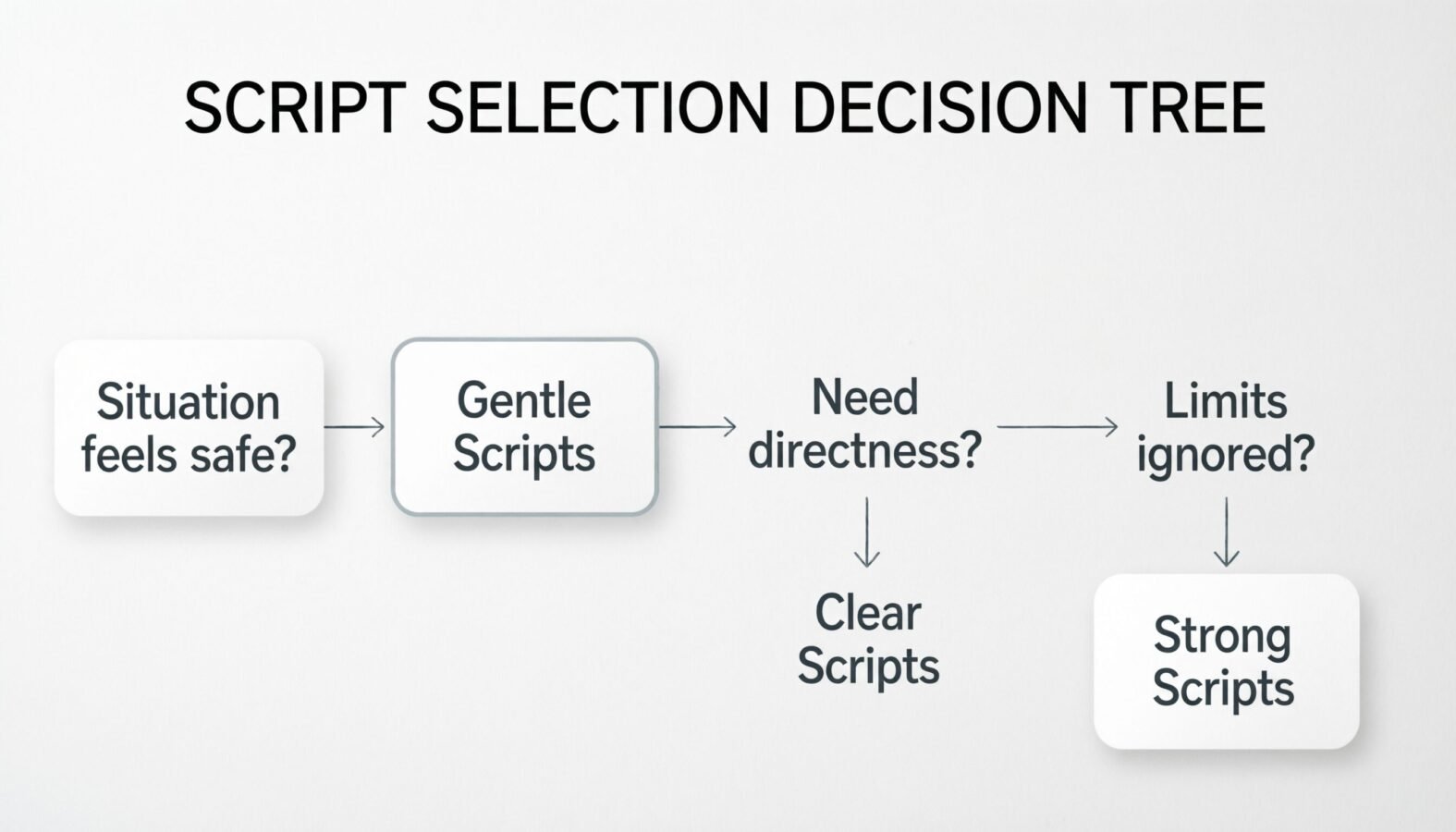 FLOWCHART: Decision tree: Situation feels safe? → Gentle Scripts / Need directness? → Clear Scripts / Limits ignored? → Strong Scripts
Alt text: Flowchart helping women choose between gentle, clear, or strong boundary scripts based on situation
Gentle Boundary Scripts (When It Feels Safe)
Use these when the relationship is generally safe, but you need to adjust the pace:
- “I want to stay close, and I need to slow down.”
- “I care about this conversation, and I need more time to process.”
- “I am not pushing you away. I am just listening to myself right now.”
- “I want affection, but I do not want pressure.”
Clear Boundary Scripts (When You Need Directness)
Use these when gentle hints have not worked and you need unambiguous language:
- “I am not ready for this.”
- “I do not want to be touched right now.”
- “I need emotional connection before physical intimacy.”
- “I will not continue this conversation if voices are raised.”
Strong Boundary Scripts (When Limits Are Ignored)
Use these when your boundaries are actively being violated or disrespected:
- “I said no. That needs to be respected.”
- “Pressure does not make me feel close; it makes me pull away.”
- “If this continues, I will leave the room.”
- “My body signals are not open for bargaining.”
What to Do When Boundaries Are Ignored or Violated
Setting a boundary is only half the work; maintaining it is the other half. It is crucial to know what to do when a partner ignores your boundaries.
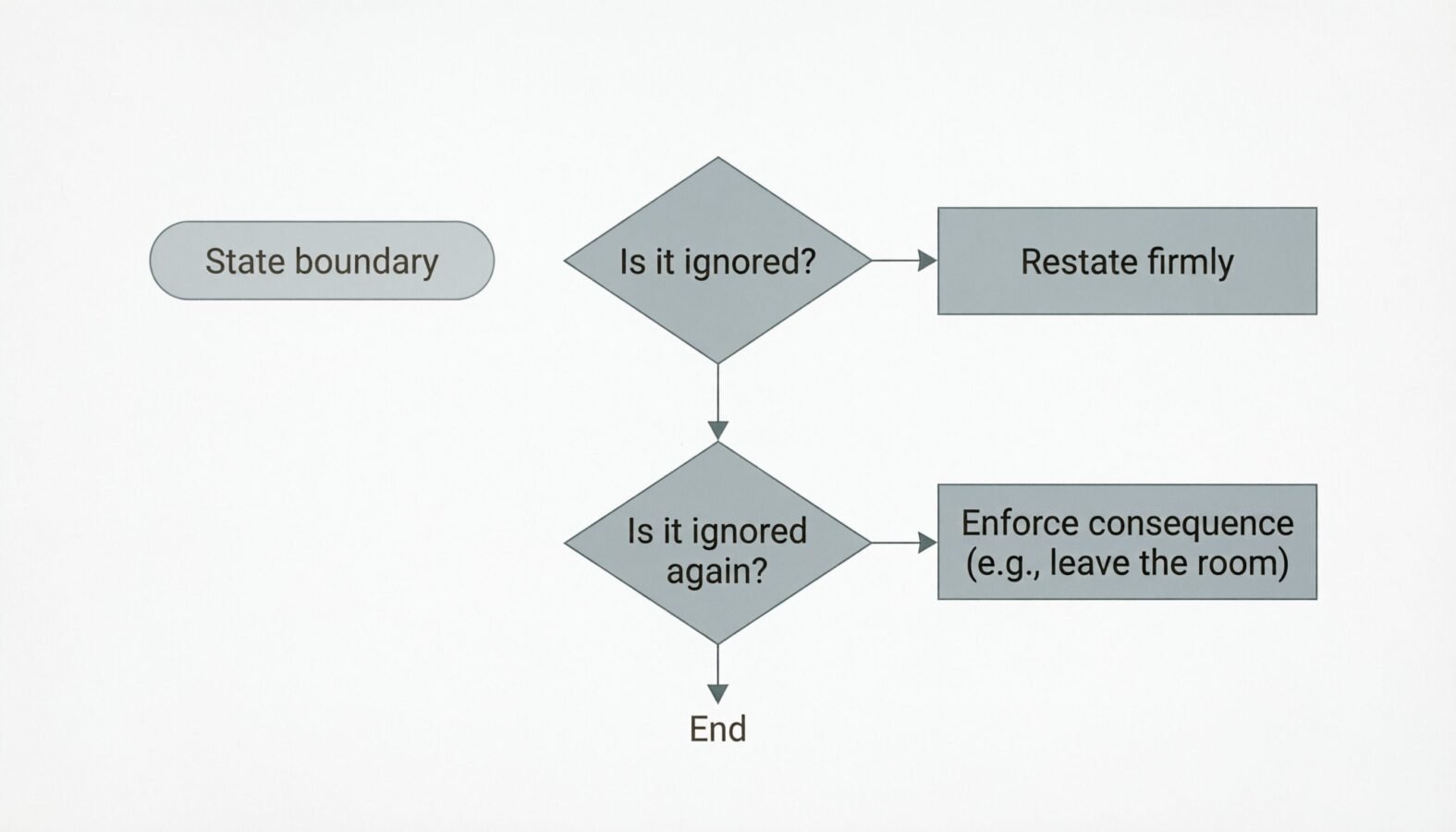 FLOWCHART: Escalation response flowchart: State boundary → If ignored, restate firmly → If ignored again, enforce consequence (e.g., leave the room)
Alt text: Flowchart showing how to respond to boundary violations and pushback
Recognizing Boundary Pushback
Pushback rarely looks like a polite disagreement. It often manifests as guilt-tripping (“After all I do for you…”), manipulation, minimizing your feelings (“You’re too sensitive”), or testing your limits repeatedly. Recognizing these patterns is the first step in addressing them.
Enforcing Boundaries Without Cruelty
Enforcement is not about punishment; it is about protecting your well-being. You can enforce a boundary firmly but kindly. For example: “I have asked that we do not discuss this when we are angry. Since you are raising your voice, I am going to take a walk. We can talk in an hour.” This shows backbone without cruelty. For severe or persistent boundary violations, consulting resources on boundary enforcement or domestic safety is highly recommended.
Managing Guilt After Setting Boundaries
Learning how to set boundaries without feeling guilty is one of the most common challenges women face.
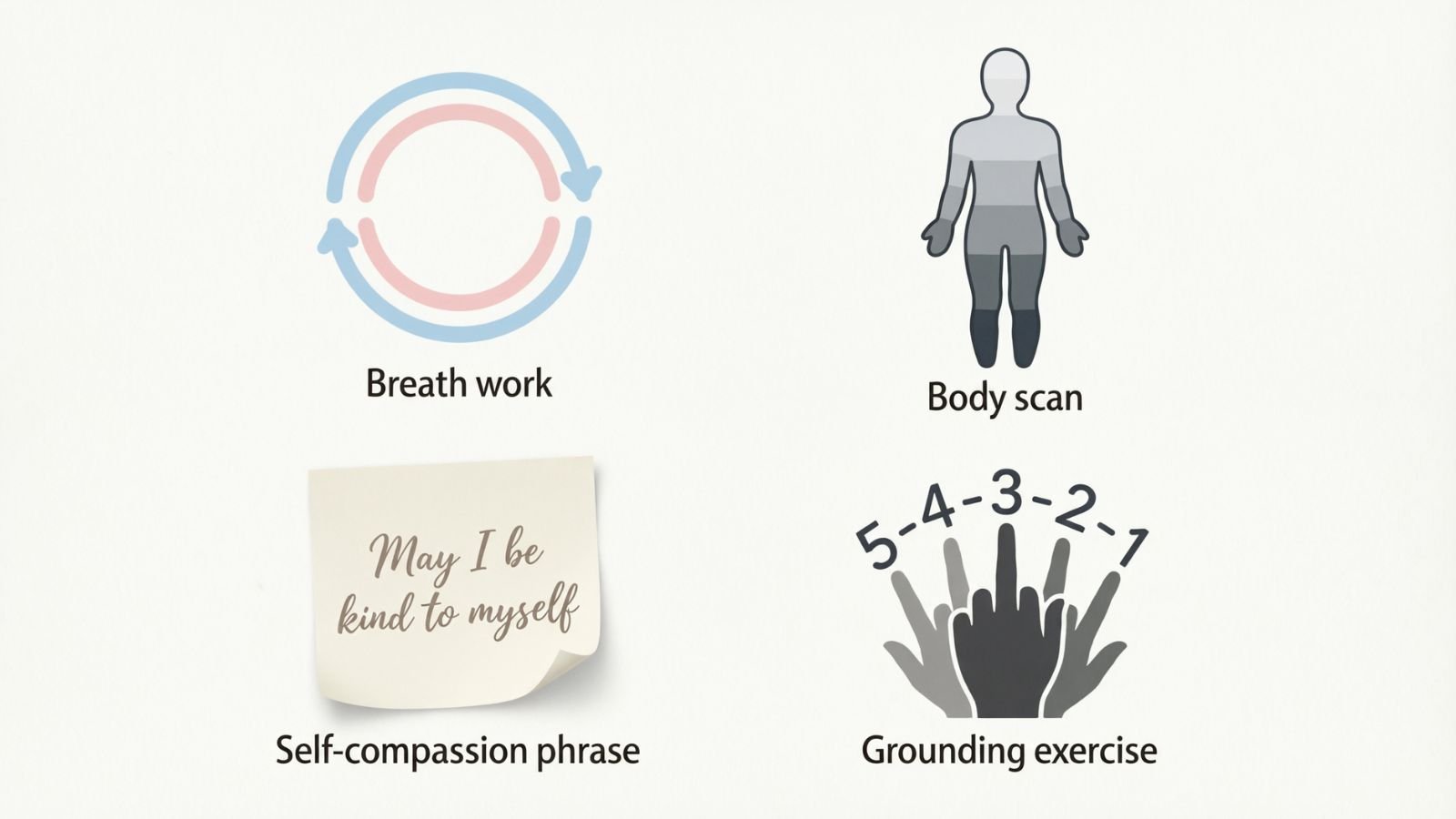 TOOLKIT VISUAL: Visual toolkit showing: Breath work icon, Body scan icon, Self-compassion phrase icon, Grounding exercise icon
Alt text: Somatic grounding toolkit for managing guilt after setting boundaries for women
Why Guilt Shows Up (And Why It’s Normal)
Guilt is a completely normal response when you are rewiring lifelong patterns of people-pleasing. Your brain is accustomed to prioritizing others, so prioritizing yourself feels “wrong” at first. Acknowledge the guilt without letting it dictate your actions. Remind yourself that this discomfort is a sign of growth, not a sign of wrongdoing.
Somatic Techniques to Stay Grounded
When guilt triggers anxiety, use your body to regulate your nervous system. Try the 4-7-8 breathing technique, place a hand on your heart, or use our interactive somatic grounding tool. These practices help you stay present and remind your body that you are safe, even when you are asserting your needs.
The Boundary Blueprint: Your 5-Step Action Plan
Knowledge is only powerful when applied. Use this actionable framework to turn boundary-setting into a sustainable practice.
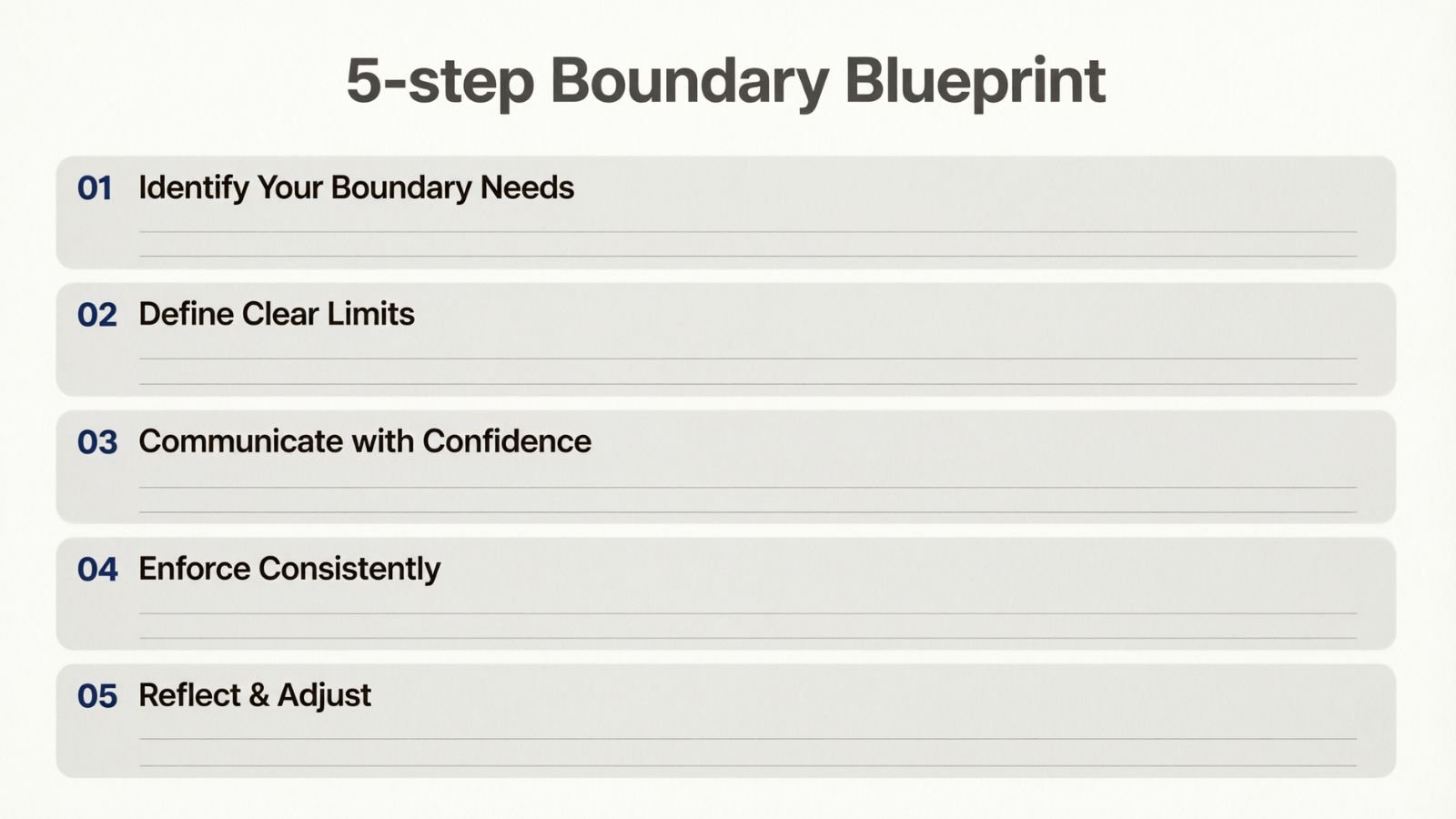 IMAGE: Screenshot or mockup of the 5-step Boundary Blueprint worksheet from the workbook
Alt text: Boundary Blueprint workbook worksheet showing 5-step action plan for women
Step 1: Choose One Area
Do not try to overhaul your entire life at once. Select one focus area: body, rest, privacy, or emotional safety. Starting small builds momentum and confidence.
Step 2-3: Name Your Value and Write Your Limit
Identify what you value in this area. Then, state your boundary clearly using the formula. For example: “I value rest, so I need to stop serious conversations after 10 p.m.”
Step 4-5: Plan for Guilt and Reflect Afterward
Acknowledge that guilt may arise and prepare a grounding response: “Guilt may come. Still, I can remain kind and clear.” After implementing your boundary, reflect without self-judgment: “Did I tell my truth? Did I keep my dignity?”
Boundaries in Different Relationship Contexts
Boudaries are not one-size-fits-all. They must be adapted to the specific dynamics of each relationship in your life.
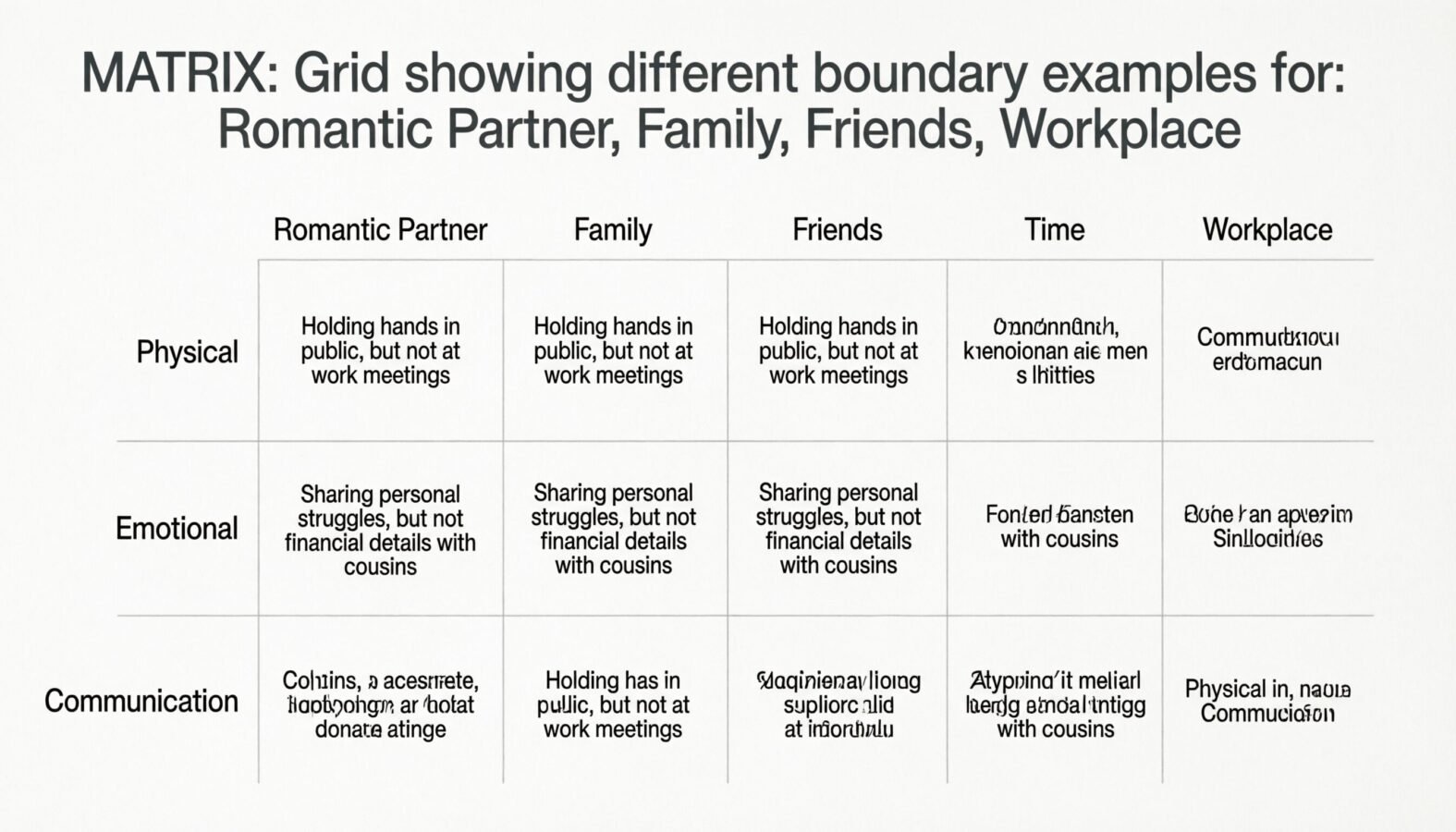 MATRIX: Grid showing different boundary examples for: Romantic Partner, Family, Friends, Workplace
Alt text: Matrix showing how boundaries for women apply differently across romantic relationships, family, and social contexts
Romantic Partners and Intimate Boundaries
In romantic relationships, boundaries around physical intimacy, emotional connection, and pace are paramount. Examples include: “I need us to check in emotionally before initiating sex,” or “I need a day to decompress after work before we discuss heavy topics.”
Family and Social Boundaries
Family dynamics often carry the heaviest historical baggage. Boundaries here might involve limiting digital availability, deflecting personal questions about your body or relationship status, or declining to participate in family gossip.
When to Seek Professional Support
While this guide provides foundational tools, it is important to recognize the limitations of self-help.
Boundaries Are Not a Substitute for Therapy
If you are dealing with deep relational trauma, codependency recovery, or abusive dynamics, setting boundaries may not be enough on its own. Professional support from a licensed therapist is essential for navigating these complex situations safely.
Signs You Need Additional Support
Seek professional help if you experience:
- Persistent anxiety or depression related to relationship dynamics.
- Fear for your physical or emotional safety when asserting limits.
- An inability to function daily due to boundary-related stress.
- A partner who escalates to aggression or violence when you say no.
Why the Boundary Workbook Accelerates Your Progress
Reading about boundaries can create awareness, but writing, practicing, and reflecting create lasting change. That is where a structured resource becomes invaluable.
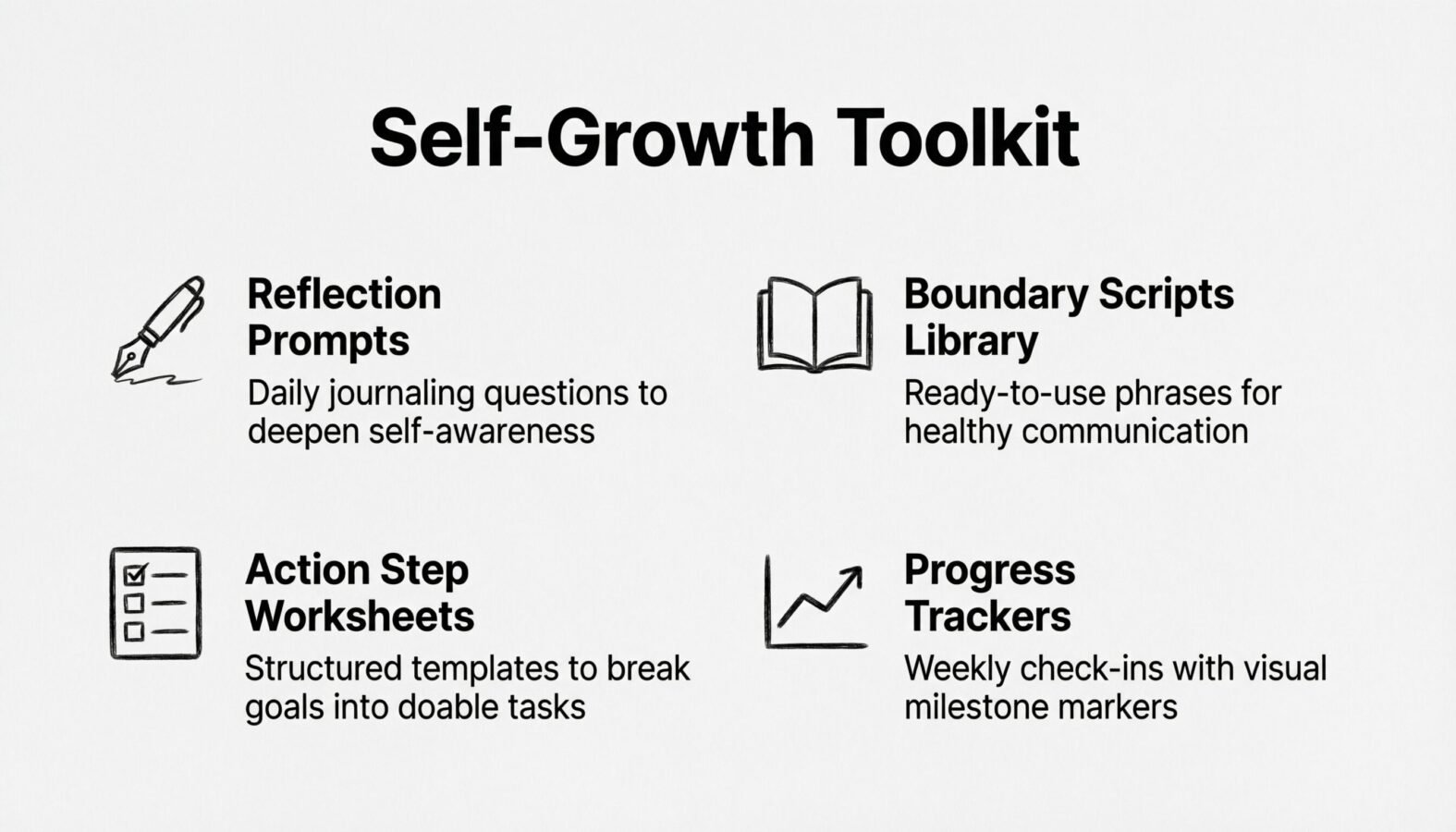 IMAGE: Collage or list showing: Reflection prompts, Boundary scripts library, Action step worksheets, Progress trackers
Alt text: The Confidence and Intimacy Reset Boundary Blueprint workbook contents and features
From Understanding to Practice
Old patterns often return under pressure. Having written prompts, scripts, action steps, and reflection exercises gives you a tangible path to come back to. It helps you move from “I understand this concept” to “I can practice this in my real life.”
What’s Inside the Boundary Blueprint Workbook
The Boundary Blueprint workbook is designed to guide you through this exact process. It includes targeted reflection exercises, a library of gentle and strong boundary scripts, and step-by-step action plans to help you rebuild your self-respect systematically.
Frequently Asked Questions About Boundaries for Women
Why is it so hard for women to set boundaries?
Many women are socialized to prioritize others’ needs over their own, equating kindness with self-sacrifice. This can create fear that saying no will make them less lovable or “good.” Additionally, nervous system responses like guilt and anxiety often arise when breaking old patterns of people-pleasing.
How do I set boundaries without feeling guilty?
Guilt is a normal response when changing old patterns. Use somatic grounding techniques like deep breathing to stay present. Remind yourself that boundaries protect your values, not reject others. Practice self-compassion and recognize that guilt will decrease as your nervous system adapts to honest self-expression.
What do I do when my partner ignores my boundaries?
First, clearly restate your boundary using direct language: “I said no, and that needs to be respected.” If ignored again, enforce consequences calmly: “If this continues, I will leave the room.” Persistent boundary violations may indicate a need for couples counseling or individual therapy to address deeper relationship dynamics.
What are examples of healthy boundaries in marriage?
Healthy boundaries in marriage include: “I need emotional connection before physical intimacy,” “I want to slow down,” “I’m not ready for this conversation tonight,” or “I need us to lower our voices.” These express your needs clearly while maintaining respect for both partners.
How do boundaries improve intimacy?
Boundaries create emotional safety by replacing false agreement with honest communication. When you say a true no instead of a false yes, both partners can connect authentically. This builds trust, reduces resentment, and allows intimacy to develop from genuine desire rather than obligation or performance.
What is the shame-free boundary formula?
The shame-free boundary formula is: “I value ______, so I need ______.” This connects your limit to your values (e.g., “I value rest, so I need to continue this tomorrow”). It works because you’re not just saying no—you’re communicating what you’re protecting, which reduces shame and increases clarity.
Are boundaries selfish?
No, boundaries are not selfish—they’re an expression of self-respect. Boundaries help you show up as your authentic self in relationships rather than resenting others from self-abandonment. Healthy boundaries actually improve relationships by creating honesty, reducing burnout, and allowing you to give from a place of genuine care.
How do I know if my boundary is reasonable?
A reasonable boundary protects your physical, emotional, or mental well-being without controlling others’ behavior. Ask: “Does this honor my values? Am I stating what I need, not demanding what others do?” If your boundary respects both your dignity and others’ autonomy, it’s reasonable.
Can boundaries change over time?
Yes, boundaries absolutely can and should evolve. As you grow, your needs, values, and circumstances change. What felt comfortable last year may not work now. Regular reflection helps you adjust boundaries to match your current truth, which is a sign of self-awareness, not inconsistency.
What’s the difference between boundaries and ultimatums?
Boundaries state what you will do to protect your well-being (“I will leave if voices are raised”). Ultimatums try to control others (“You must stop yelling or I’ll leave”). Boundaries focus on your actions; ultimatums focus on controlling theirs. One builds respect; the other creates power struggles.