

Why Stress Blocks Intimacy and How to Reclaim Your Natural Desire
If you’ve been wondering why stress blocks desire, you are not alone, and it is not your fault. Many women experience the painful paradox of loving their partner deeply, yet feeling physically closed off, exhausted, or completely “touched out” when the moment for intimacy arrives. This disconnect often triggers intense self-blame and confusing questions: Why can’t I relax? Is something wrong with me?
The truth is, this is not a relationship failure, nor is it a broken body. It is a biological protection mechanism. When your nervous system is overloaded by daily pressures, it instinctively prioritizes survival and safety over softness and pleasure. Understanding this mind-body connection is the first, most compassionate step toward healing.
Quick Answer: Why Stress Blocks Desire and How to Heal
Stress blocks desire by activating the sympathetic nervous system, which shifts the body into a “fight, flight, or freeze” state. In this survival mode, the brain prioritizes immediate safety and problem-solving over sexual arousal. Healing does not begin by forcing yourself to “get in the mood.” Instead, it begins by establishing nervous system safety. When the body feels genuinely safe, rested, and free from overwhelming emotional load, the natural capacity for connection and pleasure can gradually return.
What Does It Mean When Stress Blocks Desire?
To understand why this happens, we must look at desire not just as a mental choice, but as a full-body experience. Stress blocks desire when the body is simply too busy managing pressure, endless to-do lists, danger signals, or heavy emotional weight to feel open to pleasure.
When you are under chronic stress, your nervous system is constantly scanning for threats. In this state, the body’s primary directive is survival before softness. As authors Md. Rizwanul Haque and Md. Kawsharul Islam explain in The Confidence & Intimacy Reset For Women, a woman can deeply love her partner and still not feel ready for intimacy. The issue is rarely lost love. More often, the mind is too full, and the nervous system is sending a clear, protective message: “Not pleasure yet. Safety first.”
This does not mean your desire is gone forever. It simply means your body’s “brakes” are being pressed too hard by the demands of daily life. Recognizing this is a compassionate place to begin your healing journey.
The Physiology of Stress: Cortisol, Adrenaline, and Libido
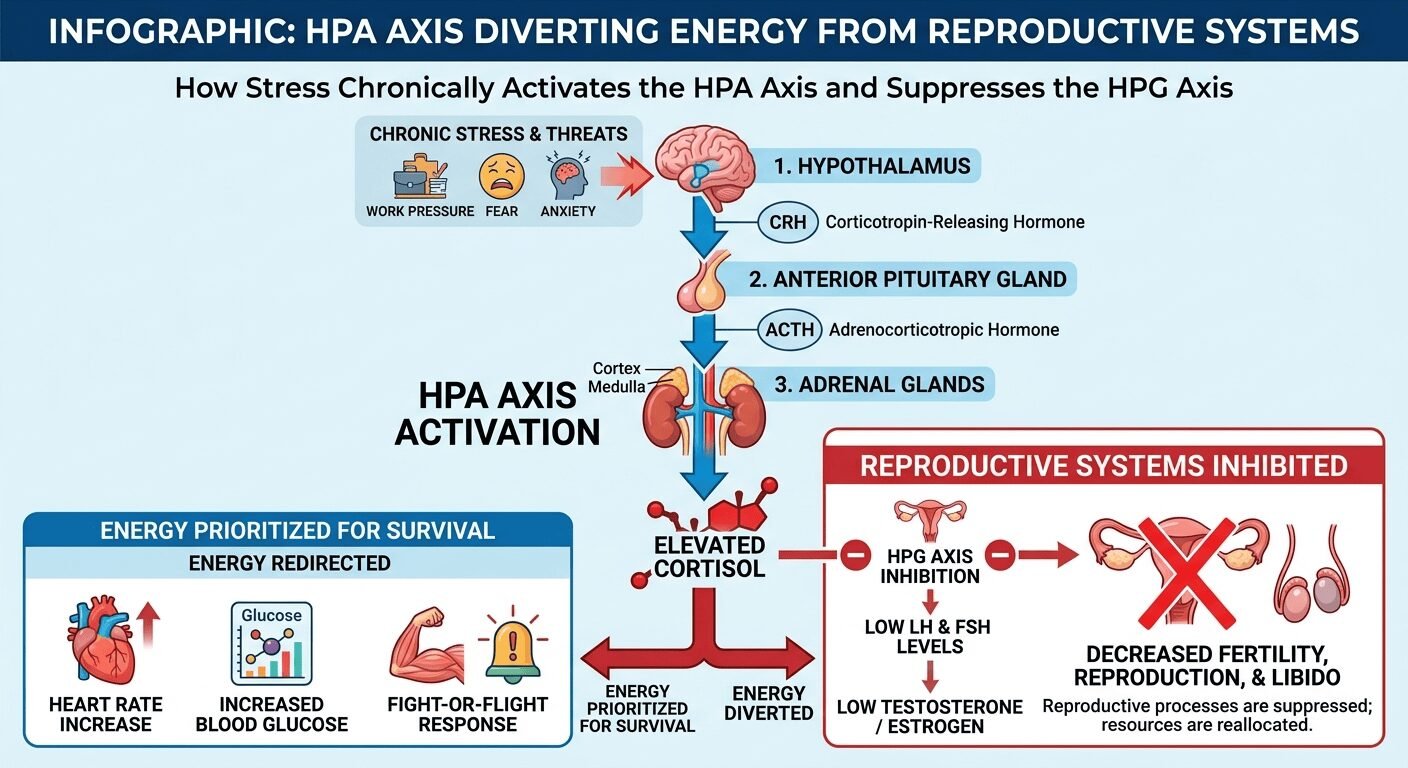
To remove the shame surrounding low libido, it helps to understand the biological mechanics at play. How does stress affect female hormones and arousal? The answer lies in the hypothalamic-pituitary-adrenal (HPA) axis.
When you experience chronic stress, your brain signals the adrenal glands to release a flood of cortisol and adrenaline. This is the hallmark of sympathetic nervous system activation. While this response is brilliant for helping you dodge a physical threat or meet a tight deadline, it is deeply counterproductive to female sexual arousal.
Biologically, the body views reproduction and sexual pleasure as non-essential functions during a crisis. High levels of cortisol directly suppress the production of sex hormones like estrogen and testosterone. Furthermore, adrenaline diverts blood flow away from the pelvic region and toward the major muscle groups, preparing you to run or fight.
Research from institutions like the American Psychological Association (APA) and the National Institutes of Health (NIH) consistently shows that prolonged elevation of stress hormones inhibits the physiological arousal response. Your body is not rejecting intimacy; it is simply following its evolutionary programming to keep you safe.
Simple Definitions for Beginners
Navigating the world of intimacy and psychology can feel overwhelming. Here are clear, foundational definitions to help you understand your body’s responses:
- Stress and desire: The intricate connection between emotional or physical stress and the body’s ability to feel open, present, and interested in intimacy.
- Low desire in women: A decrease in sexual interest or readiness that may be connected to stress, sleep deprivation, health conditions, medications, hormonal shifts, life stage, emotional load, relationship context, or a lack of body safety.
- Nervous system safety: The body’s internal sense that it is safe enough to rest, soften, connect, and become fully present, rather than staying alert, guarded, or in survival mode.
- Responsive desire: Desire that emerges after physical or emotional warmth, safety, trust, and connection have already been established. This concept, popularized by educator Emily Nagoski’s “brakes and accelerators” model, contrasts with spontaneous desire, which arises out of the blue.
If you find that negative self-talk is amplifying your stress, learning more about silencing the inner critic can be a powerful complementary step to rebuilding your confidence.
Why Low Desire Does Not Always Mean Something Is Wrong
Many women assume that low desire in women is a personal failure or a sign that the relationship is dying. This assumption is a heavy burden to carry, but it is fundamentally incorrect.
Low desire is often a signal, not a flaw. It may signal profound exhaustion. It may signal unresolved tension or an overwhelming sense of responsibility. It may signal a lack of privacy or emotional distance. Most importantly, it may signal that your body desperately needs safety before it can allow closeness.
Stress is not merely a psychological feeling; it is a measurable physical state. When stress is active, your heart rate may rise, your breathing may become shallow, your muscles may tighten, your jaw may clench, and your attention may narrow. Pleasure requires the exact opposite state. The body needs to feel safe, attention must turn inward, breathing must deepen, and there must be ample room for sensation, trust, and comfort.
That is why being told to “just relax” is never enough. The body does not soften on command. The body responds to consistent, tangible safety.
Medical Differentials: When to Look Beyond Stress
While chronic stress is a primary driver of low libido, it is crucial to acknowledge that other factors can contribute to or mimic stress-induced low desire. Building trustworthiness means knowing when to look beyond self-help.
Consider consulting a healthcare provider to rule out common medical differentials, such as:
- Medication side effects: Particularly SSRIs (antidepressants), certain blood pressure medications, or hormonal birth control.
- Thyroid dysfunction: Both hypothyroidism and hyperthyroidism can drastically alter energy levels and libido.
- Perimenopause and menopause: Fluctuating and declining estrogen levels can cause vaginal dryness, pain during sex, and a natural shift in desire.
- Postpartum changes: The massive hormonal drop after childbirth, combined with severe sleep deprivation, makes low desire a near-universal experience, not a personal failing.
The American College of Obstetricians and Gynecologists (ACOG) provides comprehensive guidelines on female sexual dysfunction, emphasizing that a holistic medical evaluation is a valid and important step in your healing journey.
Physical and Emotional Signs Stress is Blocking Your Desire
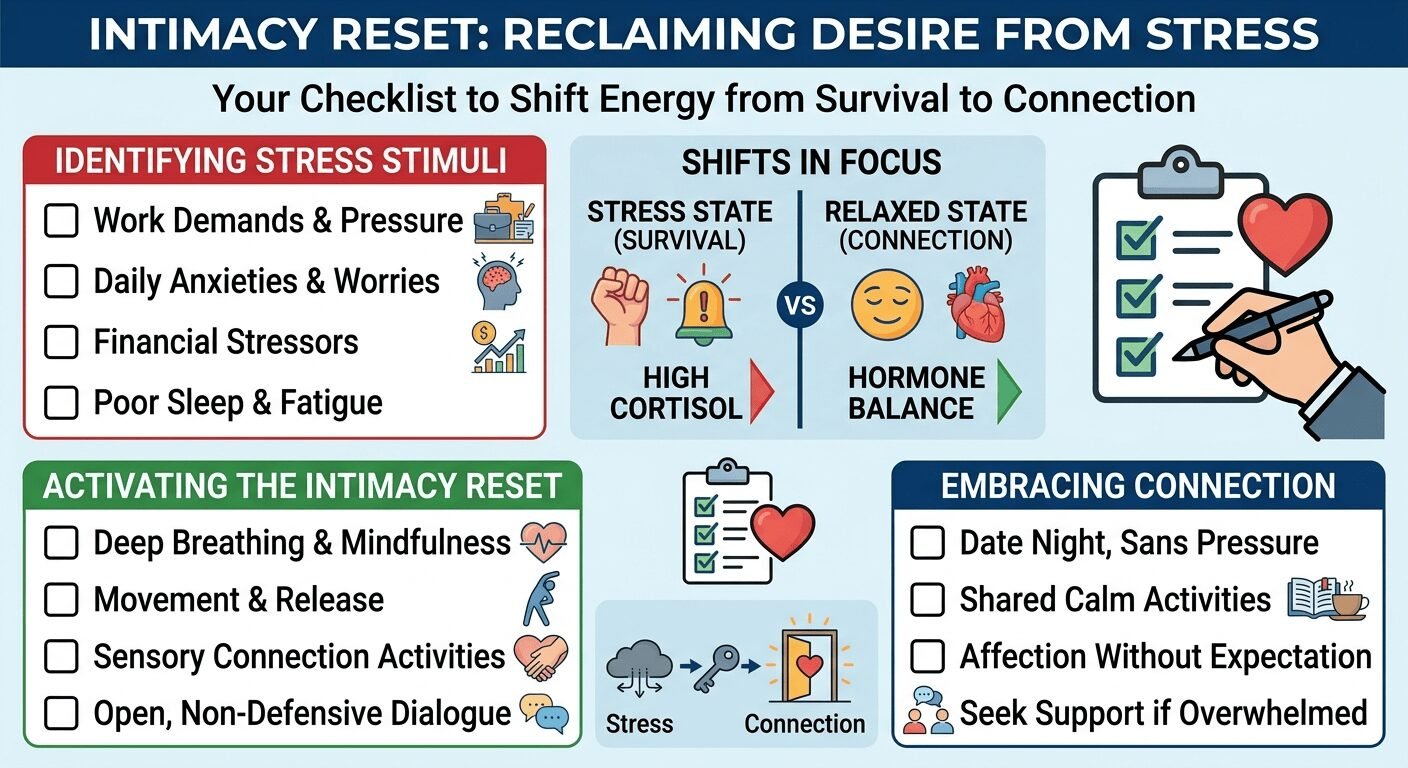
How do you know if stress is the true culprit? Recognizing the physical signs of nervous system dysregulation in bed can bring immense relief, as it shifts the narrative from “I am broken” to “My body is overwhelmed.”
Stress blocking desire can look like this:
- Physical tension: A clenched jaw, tight shoulders, or a rigid pelvic floor, even when you are trying to relax.
- Shallow breathing: Your breath stays high in your chest, signaling to your brain that you are not safe.
- Mental distraction: You want connection, but your mind keeps listing tomorrow’s tasks or worrying about the children.
- Feeling “touched out”: A deep sensory overload where even a loving, non-sexual touch from your partner feels irritating or suffocating.
- Guilt and shame: Feeling guilty for needing sleep more than intimacy, or wondering if your desire has disappeared forever.
- Emotional isolation: Feeling emotionally alone and unable to easily soften, even when your partner is right beside you.
For women experiencing this, this context brings profound relief. The question shifts from “How do I force desire back?” to “What is my body carrying, and how can I help it put the load down?” If you want to explore more about reconnecting with your physical self, consider these gentle ways to build body trust and presence.
Why Nervous System Safety Matters More Than “Just Relaxing”
Nervous system safety is the foundational requirement for desire to flourish. Rooted in polyvagal theory (developed by Dr. Stephen Porges), this concept explains that our autonomic nervous system has three main states: safe and social (ventral vagal), fight or flight (sympathetic), and shutdown/freeze (dorsal vagal).
You cannot access the “safe and social” state required for intimacy if your body is stuck in fight, flight, or freeze. Vagus nerve regulation and somatic healing practices are designed to gently guide the body back to that window of tolerance.
Safety may come from adequate rest. It may come from emotional warmth. It may come from guaranteed privacy. It may come from the freedom to give a “clear no” without fear of retaliation or guilt. It may come from less pressure, or from touch without expectations. It may even come from tangible help with work, children, home chores, or emotional labor.
When you address the root need for safety, you shift the dynamic of desire from one of pressure and performance to one of genuine care and connection.
A Realistic Action Step: The One-Brake Reset
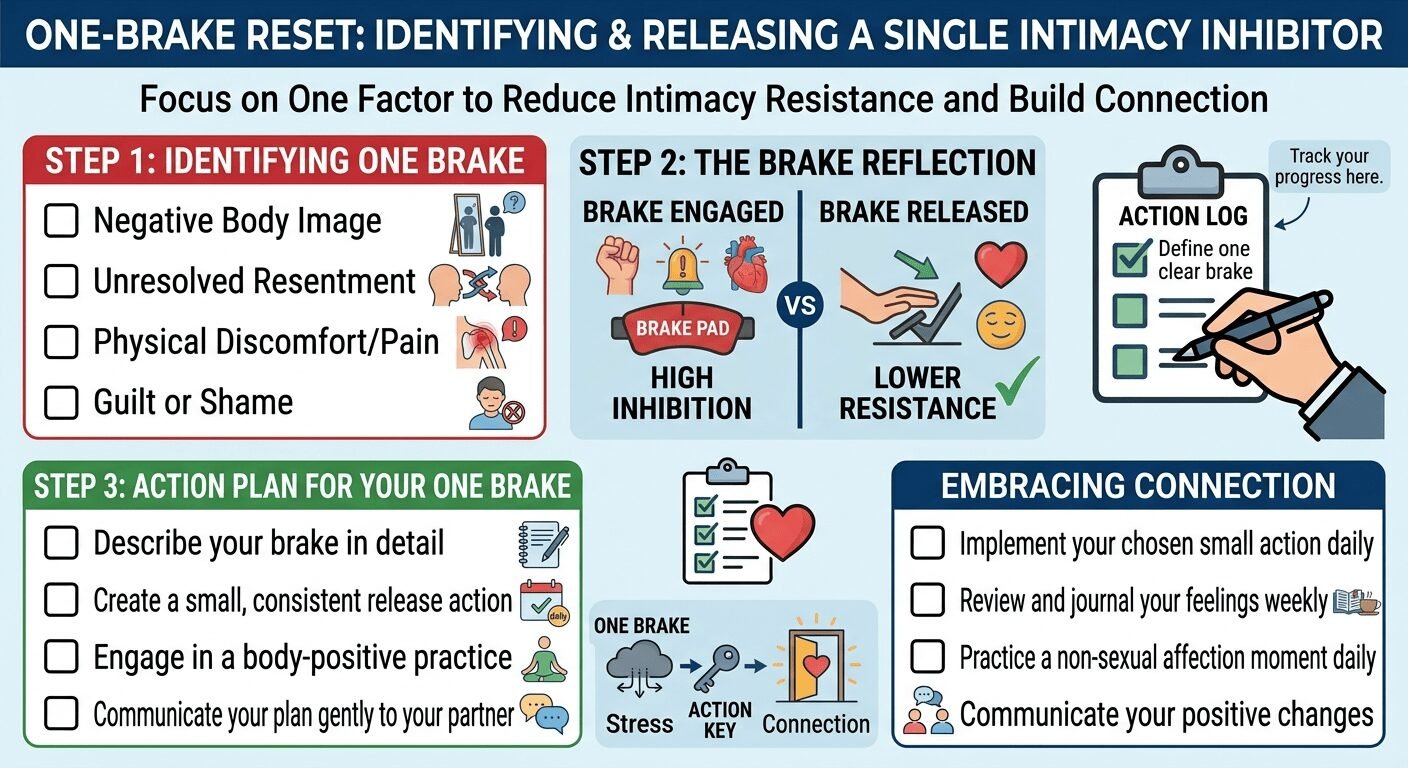
Deeper healing often needs structure, but you do not need to overhaul your entire life overnight. Start with one small, manageable intimacy reset. We call this “The One-Brake Reset.”
Follow these simple steps:
1. Identify Your Strongest Desire Brake
Write down this sentence: “My strongest desire brake right now is __________.”
Be honest and specific. Do not judge the answer.
Example: “My strongest desire brake is exhaustion.”
Example: “My strongest desire brake is feeling touched out.”
2. Choose One Kind Way to Reduce It
Write down this sentence: “One kind way to reduce this brake is __________.”
Choose a small, achievable action. Do not choose the hardest step first, because possibility creates confidence.
Example: “One kind way to reduce this brake is going to bed 30 minutes earlier.”
Example: “One kind way to reduce this brake is asking for affection without any expectation of sex.”
This gentle practice reminds you that healing begins with one possible step. Not with force. Not with shame. Not with a perfect plan.
Want more exercises like this? Download the workbook sample to continue this guided reflection.
How to Communicate Your Needs to Your Partner (With Scripts)
One of the most stressful aspects of low libido is not knowing how to talk to your partner about it without hurting their feelings or inviting pressure. Clear, compassionate communication is a vital form of nervous system regulation for both of you.
Here are a few scripts you can adapt to your own voice:
“I love you, and I want to feel close to you. Right now, my body is feeling really overwhelmed and exhausted. I need some time to just rest and recharge without any pressure for intimacy. Can we just cuddle or watch a show tonight?”
“I’ve been feeling a bit ‘touched out’ lately, and it’s not about you. My nervous system is just overloaded. It would help me so much if we could have one calm, non-sexual conversation before we even think about being intimate.”
“I am struggling with my desire right now, and I feel guilty about it. I am reading about how stress affects the body, and I realize I need to focus on feeling safe and rested first. I’d love your support in taking some pressure off for a little while.”
These scripts establish a “clear no” to pressure while offering a “yes” to connection, which is essential for rebuilding trust.
5 Gentle Steps to Reclaim Your Natural Desire
If you are wondering how to get libido back after chronic stress, the answer lies in consistent, low-pressure habits. Here are five gentle steps to guide your journey:
Step 1: Prioritize Rest Over Performance
Stop trying to “perform” desire. Give yourself unconditional permission to prioritize sleep and genuine rest. A tired nervous system cannot access pleasure. Protect your sleep hygiene as fiercely as you would protect a valuable asset.
Step 2: Practice Somatic Healing and Body Trust
Engage in daily practices that bring you back into your body without a sexual goal. This could be five minutes of deep, diaphragmatic breathing, a warm bath, gentle stretching, or simply placing a hand on your heart and acknowledging your own exhaustion with kindness.
Step 3: Redistribute the Emotional Load
Desire cannot thrive in a vacuum of resentment. Take an honest look at your emotional load. Are you carrying the mental burden of the entire household? Have a calm, structured conversation with your partner about redistributing chores and responsibilities to create actual space for you to decompress.
Step 4: Explore Sensate Focus Without Expectations
Sensate focus is a therapeutic technique that involves non-demand touching. Agree with your partner to spend 10–15 minutes touching (massaging, holding hands, cuddling) with a strict, mutual agreement that it will not lead to sex. This removes the “goal” and allows the nervous system to experience touch as purely comforting.
Step 5: Seek Professional Support When Needed
If self-guided steps are not enough, there is no shame in seeking help. A certified sex therapist, a somatic experiencing practitioner, or a couples counselor can provide tailored intimacy reset resources to help you navigate complex blocks. You can find more supportive articles and tools in our dedicated blog section.
How the eBook and Workbook Create a Fuller Reset Path
A single article can help name the problem, but deeper, lasting healing often requires structured guidance. This is where The Confidence & Intimacy Reset For Women comes in.
Co-authored by Md. Rizwanul Haque and Md. Kawsharul Islam, this comprehensive eBook and workbook bundle is designed to help women explore how stress, self-talk, physiology, desire, pleasure, and connection work together.
The path includes:
- Rebuilding body confidence without shame.
- Understanding the mechanics of pleasure and desire.
- Turning self-knowledge into trust and lasting connection.
The accompanying workbook supports your next steps by providing dedicated space for reflection, printable guided reflection worksheets, communication scripts, and actionable prompts. It is not about fixing yourself overnight; it is about understanding your body with profound care.
You can get the complete Main Book & Workbook Bundle to begin this structured journey today.
Frequently Asked Questions About Stress and Libido
Chronic stress triggers the release of cortisol and adrenaline, activating the sympathetic nervous system. This “fight or flight” response diverts energy away from non-essential functions, including the reproductive system, directly suppressing sex hormones and inhibiting female sexual arousal.
Spontaneous desire arises out of the blue, while responsive desire emerges only after physical or emotional warmth, safety, and connection have already been established. Stress heavily favors responsive desire, requiring safety before arousal can begin.
Feeling “touched out” is a classic sign of nervous system dysregulation and emotional exhaustion. Your body is not rejecting your partner; it is signaling that its sensory and emotional capacity is overloaded and needs a boundary to feel safe again.
There is no fixed timeline, as healing depends on the individual. However, by consistently applying nervous system regulation practices and removing “desire brakes,” many women notice a gradual return of responsive desire within a few weeks of prioritizing safety and rest.
Common signs include shallow breathing, a clenched jaw, tense pelvic floor muscles, a racing heart, dissociation (feeling disconnected from your body), and an inability to relax into touch, even when you mentally want to.
Yes. Severe or chronic stress can temporarily shut down the libido entirely. This is a protective biological mechanism, not a permanent flaw. Once the nervous system registers safety, desire can be rebuilt.
Focus on reducing their emotional load, offering non-sexual physical affection without expectations, and validating their need for rest. Avoid taking their low libido personally or applying pressure, as this reinforces the “brakes.”
Consult a healthcare provider if low desire is accompanied by pain during sex, sudden mood changes, or if you suspect underlying medical factors like thyroid dysfunction, perimenopause, or side effects from medications like SSRIs.
Key Takeaways
- Stress blocks desire by activating the body’s survival mechanisms, prioritizing safety over pleasure.
- Low desire in women is often a protective signal of exhaustion or emotional overload, not a personal or relationship failure.
- Nervous system safety is the absolute prerequisite for the body to soften and experience responsive desire.
- A realistic, actionable step is to identify one “desire brake” and gently reduce it, rather than trying to fix everything at once.
- Structured tools, like guided reflection and somatic practices, can turn self-knowledge into lasting, confident connection.
Explore the Full Confidence and Intimacy Reset Bundle
Healing doesn’t require a perfect plan or forced effort. It begins when you understand how stress blocks desire and give your nervous system permission to rest.
If you are ready for deeper, guided support, explore The Confidence & Intimacy Reset For Women workbook to turn this self-knowledge into lasting connection. You can explore more resources by Md. Rizwanul Haque and find the complete Main Book & Workbook Bundle to support your journey back to body trust and natural intimacy.