

Shame-Free Female Body Education: 3 Steps to Reclaim Power #BodyNeutrality #WomensHealth
Shame-free female body education is the practice of learning about your body without judgment, fear, or pressure—replacing vague language and risk-based warnings with clear, respectful knowledge that helps you rebuild self-trust.
Many women were taught how to protect their bodies before they were taught how to understand them—warned about danger, modesty, and reputation, but never given the language to describe comfort, discomfort, desire, or boundaries. That missing education can affect confidence, communication, and emotional intimacy for years.
But the problem isn’t your body—it’s incomplete education. This guide shows you how to replace shame with clarity through gentle practices, clear anatomical language, and daily awareness exercises that help you finally understand and trust your own body.
What Is Shame-Free Female Body Education?
Shame-free female body education is the practice of learning about your body without judgment, fear, or pressure. It replaces vague language and risk-based warnings with clear, respectful knowledge that helps you rebuild self-trust.
According to the World Health Organization’s definition of sexual health, true wellbeing encompasses physical, emotional, mental, and social aspects—not just the absence of disease or dysfunction. This holistic approach forms the foundation of shame-free learning, where your body is treated as something to understand and respect rather than control or fear.
This type of education emphasizes body neutrality—accepting your body as it is without the pressure to love everything about it. It incorporates trauma-informed care principles, recognizing that many women have experienced messaging that created fear, shame, or disconnection from their bodies.
The goal isn’t to make you more sexual, more confident overnight, or more perfect. The goal is clarity. It’s about giving yourself permission to ask questions, to use precise language, and to understand what your body is communicating without immediately judging those signals as good or bad.
The Core Principles of Shame-Free Learning
Shame-free body education rests on several foundational principles that distinguish it from traditional, fear-based approaches:
- Clear language over vague euphemisms: Using accurate anatomical names instead of “down there” or “lady parts”
- Understanding over control: Focusing on how your body works rather than just how to prevent problems
- Curiosity over judgment: Approaching bodily sensations with interest rather than criticism
- Respect for boundaries: Honoring your body’s pace, preferences, and limits
- Emotional intimacy with self: Building a relationship with your body based on trust, not fear
- Consent and autonomy: Recognizing your right to make informed decisions about your body
These principles create a framework where learning becomes empowering rather than shaming. They acknowledge that women body awareness develops through patient attention and respectful inquiry, not through warnings and restrictions.
Why Many Women Were Never Properly Taught About Their Bodies
If you feel like you’re playing catch-up when it comes to understanding your body, you’re not alone. Many women report feeling disconnected from their bodies because their early education was incomplete or entirely focused on risk prevention.
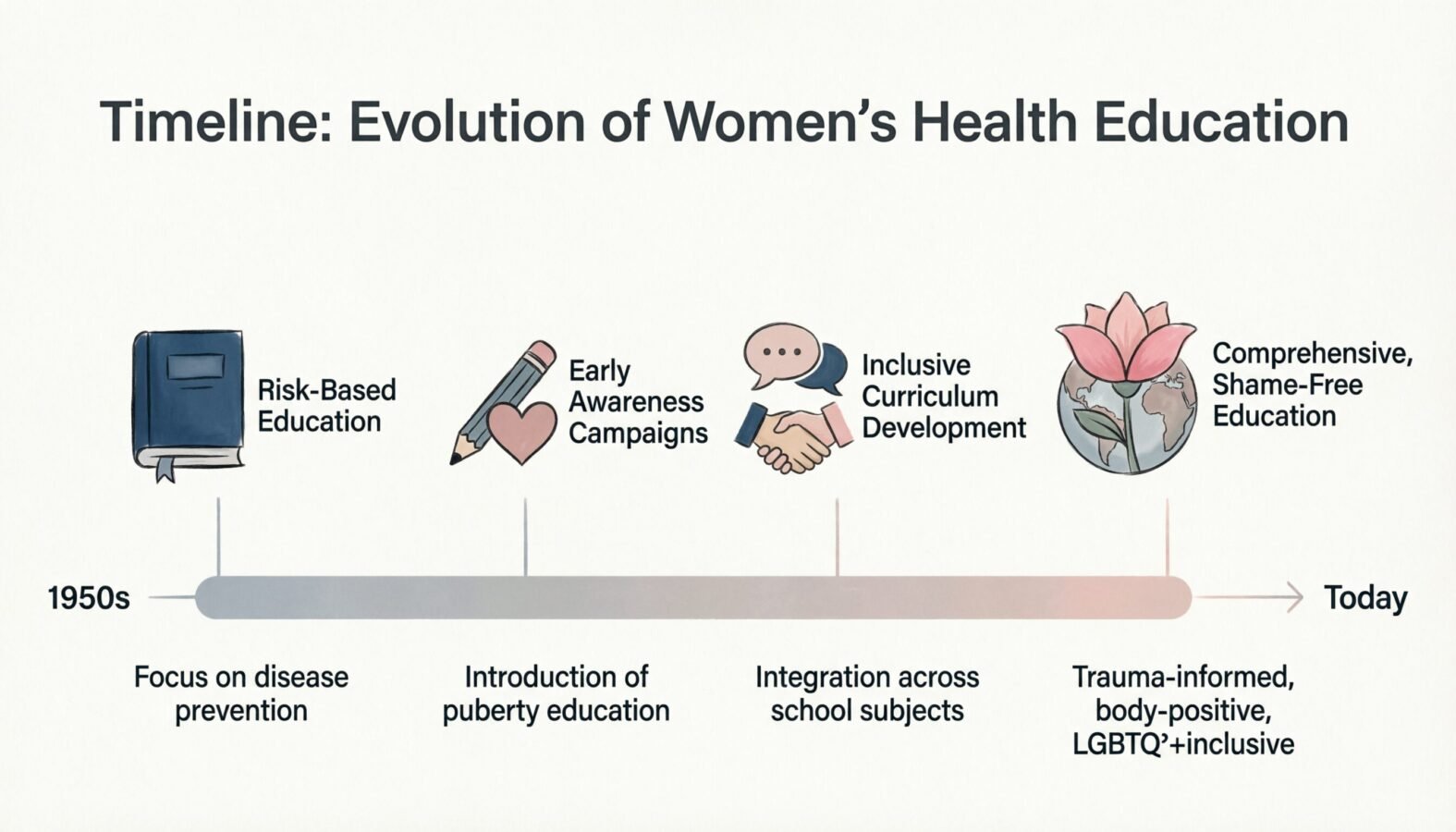
Historically, body education for women centered on what could go wrong: pregnancy, sexually transmitted infections, reputation damage, and social consequences. While these topics matter—and safety, health, and consent are genuinely important—when they dominate the entire conversation, something crucial gets lost.
According to guidelines from the American College of Obstetricians and Gynecologists (ACOG), comprehensive sex education should include anatomical knowledge, communication skills, and understanding of consent alongside disease prevention. Yet many women received education that emphasized danger without teaching them how their bodies actually function, communicate, or experience pleasure and comfort.
If you’re exploring why you might feel disconnected from your body, this article on why women feel disconnected from their bodies offers deeper context.
The Focus on Protection Over Understanding
Think back to what you were taught about your body during adolescence. Chances are, the conversation revolved around protection: preventing pregnancy, avoiding disease, maintaining reputation, and exercising control.
These messages weren’t wrong—protection matters. But when protection becomes the only lens through which you view your body, it creates an imbalanced relationship. Your body becomes something to manage, monitor, and restrict rather than understand, appreciate, and communicate with.
Many women were taught modesty and silence as virtues, cleanliness as moral obligation, and reputation as fragile. They learned what could harm them but rarely learned what brings them comfort, what their body’s signals mean, or how to articulate their needs and boundaries clearly.
This gap in education doesn’t reflect any personal failing on your part. It reflects a systemic pattern where women’s bodies were framed primarily as sites of potential risk rather than sources of knowledge, wisdom, and authentic experience.
How Fear-Based Messaging Creates Shame
When education is built primarily around fear, the body itself can start to feel like a warning sign. This isn’t just a metaphor—it has real effects on how your nervous system responds to bodily sensations and intimate situations.
Fear-based messaging activates your body’s stress response. Over time, this can create patterns where you unconsciously associate bodily awareness with danger, discomfort, or potential mistakes. Your nervous system regulation becomes tied to vigilance rather than ease.
Research on trauma-informed approaches shows that fear-based education can contribute to what clinicians call “body alienation”—a sense of disconnection from physical sensations, difficulty recognizing internal cues, and discomfort with bodily autonomy.
This is where trauma-informed care principles become essential. They recognize that many women’s relationships with their bodies have been shaped by messaging that emphasized danger over understanding, control over curiosity, and silence over communication. Healing requires replacing those patterns with patient, respectful, shame-free attention.
What Are the Signs You Need Shame-Free Body Education?
You might benefit from deeper women body awareness if you notice these patterns in your life:
- You feel embarrassed asking basic questions about your body, even to healthcare providers
- You use vague words like “down there” because clear anatomical language feels uncomfortable or inappropriate
- You feel disconnected from your body during stress or intimacy, as if you’re watching from outside
- You ignore discomfort or push through pain to avoid disappointing someone else
- You feel guilty when you need more time, more space, or clearer explanations
- You compare your body, desire, or response to other women and feel inadequate
- You think you “should already know” what you want or need, but you don’t
- You struggle to explain what feels safe, unsafe, good, or uncomfortable to you
- You feel pressure to perform confidence instead of actually feeling secure
If body comparison resonates with you, explore this resource on comparison, body image, and relationship insecurity.
These signs don’t mean you’re failing. They may simply show that your body hasn’t received enough patient, respectful attention. Many women have been trained to understand others before understanding themselves—noticing a partner’s mood, a child’s needs, or family dynamics while struggling to recognize their own body signals.
That’s not weakness. It’s training. And training can be gently changed.
Emotional and Communication Patterns
Body shame often shows up in how you communicate—or don’t communicate—about your needs. You might notice yourself staying silent in situations where speaking up would serve you better, not because you don’t care, but because you lack the language or confidence to express what you’re experiencing.
Vague language keeps shame alive. When you can’t name what you’re feeling, it’s harder to ask for what you need. Embarrassment about basic body questions can prevent you from getting the information or support that would help you feel more confident and secure.
Guilt around boundaries is another common pattern. You might feel selfish for needing more time, softer touch, slower pacing, or clearer consent. This guilt often stems from education that prioritized others’ comfort and expectations over your own understanding and autonomy.
Physical and Intimacy-Related Signs
Body shame can also manifest physically, particularly during intimate situations. You might notice tension in your pelvic floor, difficulty relaxing, or a sense of numbness or disconnection when physical touch occurs.
Performance pressure—feeling like you need to respond in certain ways or meet certain expectations—can make intimacy feel like a test you might fail rather than an experience to explore. This pressure often connects back to incomplete education that didn’t teach you about your body’s unique pace, preferences, and responses.
Some women experience discomfort or pain during intimacy but don’t know how to describe it clearly or whether it’s something to address. Without clear anatomical language and understanding of pelvic floor health, it’s harder to communicate with healthcare providers or partners about what’s happening in your body.
The Power of Clear Body Language
Language shapes how we think about our bodies. When you use vague euphemisms instead of clear anatomical names, it’s harder to understand your experiences, communicate your needs, or seek appropriate help when something doesn’t feel right.
According to ACOG guidelines on patient communication, using accurate anatomical terminology improves medical conversations, reduces misunderstandings, and supports better health outcomes. But the benefits extend far beyond the doctor’s office.
Clear language builds body confidence because it gives you precision. Instead of saying “it hurts down there,” you can say “I’m experiencing tension in my pelvic floor” or “I feel discomfort at my vaginal opening.” This specificity helps you understand what’s happening and communicate it effectively.
How Vague Words Keep Shame Alive
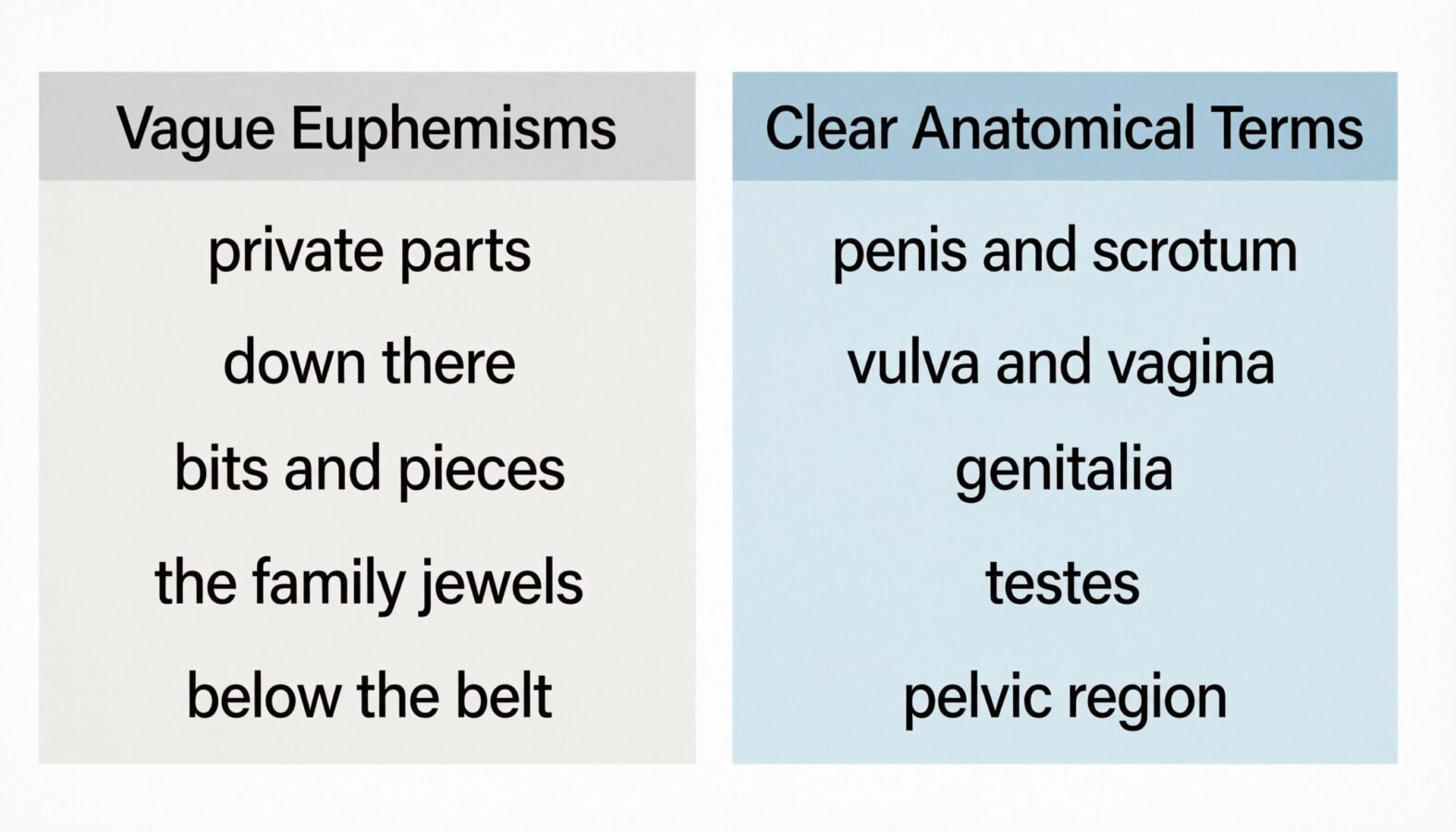
Euphemisms like “down there,” “lady parts,” “private area,” or “womanhood” might feel more comfortable initially, but they often reinforce the idea that certain parts of your body are too shameful, embarrassing, or inappropriate to name directly.
Shame grows easily where language is restricted. When you can’t name something clearly, it stays vague, mysterious, and potentially threatening. Clear names aren’t just about information—they’re about permission to acknowledge, understand, and discuss your whole body without embarrassment.
Using vague language can also create confusion. “Down there” could refer to your vulva, your vagina, your pelvic floor, or your entire pelvic region. Without precision, it’s harder to identify what you’re actually experiencing or what you need.
Vague Language vs. Clear Body Names: A Comparison
Here’s a practical comparison to help you see the difference between vague language and clear anatomical names:
| Vague Language | Clear Anatomical Name |
|---|---|
| “Down there” | Vulva (external genitalia) |
| “Private parts” | Vulva, clitoris, vaginal canal |
| “Lady parts” | Vulva, clitoris, labia, vaginal opening |
| “Your womanhood” | Vulva and vaginal canal |
| “Below the waist” | Pelvic region, pelvic floor muscles |
| “The opening” | Vaginal opening or urethral opening |
| “The sensitive spot” | Clitoris |
| “Inside you” | Vaginal canal, cervix, uterus |
| “Your core” | Pelvic floor muscles, abdominal muscles |
| “That time of month” | Menstruation, menstrual cycle |
Why Clear Names Build Confidence
Using clear anatomical names builds confidence for several reasons. First, it improves medical communication—you can describe symptoms more accurately to healthcare providers, leading to better diagnosis and treatment.
Second, it supports honest intimate communication. When you can name what you’re experiencing, you can guide partners toward what feels good and away from what doesn’t. This creates safer, more satisfying intimate experiences.
Third, clear language reduces shame. When you can say “clitoris” or “vulva” or “pelvic floor” without embarrassment, you’re reclaiming your right to understand and discuss your body openly. This isn’t about being clinical—it’s about giving yourself permission to know yourself clearly.
How Missing Body Education Affects Communication
When you don’t understand your body, communication becomes significantly harder. This affects not just intimate relationships but also medical appointments, friendships, and your internal dialogue with yourself.
You might not know how to explain what feels good or what doesn’t. You may struggle to describe whether you need rest, emotional safety, slower pacing, or clearer consent. Without this vocabulary and self-knowledge, silence can feel easier than the vulnerability of speaking up.
This silence affects emotional intimacy—not because you don’t care, not because you’re cold or broken, but because you may not have been given the words, the permission, or the practice to express your bodily experience.
Learn more about setting boundaries and emotional safety in intimate relationships.
The Silence Pattern in Relationships
Many women develop a pattern of staying silent about their bodily needs and experiences. This silence isn’t passive—it’s often an active choice to avoid conflict, disappointment, or the discomfort of not having the right words.
You might stay silent because you’re unsure what you need. You might stay silent because you fear being seen as difficult, dramatic, or demanding. You might stay silent because past experiences taught you that your needs weren’t important or wouldn’t be respected.
This pattern affects emotional intimacy because intimacy requires vulnerability and honesty. When you can’t or don’t share what you’re experiencing in your body, your partner can’t respond to your actual needs—they can only respond to what they assume or guess.
Gentle Scripts for Honest Communication
If you’re struggling to find words, here are some gentle scripts you can practice:
- “I need more time to figure out what I’m feeling.”
- “This creates pressure for me. Can we slow down?”
- “I want to understand what feels safe for me before we continue.”
- “Can we pause for a moment? I’m noticing some tension in my body.”
- “I’m still learning how to explain what I need. Thank you for being patient.”
- “I need clearer information before I can make a decision about this.”
- “My body is asking for something different right now.”
These sentences aren’t rejection. They’re self-awareness. They’re acts of respect toward your body and your experience. Using them builds the muscle of honest communication gradually, without pressure to be perfect.
Why Do I Feel Disconnected From My Body During Intimacy?
Feeling disconnected from your body during intimacy is more common than many women realize, and it’s rarely a sign that something is fundamentally wrong with you. More often, it’s a sign that your body education was incomplete or that you’ve developed protective patterns in response to fear-based messaging.
Disconnection during intimacy often stems from several sources: incomplete body education that didn’t teach you to notice and trust your sensations, fear-based messaging that associated bodily awareness with danger or mistakes, or learned patterns of ignoring your body’s signals to meet others’ expectations.
You may experience what therapists call “spectatoring“—watching yourself from outside your body rather than feeling present in your experience. This can feel like you’re observing what’s happening rather than participating in it, or like your mind is somewhere else while your body goes through the motions.
Understanding Spectatoring and Body Comparison
Spectatoring often connects to body comparison. When you’re focused on how your body looks, whether you’re responding “correctly,” or how you measure up to other women or unrealistic expectations, you’re pulled out of your bodily experience and into your thoughts.
This pattern affects nervous system regulation. Instead of feeling safe and present, your nervous system may shift into vigilance or performance mode. This makes it harder to notice pleasure, comfort, or your body’s authentic responses.
Performance anxiety feeds this cycle. When you’re worried about whether you’re doing things “right” or meeting certain expectations, you’re focused on outcomes rather than experience. This takes you further away from the present-moment awareness that allows genuine connection with your body.
Understanding that spectatoring is a learned pattern—not a personal failing—is the first step toward changing it. With patient practice and shame-free attention, you can gradually rebuild your capacity to feel present in your body.
Body Neutrality vs. Body Positivity: Which Path Heals Shame?
You may have heard about body positivity—the movement encouraging women to love and celebrate their bodies. While this approach has value, it can feel like pressure if you’re healing from shame, disconnection, or incomplete education.
Body neutrality offers an alternative path. Instead of requiring you to love everything about your body, body neutrality focuses on accepting your body as it is without judgment—neither loving nor hating it, simply acknowledging it with respect and curiosity.
Body positivity encourages: “Love your body! Celebrate it! Find it beautiful!”
Body neutrality suggests: “Your body is allowed to exist as it is. You don’t have to love it to respect it. You can understand it without judging it.”
For those healing from shame, neutrality is often gentler because it removes the pressure to feel positive. It emphasizes understanding, respect, and functional appreciation of what your body does rather than how it looks or whether you find it attractive.
Why Body Neutrality May Be a Gentler Starting Point
If you’ve been taught to feel shame about your body, being told to suddenly love it can feel impossible, inauthentic, or like another form of pressure. Body neutrality gives you permission to start where you actually are—not where you think you should be.
With body neutrality, you can acknowledge that your body carries you through the day, that it communicates through sensations, that it has needs and preferences, without requiring yourself to feel enthusiastic about it. This creates space for genuine understanding to develop gradually.
Over time, as you practice somatic awareness and replace shame with curiosity, you may naturally develop more positive feelings toward your body. But neutrality doesn’t demand that outcome. It simply asks you to treat your body with respect and attention, whatever you happen to feel about it in this moment.
The Body Awareness Pause: A Simple Daily Practice
Here is one simple practice to begin shame-free education today. This exercise takes just one minute and can help you start rebuilding connection with your body without pressure or judgment.
The Body Awareness Pause is designed to be accessible, gentle, and repeatable. You don’t need special equipment, a quiet space, or extensive training. You just need one minute and willingness to notice.
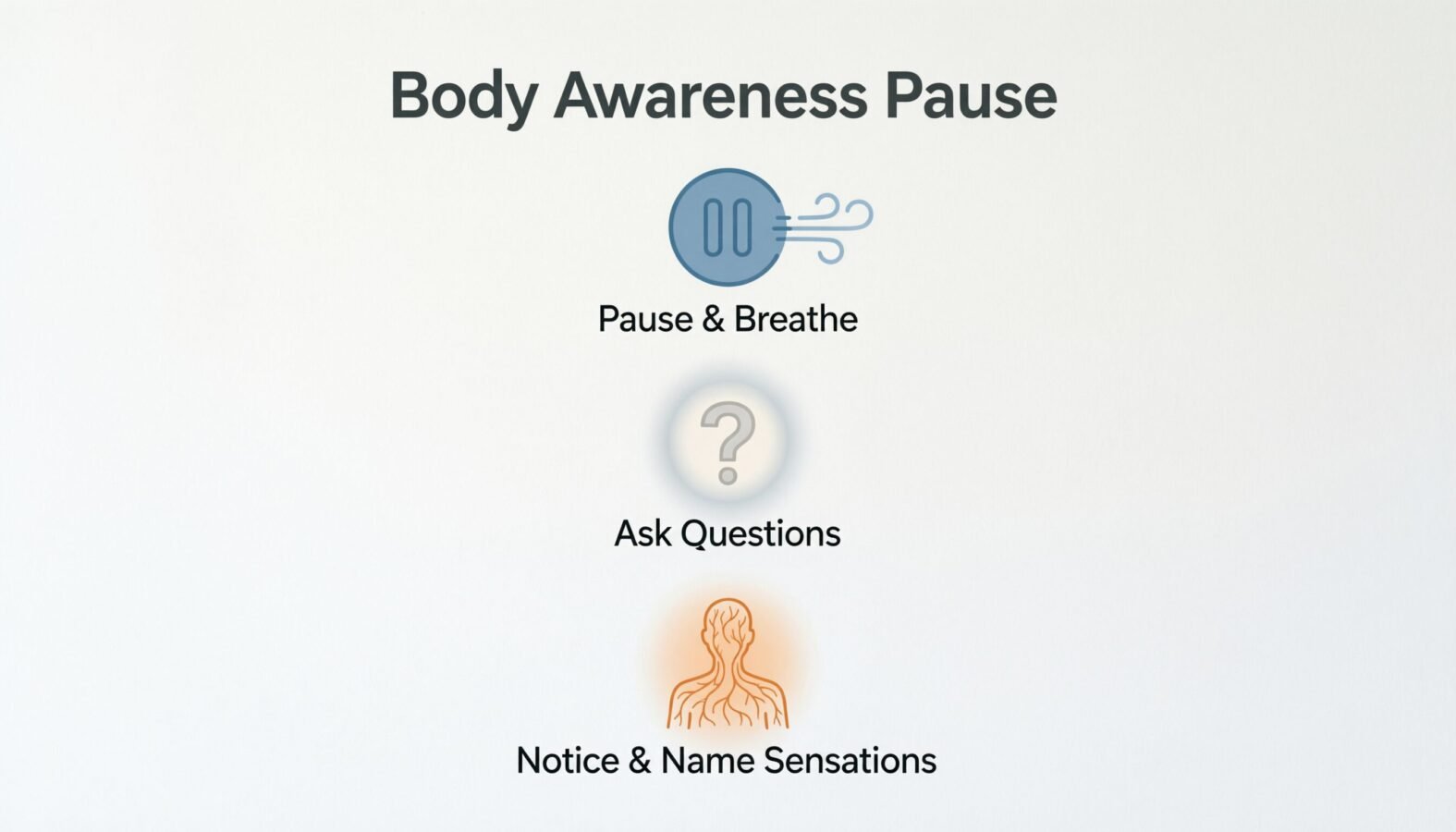
Step 1: Pause and Breathe
Once a day, pause for one minute. Set a timer if that helps, or simply commit to sixty seconds of attention. Take a few deep breaths and bring your awareness to the present moment.
You don’t need to be anywhere special. You can do this sitting at your desk, lying in bed, standing in your kitchen, or wherever you happen to be. You don’t need to change your posture or do anything elaborate.
The goal here is simply to interrupt autopilot and create a small space for awareness. This pause signals to your nervous system that it’s safe to notice what’s happening in your body right now.
Step 2: Ask Without Judgment
Ask yourself: “What am I feeling in my body right now?”
This is the crucial part: do not judge the answer. Do not fix the answer. Do not explain it away or talk yourself out of it. Do not decide whether what you’re feeling is good or bad, right or wrong.
Simply allow whatever arises to be there. If you notice resistance, that’s okay. If you notice numbness, that’s okay. If you notice tension, comfort, restlessness, or calm, all of it is okay.
This practice of non-judgmental curiosity is foundational to shame-free female body education. It teaches your body that it’s safe to communicate with you, that you’ll listen without immediately trying to change or criticize what you hear.
Step 3: Notice and Name
Now, notice specific sensations and name them clearly. You might notice:
- “My shoulders are tight.”
- “My stomach feels calm.”
- “My chest feels heavy.”
- “My breathing is held.”
- “My body feels numb.”
- “My face feels warm.”
- “My mind feels restless.”
- “My body feels soft.”
- “My jaw is clenched.”
- “My hands feel cold.”
Use clear, specific language. Instead of “I feel weird,” try “My chest feels tight and my breathing is shallow.” Instead of “Something’s off,” try “My stomach feels unsettled.”
The eBook The Confidence & Intimacy Reset For Women by Md. Rizwanul Haque offers this exact kind of practice and reminds readers that the goal is not to fix the body, but to notice it. This small reset step is powerful because body confidence begins with attention. A woman cannot easily speak for a body she has been trained to ignore. But when she begins listening, even gently, she starts rebuilding self-trust.
How to Reconnect With Your Body After Trauma
If you’ve experienced trauma, reconnecting with your body requires extra care, patience, and often professional support. This isn’t something you need to do alone, and there’s no timeline you need to meet.
Reconnecting after trauma requires a gentle, trauma-informed approach. Start with brief, non-threatening body awareness practices like the Body Awareness Pause described above. Work at your own pace without forcing anything. If certain sensations or memories arise, it’s okay to pause, redirect your attention, or seek support.
Healing isn’t linear. Some days you may feel more connected; other days you may feel more distant. Both are normal. The goal isn’t to push through discomfort but to build safety and trust gradually.
When to Seek Professional Support
Consider seeking support from a trauma-informed therapist, pelvic floor physical therapist, or counselor who specializes in body-based healing if:
- Body awareness practices trigger intense emotions, flashbacks, or overwhelming anxiety
- You experience chronic pain, pelvic floor dysfunction, or sexual pain that doesn’t improve with self-care
- Disconnection from your body significantly affects your daily life or relationships
- You want structured guidance through the healing process
Professional support can provide safety, structure, and specialized tools as you rebuild trust with your body. This isn’t a sign of weakness—it’s an act of self-respect.
Building Self-Trust Through Somatic Awareness
Rebuilding trust with your body is a gradual process that happens through consistent, gentle attention. Somatic awareness—your ability to notice, interpret, and respond to physical sensations—is a skill you can develop with practice.
Self-trust grows when your body learns that you’ll listen without judgment, that you’ll respect its signals, and that you won’t force it to do things that don’t feel safe or right. This trust is built through small, repeated experiences of honoring what you notice.
Listening to Your Body’s Pace and Preferences
Start paying attention to your body’s unique pace and preferences. Notice when you feel rushed versus when you feel comfortable. Notice what kinds of touch feel good versus uncomfortable. Notice when your body needs rest versus activity.
These preferences aren’t right or wrong—they’re information. Your body’s pace might be slower than others’. Your preferences might be different from what you’ve been taught to expect. This is normal.
As you practice noticing and honoring these signals, you build self-trust. You learn that you can rely on your body’s communication, that your needs are valid, and that you have the right to set boundaries based on what you notice.
Key Takeaways: Your Path Forward
- Female body education should be shame-free, respectful, and practical. You deserve to understand your body without fear, judgment, or pressure.
- Many women were taught risk, silence, and fear before clear body knowledge. If you feel like you’re playing catch-up, this reflects incomplete education, not personal failure.
- Missing education can affect confidence, desire, communication, and intimacy. These effects are real and valid, but they’re also changeable with patient practice.
- Clear language helps women understand and communicate their body experiences. Using accurate anatomical names builds confidence and improves communication with healthcare providers and partners.
- Women body awareness begins with noticing, not fixing. The goal isn’t to change your body but to understand it with curiosity and respect.
- A one-minute daily body check-in can help rebuild self-trust. The Body Awareness Pause is a simple, accessible practice you can start today.
- The goal is not perfection. The goal is clarity, confidence, and self-respect. Progress happens gradually through consistent, gentle attention.
Frequently Asked Questions About Shame-Free Body Education
What is shame-free female body education?
Shame-free female body education is the practice of learning about your body without judgment, fear, or pressure. It replaces vague language with clear anatomical names, focuses on understanding rather than just protection, and helps you rebuild self-trust through gentle awareness. This approach emphasizes that your body is allowed to be understood, not just controlled or protected.
How do I stop feeling ashamed of my body?
Start by replacing vague language with clear anatomical names, practice daily body awareness without judgment, and challenge shame-based thoughts with factual information. Body neutrality—accepting your body as it is without pressure to love everything—can be a gentler starting point than forced positivity. Consider guided resources like workbooks that offer structured reflection and scripts for rebuilding self-trust over time.
Why do I feel disconnected from my body during intimacy?
Disconnection during intimacy often stems from incomplete body education, fear-based messaging, or learned patterns of ignoring your body’s signals. You may experience “spectatoring”—watching yourself from outside rather than feeling present. This isn’t a personal failure; it’s a sign that your body needs patient, shame-free attention and gentle reconnection practices to rebuild trust and presence.
What are the signs of body shame in women?
Common signs include: feeling embarrassed asking basic body questions, using vague words instead of clear names, feeling disconnected during stress or intimacy, ignoring discomfort to avoid disappointing others, feeling guilty when needing more time or space, comparing your body to others, struggling to explain what feels safe or uncomfortable, and feeling pressure to perform confidence rather than actually feeling secure.
How to reconnect with your body after trauma?
Reconnecting after trauma requires a gentle, trauma-informed approach. Start with brief, non-threatening body awareness practices like the Body Awareness Pause. Work at your own pace without forcing anything. Consider seeking support from a trauma-informed therapist or pelvic floor specialist. Remember that healing isn’t linear, and professional guidance can provide safety and structure as you rebuild trust with your body.
What is the difference between body neutrality and body positivity?
Body positivity encourages loving and celebrating your body, which can feel like pressure if you’re not ready. Body neutrality focuses on accepting your body as it is without judgment—neither loving nor hating it. For those healing from shame, neutrality is often gentler because it removes the pressure to feel positive and instead emphasizes understanding, respect, and functional appreciation of what your body does.
Why do I feel guilty setting boundaries in intimacy?
Guilt around boundaries often stems from incomplete body education that prioritized others’ needs over your own understanding. You may have been taught that saying no is selfish or that your body exists to please others. Recognizing that boundaries are acts of self-respect, not rejection, and practicing gentle scripts like “I need more time” can help reframe boundaries as healthy communication rather than failure.
How does shame-free female body education improve intimacy?
Shame-free education improves intimacy by giving you clear language to express needs, reducing fear and disconnection, and building self-trust. When you understand your body’s pace, preferences, and boundaries without shame, you can communicate more honestly with partners. This creates safer, deeper emotional intimacy because you’re no longer hiding, guessing, or performing—you’re present and authentic in your experience.
Is it normal to feel disconnected from my body?
Yes, feeling disconnected is very common, especially among women who received risk-based, fear-focused body education. Many women were taught to protect, control, or hide their bodies rather than understand them. This disconnection isn’t a personal flaw—it’s a predictable response to incomplete education. With patient, shame-free attention and gentle practices, you can gradually rebuild connection and trust with your body.
What are clear anatomical names I should know?
Clear anatomical names include: vulva (external genitalia), clitoris, vaginal canal, pelvic floor muscles, uterus, ovaries, cervix. Using these specific terms instead of vague phrases like “down there” reduces shame, improves medical communication, and builds confidence. Learning correct names isn’t about being clinical—it’s about giving yourself permission to understand and speak about your body with clarity and respect.
A Doorway Into Deeper Practice
This article gives you a starting point. But deeper healing often needs structure, reflection, and repeated practice over time.
That’s why the complete Confidence & Intimacy Reset For Women eBook and workbook bundle by Md. Rizwanul Haque and Md. Kawsharul Islam can be helpful. The main book provides educational context while the workbook offers space for guided reflection, scripts, and action prompts to support your journey.
What’s Inside The Confidence & Intimacy Reset
The Confidence & Intimacy Reset For Women includes:
- Educational context that explains the roots of body shame and disconnection
- Guided reflection exercises to help you notice your patterns without judgment
- Practical scripts for communicating boundaries, needs, and preferences
- Action prompts that support gradual, sustainable change
- Shame-free perspective that respects your pace and honors your experience
- Structured methodology tested through intimacy education work
Main Book: The Confidence & Intimacy Reset For Women
Workbook A4 Size / US Letter Size
Main Book & Workbook Bundle

Conclusion
Shame-free female body education isn’t about becoming more sexual, more confident, or more perfect. It’s about giving yourself permission to understand your body without fear, pressure, or judgment. When you replace vague language with clear names, silence with gentle awareness, and shame with curiosity, you create space for authentic self-trust to grow.
Remember: your body is allowed to be understood. Start with one minute of daily awareness. Use clear anatomical names instead of vague words. Practice gentle scripts like “I need more time” or “Can we slow down?” These small steps rebuild the connection that fear-based education broke.
If you’re ready for deeper healing with structure, reflection, and guided practice, explore The Confidence & Intimacy Reset For Women eBook and workbook bundle by Md. Rizwanul Haque. The main book provides educational context while the workbook offers space for guided reflection, scripts, and action prompts to support your journey.
Your path to shame-free female body education begins with a single moment of noticing—and every small step toward clarity is an act of self-respect.
This article is educational and should not replace medical, legal, or therapeutic advice. The resources mentioned are for informational and educational purposes only and are not a substitute for qualified professional advice.
Relevant Links
Similar Posts
Female Body Education: 5 Gentle Steps to Reclaim Intimacy
Understanding Your Body: A Gentle Guide to Women’s Body Awareness and Intimacy #BodyPositivity #IntimacyReset Female body education is the missing lesson many women never received—the gentle, shame-free understanding of how their bodies speak, feel, and connect. You may look confident from the outside but feel uncertain inside your own body. You care deeply about connection,…
How to Name Emotions Before Hiding Them Without Shame: A Guide for Women
How to Name Emotions Before Hiding Them Without Shame How to Name Emotions Before Hiding Them Without Shame A Guide for Women on Reclaiming Emotional Intelligence as an Intimate Superpower Begin Your Reset Journey Many women are emotionally intelligent with everyone else. They can listen to a friend, calm a stressful family moment, explain complex…
Nervous System Safety: 5 Steps to Restore Desire
How Nervous System Regulation Rewires Stress and Awakens Female Desire #IntimacyReset #WomensHealth Nervous system safety is the missing piece that explains why you can love your partner deeply yet still feel closed off to intimacy. Simply put, nervous system safety means your body receives enough physiological signals that it is safe to soften, rest, connect,…
Silencing the Inner Critic: A Blog Guide to Confidence and Intimacy
Silencing the Inner Critic: A Blog Guide to Confidence and Intimacy Silencing the Inner Critic:A Blog Guide to Confidence and Intimacy By Md. Rizwanul Haque Co-author: Md. Kawsharul Islam Educational Notice: This article is educational only. The eBook states that it is for informational and educational purposes and is not a substitute for professional medical,…
Spiritual Confidence: 5 Steps to Reclaim Your Power
How to Become the Author of Your Life: A Guide to Inner Authority #SelfAuthorship #InnerPower Spiritual Confidence is not about loud, performative arrogance; it is the quiet inner authority that allows a woman to stop asking for permission to exist. If you feel guilty when you choose yourself, that guilt is usually a learned reaction…
Speak Needs Without Losing Yourself: Confidence Reset
Speak Needs Without Losing Yourself: A Guide to Communication Confidence for Women Many women feel the truth long before they can say it. Your body knows when something feels off. Your heart knows when it needs more care. A quiet inner voice whispers, “I cannot keep pretending I am fine.” Yet, when the moment arrives…