

5 Gentle Ways to Build Mindful Desire Awareness and Reclaim Your Intimacy #LowDesire #IntimacyReset
Compassionate desire awareness is the gentle, intentional practice of understanding your body’s signals around intimacy without shame or self-judgment. If you love your partner but often feel tired, tense, or physically closed off when the moment arrives, please know that you are not broken. Many women quietly blame themselves, asking, “Why can’t I relax?” or “What is wrong with me?”
The truth is, low desire is rarely a character flaw. Often, it is simply your nervous system sending a clear, protective signal: “Not pleasure yet. Safety first.” This comprehensive guide offers five gentle, science-backed steps to help you build that safety, release self-blame, and reclaim your natural connection through true compassionate desire awareness.
The Myth of the “Character Flaw” in Female Sexuality
For decades, pervasive cultural narratives have subtly suggested that a woman’s sexual desire should be constant, effortless, and always readily available. When reality diverges from this myth, the immediate internal reaction is often profound guilt. You might find yourself engaging in relentless self-attack, wondering if you are losing your mind, your femininity, or your love for your partner.
This experience is incredibly common, yet it is rarely discussed with the nuance it truly deserves. What you are experiencing is not a personal failure or a defect in your character. In clinical terms, this is often referred to as a sexual desire discrepancy. However, that sterile medical phrase fails to capture the heavy emotional weight of feeling disconnected from your own body.
The truth is that female sexuality is deeply contextual. It is not a standalone switch that operates independently of your daily life. According to the American College of Obstetricians and Gynecologists (ACOG), stress, fatigue, and relational dynamics are among the most significant factors influencing female sexual response. When you are carrying the heavy burden of emotional labor, managing a household, or navigating chronic stress, your body’s priority naturally shifts away from reproduction and pleasure, and toward survival and management.
Recognizing this biological reality is the first step toward shame-free female body education. By understanding that your body is responding exactly as it is designed to under pressure, you can begin to replace self-blame with gentle curiosity. You are not broken; you are simply adapting to your environment. Cultivating compassionate desire awareness starts with this fundamental shift in perspective.
1. Stop Treating Low Desire as a Character Flaw
The very first step in cultivating compassionate desire awareness is to actively remove shame from the conversation. Low desire in women can be connected to a vast array of perfectly normal, physiological, and psychological factors. These include chronic stress, poor sleep quality, underlying health conditions, medication side effects, overwhelming emotional load, relationship pressure, hormonal fluctuations, life stage transitions, physical pain, or a fundamental lack of perceived safety.
In The Confidence & Intimacy Reset For Women, intimacy and wellness educators Md. Rizwanul Haque and Md. Kawsharul Islam explain that desire is not controlled by one single hormone or switch. Instead, it is shaped by a complex, dynamic interplay of stress hormones, sex hormones, sleep quality, pain levels, mood, overall health, medication, relationship context, life stage, and body safety.
To understand this, we can look to the Dual Control Model, popularized by renowned sex educator and researcher Emily Nagoski. This model suggests that our sexual response system has both “accelerators” (things that turn us on) and “brakes” (things that turn us off). When you are stressed, your brain is hitting the brakes. No amount of pressing the accelerator will work if the brake is firmly engaged.
Instead of asking yourself the damaging question, “What is wrong with me?”, try shifting your internal dialogue to: “What is my body trying to tell me?”
Common desire brakes include:
- Exhaustion: Physical or mental depletion from relentless daily demands.
- Resentment: Unresolved conflicts or an unequal distribution of household tasks.
- Performance Pressure: The anxiety of needing to “perform” or reach a specific physical outcome.
- Lack of Privacy: Never having a moment truly to yourself to decompress.
- Feeling Touched Out: Sensory overload, especially common for mothers of young children.
That small shift in questioning matters immensely. It moves you from a state of self-attack to a state of self-understanding, laying the essential groundwork for genuine healing and compassionate desire awareness.
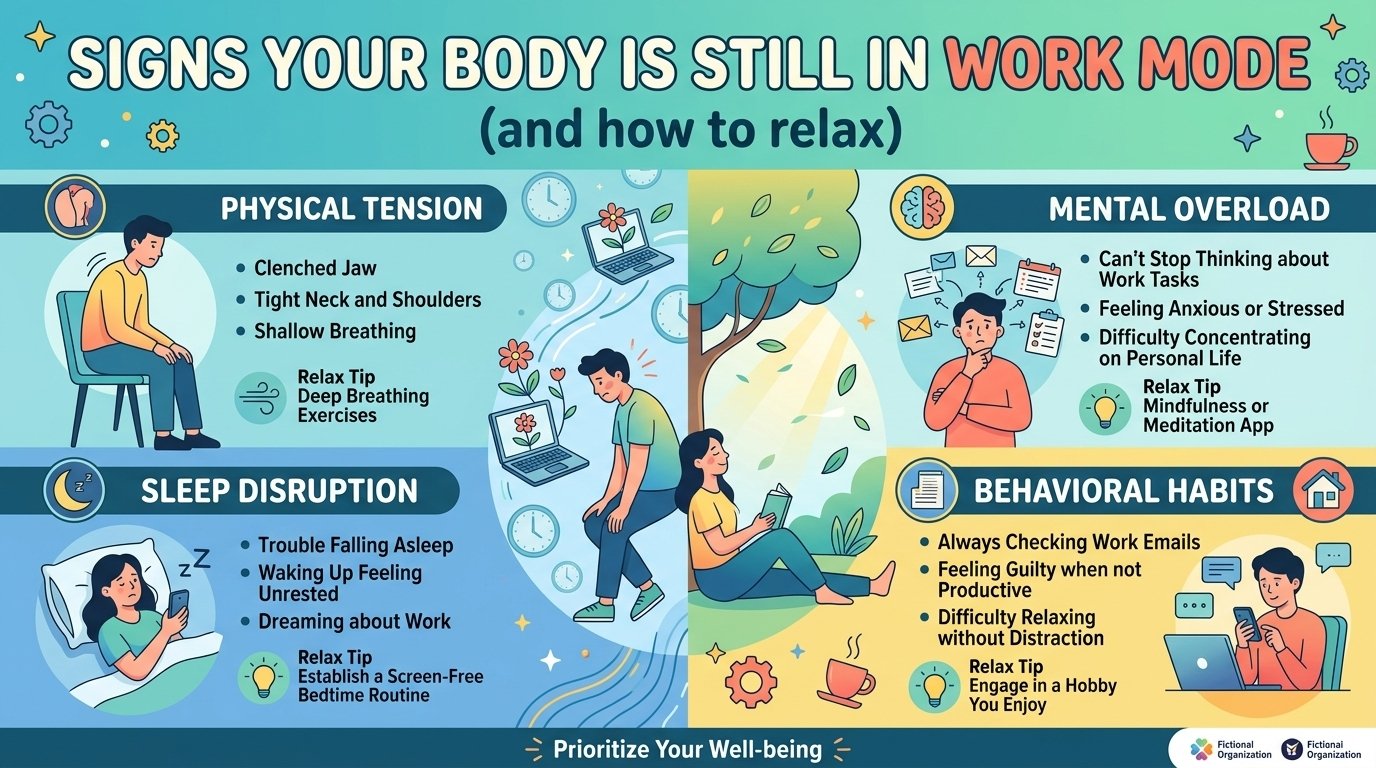
2. Notice When Your Body Is Still in Work Mode
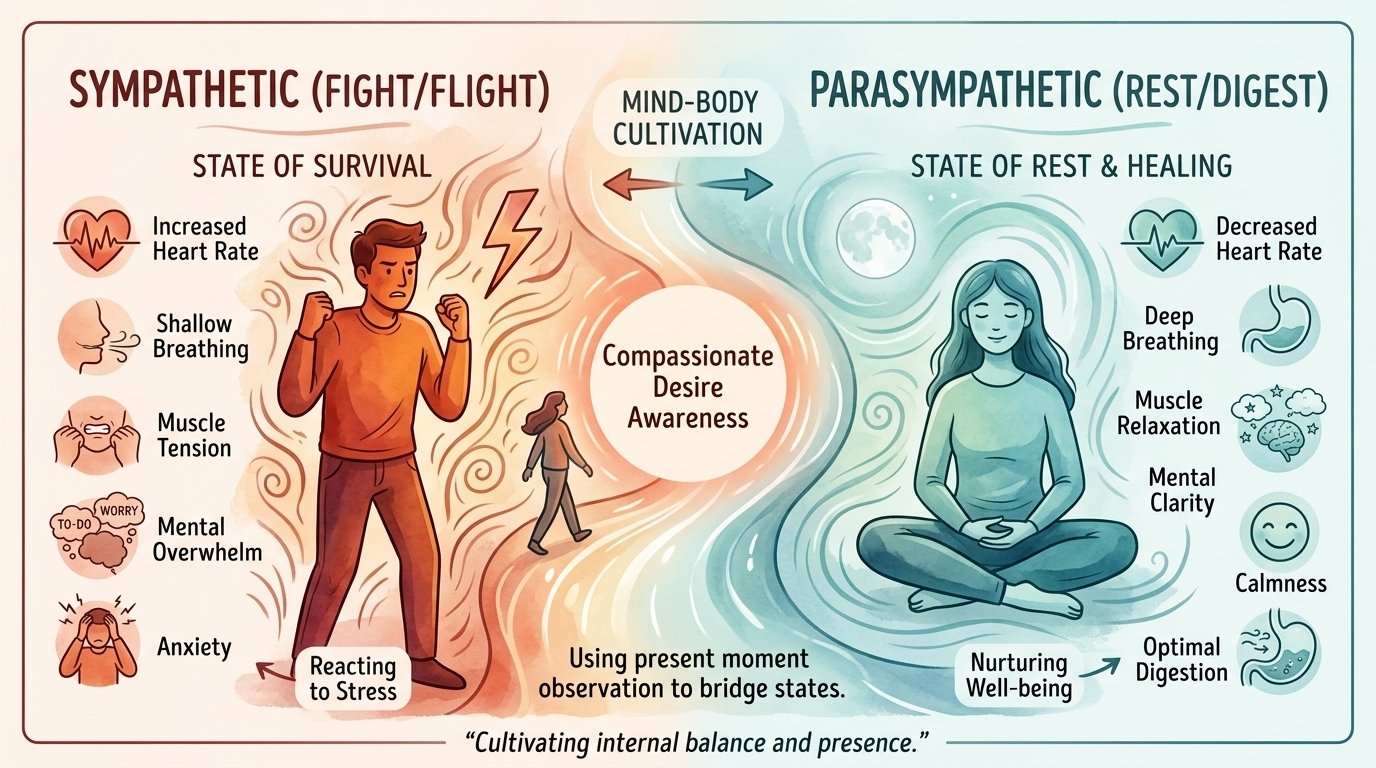
Stress is not merely a psychological feeling; it is a measurable, physiological body state. When your stress response is active, your sympathetic nervous system (the “fight, flight, or freeze” response) takes the wheel.
When this happens, you might notice distinct physical signs:
- Your breathing becomes shallow and restricted to your upper chest.
- Your muscles, particularly in your neck, shoulders, and jaw, remain chronically tight.
- Your stomach may pull inward, creating a sense of physical guarding.
- Your attention narrows, making it difficult to be present, playful, or vulnerable.
This physiological state can easily persist long after a long day of work, intensive childcare, financial pressure, family responsibility, or unresolved relationship conflict has ended. From the outside, you might look completely relaxed on the couch. But inside, your body is still managing a full, active list of problems.
The body requires a specific physiological state to experience pleasure. As noted in somatic wellness research, the body needs to feel safe enough for the parasympathetic nervous system (the “rest and digest” state) to activate. Attention needs to turn inward, breathing needs to deepen, and there must be ample room for trust, physical sensation, and comfort.
This is precisely why a woman cannot always move from a state of high stress to a state of high desire instantly. The gap between “work mode” and “pleasure mode” is too vast. The body often needs a bridge to cross that gap safely, which is a core principle of compassionate desire awareness.
3. Learn the Language of Nervous System Safety
If the body needs a bridge, what is that bridge made of? It is built from nervous system safety. Nervous system safety means the body feels secure enough to soften, rest, connect, and become fully present in the moment. It is the foundational requirement for any meaningful intimacy reset.
Safety does not always look like a romantic candlelit dinner. For many women, safety is highly practical and grounded in everyday actions. It may come from:
- Rest: Genuine, uninterrupted time to recharge without guilt.
- Privacy: Knowing you will not be interrupted by children, pets, or work.
- Emotional Warmth: Feeling heard, validated, and appreciated by your partner.
- A Slower Evening: Removing the rush and allowing time to decompress naturally.
- Help with Tasks: A partner proactively taking on mental and physical loads.
- Touch Without Expectations: Cuddling or holding hands with zero pressure for it to lead to sex.
- A Clear No: Knowing your boundaries will be respected immediately and without guilt.
- A Calm Conversation: Resolving lingering tensions before attempting physical closeness.
- Less Pressure to Perform: Removing the goal-oriented mindset from physical intimacy.
To learn more about this foundational concept, explore our detailed guide on nervous system safety to restore desire.
A powerful question to ask yourself is: What condition does my body need before desire can wake up?
Your answer might be eight hours of sleep, a reduction in daily stressors, more help with household work, or simply one night of complete, uninterrupted rest. By asking this question, you begin creating the precise conditions where desire has the room it needs to return naturally, rather than trying to force it into existence.
4. Understand Responsive Desire Without Judgment
One of the most liberating concepts for women struggling with low libido is understanding the difference between spontaneous and responsive desire. Many women expect desire to appear suddenly, out of the blue, like a lightning strike. They believe that if they truly loved their partner, they would spontaneously crave physical intimacy.
However, desire does not always begin before connection. Sometimes, it appears only after connection has been established.
| Feature | Spontaneous Desire | Responsive Desire |
|---|---|---|
| Onset | Arises out of the blue, without prior physical stimulation. | Emerges after experiencing warmth, safety, and physical connection. |
| Trigger | Internal cues, visual stimuli, or random thoughts. | External cues like affectionate touch, emotional closeness, or a relaxed environment. |
| Prevalence | Often more common in men, or during the honeymoon phase of a relationship. | Highly common in women, especially those managing stress, children, or long-term relationships. |
| Mindset | “I want sex, so I will initiate.” | “I am enjoying this closeness, and now my body is responding with desire.” |
Data and framework adapted from Emily Nagoski’s groundbreaking book, Come As You Are.
This concept can be deeply relieving for women who think they are broken because desire does not arrive instantly. Responsive desire may need emotional closeness, trust, a slower pace, rest, warmth, touch without pressure, a feeling of being cared for, and a deliberate transition out of stress.
Many women expect desire to arrive suddenly after a noisy day, a busy mind, and a hard, tense body. But that is a massive physiological jump. The body needs a bridge. That bridge is not a trick or a manipulation; it is genuine care and the essence of compassionate desire awareness.
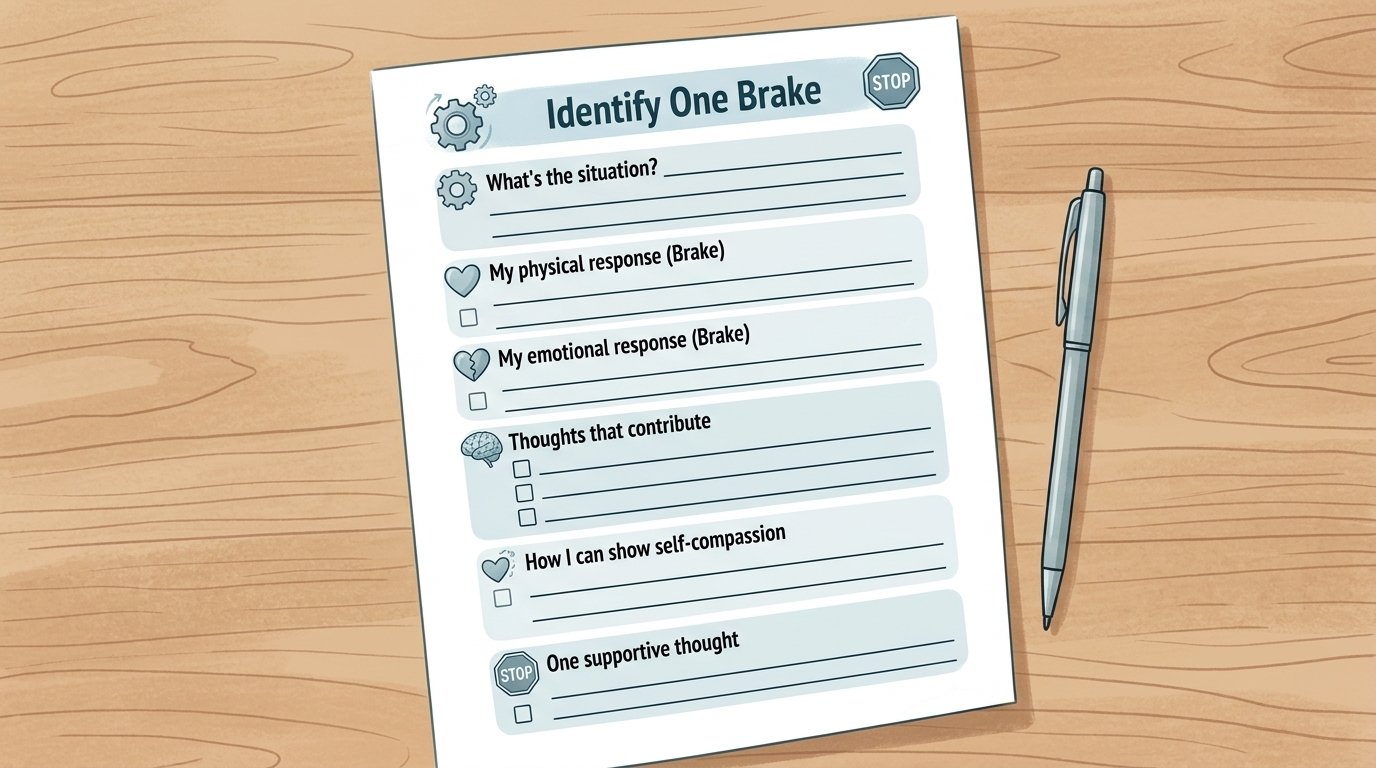
5. Practice One Compassionate Habit: Identify One Brake
Knowledge is only powerful when it is applied. The fifth step in building compassionate desire awareness is to practice one simple, compassionate habit: identifying and gently releasing one “desire brake.”
As established, desire often has brakes. A brake may be exhaustion, emotional tension, lack of privacy, resentment, performance pressure, feeling touched out, or a deep-seated fear of disappointing your partner.
Here is a simple, structured reflection practice you can start today:
Step 1: Identify the Brake
Take a quiet moment and write down: “My strongest desire brake right now is __________.” Be honest and specific with yourself.
Step 2: Choose a Kind Reduction
Next, write down: “One kind way to reduce this brake is __________.”
The goal is not to solve your entire life’s stress in one day. As emphasized in our resources, do not choose the hardest step first, because small, achievable possibilities create lasting confidence.
Examples of this practice in action:
- Brake: Exhaustion.
Kind Reduction: “I will go to bed 30 minutes earlier twice this week, and my partner will handle the morning routine.” - Brake: Emotional distance.
Kind Reduction: “I will initiate one calm conversation this week to share how I’ve been feeling without blaming anyone.” - Brake: Performance pressure.
Kind Reduction: “I will ask my partner for 10 minutes of affectionate cuddling with a mutual agreement that it will not lead to sex.” - Brake: No privacy.
Kind Reduction: “We will create one quiet evening at home after the children are asleep, with phones put away.”
This is the essence of compassionate desire awareness. It does not force the body. It listens, validates, and responds with kindness.
The Impact of Emotional Labor and “Feeling Touched Out”
It is impossible to discuss low desire in women without addressing the profound impact of emotional labor and the phenomenon of “feeling touched out.” Emotional labor refers to the invisible, cognitive work of managing a household, remembering schedules, anticipating needs, and regulating the emotions of others.
When a woman spends her entire day being needed, touched, demanded of, and responsible for others, her nervous system registers this as a state of high demand. By the time evening arrives, the last thing her body craves is more physical demand, even if that demand comes from a loving partner.
Feeling “touched out” is a valid physiological response to sensory overload. It is not a rejection of your partner; it is your body’s boundary asserting itself. Acknowledging this reality is crucial. Partners can support this by proactively sharing the mental load, creating pockets of solitude for their partner, and offering non-demanding, soothing touch that asks for nothing in return. This mutual understanding is a cornerstone of compassionate desire awareness.
Natural Ways to Fix Low Libido: Beyond Quick Fixes
When searching for natural ways to fix low libido in women, it is easy to fall for the trap of “quick fixes” like unregulated supplements or extreme diets. True healing is holistic and addresses the root causes of the disconnect.
Consider integrating these gentle, natural practices into your life:
- Address Pelvic Floor Tension: Chronic stress often manifests as a clenched pelvic floor. Gentle stretching, yoga, or consulting a pelvic floor physical therapist can release physical holding patterns.
- Prioritize Sleep Hygiene: Sleep is the foundation of hormonal regulation. Protecting your sleep is a radical act of self-care that directly supports libido.
- Engage in Non-Sexual Touch: Rebuild the mind-body connection through massage, holding hands, or cuddling, explicitly removing the expectation of sex.
- Practice Mindful Transitions: Create a 15-minute ritual between “work mode” and “home mode,” such as a warm shower, a short walk, or deep breathing exercises, to signal to your nervous system that it is safe to power down.
If you are looking for more holistic strategies, you can explore more resources to reclaim intimacy on our blog.
How Long Does It Take to Reset a Stressed Nervous System?
It typically takes 2 to 4 weeks of consistent, gentle practice to begin noticing a tangible shift in your nervous system’s sense of safety, though full healing is an ongoing journey.
There is no fixed, universal timeline, as it depends heavily on the severity of chronic stress, your individual physiology, and your life circumstances. However, neuroplasticity tells us that the brain and body can learn new patterns of safety. With consistent practices like prioritizing sleep, setting firm boundaries, delegating tasks, and engaging in non-demanding physical connection, the “brakes” begin to loosen. Patience and self-compassion are your most valuable tools during this timeline of compassionate desire awareness.
When to Seek Professional Support (Risks & Limitations)
While compassionate desire awareness and gentle lifestyle shifts are powerful, it is vital to acknowledge the limitations of self-guided work. Low desire can sometimes be a symptom of an underlying medical issue.
You should consider seeking professional support if your low desire is accompanied by:
- Sudden, unexplained changes in your menstrual cycle.
- Pain during intercourse (dyspareunia).
- Symptoms of thyroid dysfunction (extreme fatigue, weight changes, hair loss).
- Severe depression or anxiety that impacts your daily functioning.
- Side effects from new medications, particularly certain antidepressants or hormonal birth controls.
In these cases, consulting a healthcare provider, a gynecologist, or a certified sex therapist is the most responsible and compassionate choice. As a reminder, this article is educational and should not replace medical, legal, or therapeutic advice. Always refer to established guidelines, such as those from the American College of Obstetricians and Gynecologists (ACOG), when evaluating potential medical causes for female sexual dysfunction.
Key Takeaways: Your Path to an Intimacy Reset
As we conclude this guide, let’s summarize the core principles of your journey:
- Stress and desire are deeply connected: A stressed body prioritizes survival over pleasure.
- Low desire is not a failure: It is a signal, not a character flaw or a relationship death sentence.
- Safety precedes desire: Your nervous system must feel safe before it can soften and open to intimacy.
- Responsive desire is normal: Wanting connection before desire arises is a healthy, common pattern.
- Small steps matter: Identifying and gently reducing just one “desire brake” can create meaningful momentum.
Compassionate desire awareness is the compass that will guide you through this reset.
Explore the Full Confidence and Intimacy Reset Bundle
This article provides a gentle, foundational starting point. However, a deeper, lasting reset often happens through structured reflection, repeated practice, and guided support.
If you are ready to move beyond gentle starting points and engage in deeper, structured reflection, The Confidence & Intimacy Reset For Women eBook and workbook bundle is explicitly designed to guide you. Created by intimacy and wellness educators Md. Rizwanul Haque and Md. Kawsharul Islam, this comprehensive resource helps readers understand exactly how stress, self-talk, physiology, and desire are interconnected.
The book’s path includes rebuilding body confidence, understanding pleasure and desire without shame, and turning self-knowledge into trust and lasting connection. It provides practical scripts, actionable worksheets, and science-backed prompts to help you turn insight into reality.
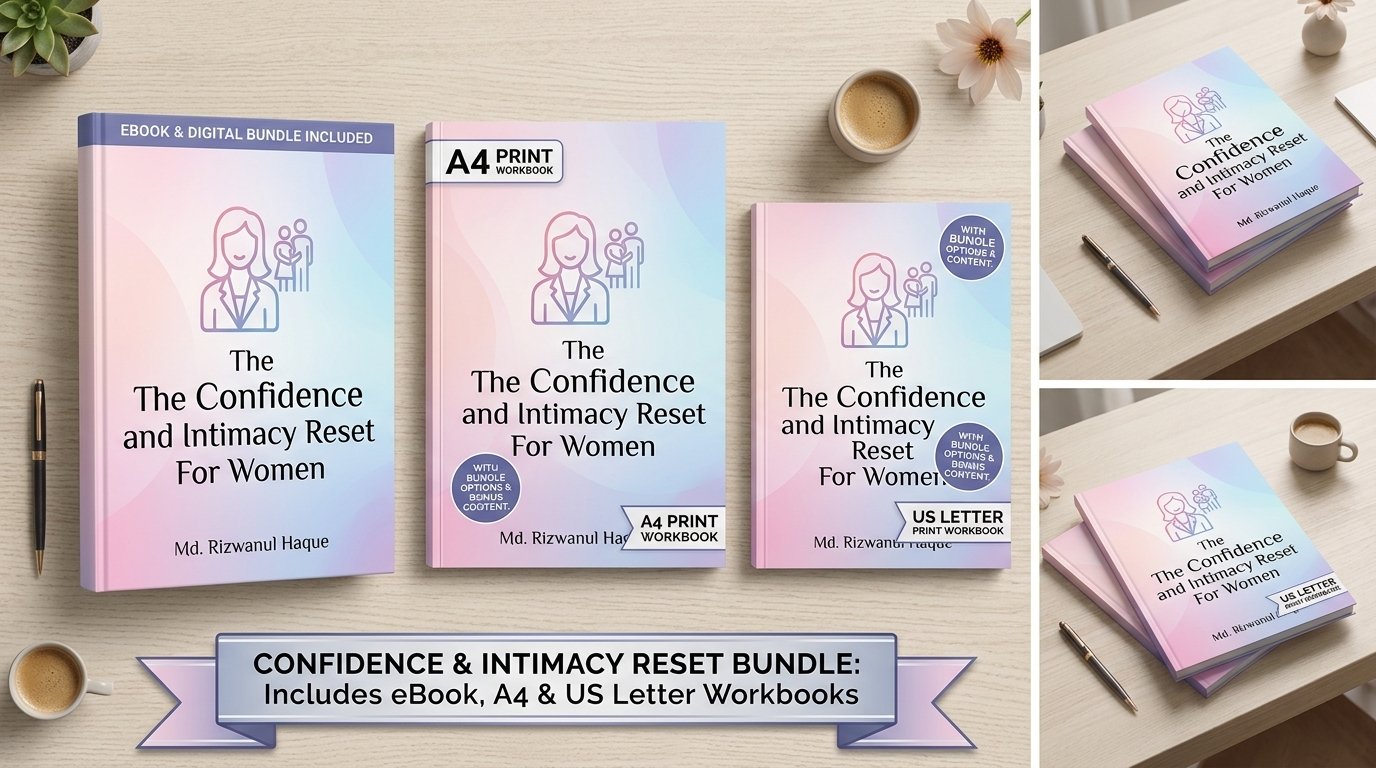
Explore the resources and choose the format that best supports your journey:
Frequently Asked Questions (FAQs)
Compassionate desire awareness is the practice of observing your body’s signals around intimacy without shame or self-judgment. Instead of asking “What is wrong with me?”, it shifts the focus to “What does my body need to feel safe?” This approach recognizes that low desire is often a protective response to stress, not a personal failure.
Spontaneous desire arises out of the blue, often before any physical stimulation. Responsive desire, a concept popularized by sex educator Emily Nagoski, emerges after a person experiences warmth, safety, and physical connection. Both are completely normal, but responsive desire is more common in women, especially under stress.
Stress activates the sympathetic nervous system (fight-or-flight), releasing cortisol. This state prioritizes survival over reproduction, effectively hitting the “brakes” on your libido. Your body cannot easily transition from a state of high alert to a state of vulnerability and pleasure without a deliberate “bridge” of safety and relaxation.
Frame the conversation around your body’s needs, not your partner’s shortcomings. Use “I” statements: “I love you, and I want to feel close to you. Right now, my body is feeling overwhelmed, and I need us to focus on non-sexual touch and relaxation first.” This removes blame and invites teamwork.
A “desire brake” is anything that inhibits your ability to feel turned on. While “accelerators” are things that turn you on, brakes include exhaustion, resentment, body image issues, financial stress, or feeling “touched out” from childcare. Identifying and gently reducing one brake is a core step in rebuilding intimacy.
There is no fixed timeline, as it depends on the severity of chronic stress and individual physiology. However, with consistent, gentle practices like prioritizing sleep, setting boundaries, and engaging in non-demanding touch, many women begin to notice a shift in their body’s sense of safety within 2 to 4 weeks.
Yes. Hormonal contraceptives can alter natural hormone fluctuations, which may blunt libido or change how you experience desire for some women. If you suspect your medication is impacting your intimacy, consult a healthcare provider to discuss alternative options that align with your body’s needs.
No. While relationship dynamics (like unresolved conflict or lack of emotional safety) can act as “brakes,” low desire is frequently linked to individual factors such as chronic stress, sleep deprivation, hormonal shifts, or medication side effects. It is rarely just a “relationship problem.”
Conclusion
Reclaiming your intimacy does not require forcing your body to perform; it begins with listening to what it truly needs. By shifting from self-attack to self-understanding, recognizing your unique “desire brakes,” and honoring the reality of responsive desire, you create the necessary bridge from stress to safety. Remember, compassionate desire awareness is not a quick fix, but a lifelong practice of kindness toward yourself.
If you are ready to move beyond gentle starting points and engage in deeper, structured reflection, The Confidence & Intimacy Reset For Women eBook and workbook bundle is designed to guide you. With practical scripts, worksheets, and science-backed prompts, it will help you turn self-knowledge into lasting, shame-free connection. Explore the Bundle Here.