

The Relationship Between Stress and Low Desire: A Compassionate Guide to Reclaiming Intimacy #WomensHealth #IntimacyReset
Stress and desire are deeply interconnected, and understanding this link is the first step toward reclaiming your intimacy. If you love your partner but find your body feeling closed off, exhausted, or “touched out,” you are not broken. Many women mistakenly believe that low desire is a personal or relationship failure, leading to shame and emotional loneliness.
In reality, a stressed body does not ask, “What would feel good?” It asks, “What problem needs to be handled first?” By shifting your focus from fixing a “flaw” to creating nervous system safety, you can gently release the “desire brakes” holding you back. This guide will show you how to understand your body’s signals without shame and take small, compassionate steps toward reconnection.
Why Stress and Desire Are Connected: The Physiology of Arousal
Desire does not happen in a vacuum. It happens inside a living, breathing body. When the body is overloaded, desire may not disappear forever. It may simply be buried under stress, pressure, exhaustion, resentment, fear, or emotional noise.
Somatic therapists note that desire originates in a state of physiological safety. When the body is full of stress signals, pleasure may not come easily. A stressed body does not first ask, “What would feel good?” It asks, “What problem needs to be handled first?”
That is why the better question is not always, “What is wrong with me?” A more compassionate question is, “What is my body carrying?” This shift matters because shame makes low desire feel like a permanent flaw, while understanding turns it into actionable information. According to the Mayo Clinic, chronic stress triggers a cascade of physiological responses that directly compete with the body’s capacity for sexual arousal and relaxation.
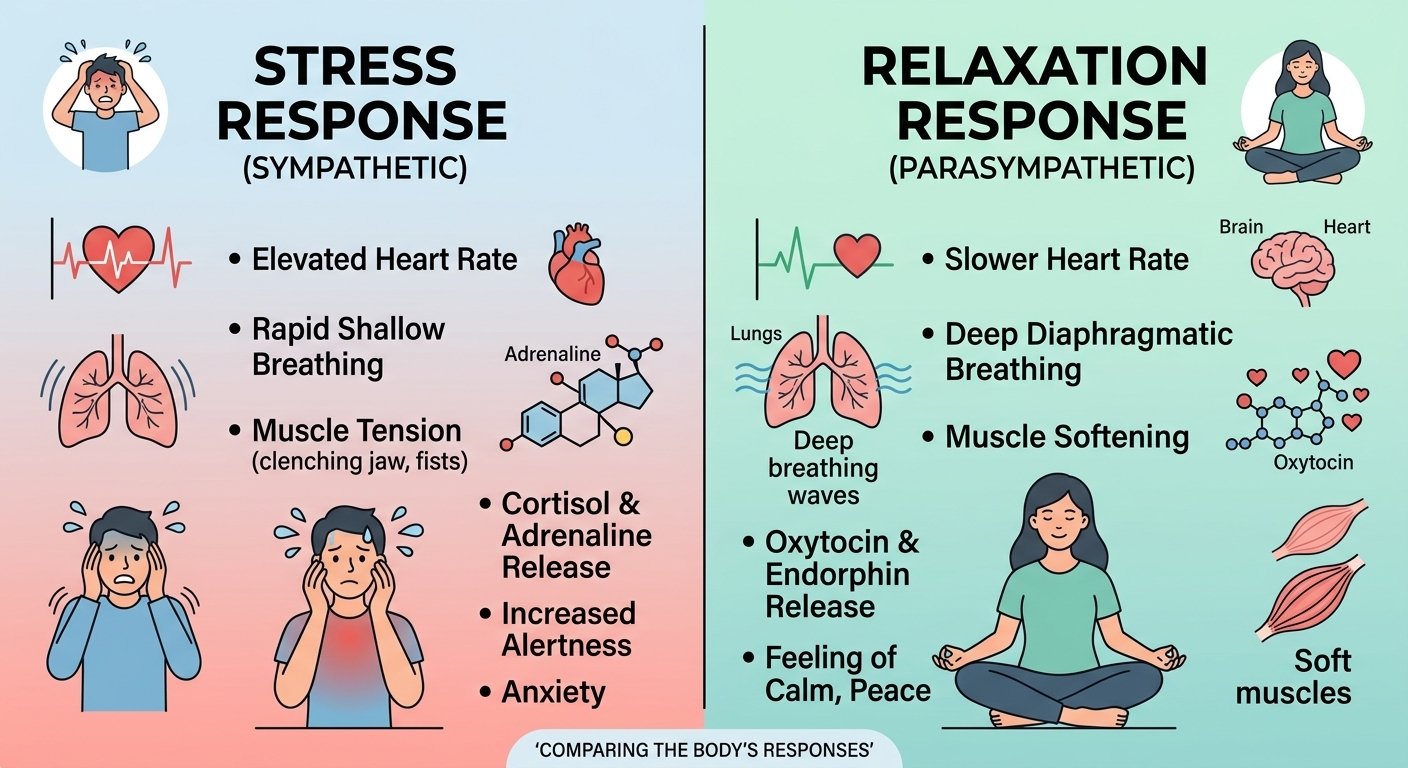
The Cortisol vs. Oxytocin Dynamic
To understand how stress physically blocks arousal, we must look at hormones. When you experience chronic stress, your adrenal glands pump out cortisol, the primary stress hormone. Cortisol’s evolutionary job is to keep you alert and ready to face a threat.
However, cortisol and oxytocin (the “bonding” or “love” hormone) operate on a physiological seesaw. High cortisol levels actively suppress oxytocin production. Since oxytocin is essential for feelings of trust, relaxation, and sexual arousal, a cortisol-dominant state makes it biologically difficult for the body to transition into a state of pleasure. Your nervous system is prioritizing survival over reproduction, acting as a natural “desire brake” until safety is restored.
The Dual Control Model of Sexual Response
This hormonal dynamic is perfectly illustrated by the Dual Control Model of sexual response, a well-established framework in sexology popularized by researchers like Dr. Emily Nagoski. This model suggests that sexual response is governed by two separate systems: the sexual “accelerator” (what turns you on) and the sexual “brakes” (what turns you off).
Stress is one of the most powerful brakes. Even if your accelerator is working perfectly, slamming on the brakes due to exhaustion, financial worry, or relationship tension will stop arousal in its tracks. Recognizing this helps remove the blame. You do not have a broken accelerator; you simply have active brakes that need gentle releasing.
Low Desire in Women Is Not a Personal Failure
Many women feel deeply ashamed when desire feels low. They may think they are not loving enough, feminine enough, open enough, or attractive enough. But low desire in women often needs context, not criticism.
Low desire in women is rarely a personal failure; it is typically shaped by a combination of these factors:
- Chronic stress and mental load
- Inadequate or poor-quality sleep
- Underlying physical health conditions
- Side effects from medications (e.g., SSRIs, birth control)
- Physical pain or pelvic floor tension
- Mood fluctuations or burnout
- Hormonal shifts (postpartum, perimenopause, menopause)
- Current life stage demands (e.g., young children, career peaks)
- Relationship context and unresolved conflict
- Lack of body safety or past trauma
For those seeking to remove shame from this equation, exploring shame-free body education can be a transformative first step. A woman does not need to attack herself for low desire. She can begin by learning what her body may need before desire can safely return.
The 10 Common “Desire Brakes”
If you are wondering what stops desire from happening, consider these common internal and external brakes:
- Exhaustion: The sheer physical depletion of daily life.
- Mental Load: Constantly planning, remembering, and managing household tasks.
- Body Image Concerns: Feeling disconnected from or critical of your physical form.
- Unresolved Resentment: Lingering anger over unequal division of labor.
- Performance Pressure: Feeling that intimacy is an obligation or a “chore.”
- Lack of Transition Time: Moving directly from work or parenting mode to partner mode.
- Medical Factors: Hormonal imbalances or medication side effects.
- Emotional Loneliness: Feeling unseen or unheard by your partner.
- Environmental Stressors: Financial worries, job insecurity, or noisy living spaces.
- Trauma History: Past experiences that make vulnerability feel dangerous.
What Nervous System Safety Really Means
If the solution to stress-induced low libido is safety, what does that actually look like in practice?
Nervous system safety means the body feels safe enough to soften, rest, connect, and become present.
It does not mean life is perfect or free of problems. It means the body has received enough signals of safety to stop staying in constant alert mode. Stress is physical. When the brain senses stress, heart rate may rise, breathing may become shallow, muscles may tighten, the jaw may clench, and attention may narrow.
Pleasure needs a different state. The body needs to feel safe enough, attention needs to turn inward, breathing needs to deepen, and there needs to be room for sensation, trust, and comfort. That is why being told to “just relax” often does not work. A body that has spent the whole day planning, managing, and caring for others cannot always become soft on command. It may need a bridge. For more science-backed steps on this, read our guide on nervous system safety to restore desire.

Signs of Nervous System Dysregulation in Relationships
How do you know if your nervous system is dysregulated? Look for these subtle signs of nervous system dysregulation in relationships:
- Feeling “touched out” or physically recoiling from non-sexual touch.
- Unexplained pelvic floor tension or clenching.
- Irritability or a short fuse with your partner over minor issues.
- A sense of dread or anxiety when your partner initiates intimacy.
- Difficulty being present during moments of connection, leading to mental distraction.
Responsive Desire vs. Spontaneous Desire: What’s the Difference?
Many women expect desire to appear suddenly, out of the blue, just as it might have in the early stages of a relationship. But desire does not always begin before connection. Sometimes it appears after connection.
Understanding the difference between spontaneous and responsive desire is crucial for rebuilding emotional intimacy.
Responsive desire is defined as desire that emerges only after physical or emotional warmth, safety, and connection have been established. In contrast, spontaneous desire arises internally, seemingly out of nowhere.
| Feature | Spontaneous Desire | Responsive Desire |
|---|---|---|
| Trigger | Arises internally, seemingly out of nowhere. | Emerges after physical or emotional warmth is introduced. |
| Timing | Desire comes first, leading to arousal. | Arousal and connection come first, leading to desire. |
| Prevalence | More common in early relationships or high-testosterone states. | Highly common and completely normal for women in long-term relationships. |
| Requirement | Minimal external context needed. | Requires safety, warmth, and a lack of pressure. |
Why Warmth and Connection Must Come First
If you identify with responsive desire, it does not mean something is wrong with you. It may simply mean your body needs the right conditions first. Those conditions may include a slower evening, adequate rest, privacy, emotional warmth, touch without expectations, less pressure, a clear “no,” a calm conversation, or help with daily responsibilities.
Asking yourself, “What condition does my body need before desire can wake up?” turns desire from a demand into a compassionate conversation with your body. For more insights on fostering this dynamic, explore our resources on emotional intimacy.
The Role of Somatic Healing in Rebuilding Libido
Somatic healing focuses on the connection between the mind and the body, emphasizing that trauma and stress are stored in our physical tissues. When it comes to rebuilding libido, somatic healing helps individuals reconnect with their bodies in a gentle, non-demanding way.
Instead of trying to “think” your way into desire, somatic practices encourage you to “feel” your way back to safety. This might involve mindful breathing, gentle stretching, body scanning, or simply noticing where you hold tension without trying to immediately fix it. By practicing self-compassion and learning to read your body’s subtle cues, you can gradually rebuild body confidence. This process teaches the nervous system that intimacy can be a source of comfort rather than another item on a stressful to-do list.
How Stress Affects Confidence and Communication
When stress blocks desire, women may become silent. A woman may avoid explaining what she feels because she does not want to hurt her partner’s feelings. She may say, “I’m just tired,” when the truth is much more layered. She may feel intense pressure to be available before her body is ready, or she may withdraw entirely because she lacks the language for what is happening inside.
This dynamic can severely impact emotional intimacy. Not because she does not care. Not because she is rejecting love. Not because desire is permanently gone. But because stress can make the body guarded, and shame can make communication feel impossible.
Compassionate desire awareness helps a woman replace silence with honest, boundary-setting language. These are not selfish sentences; they are honest sentences that protect the relationship from resentment.
Scripts for a Calm Conversation
If you are wondering how to tell your partner you are stressed and not in the mood, having a pre-planned script can reduce the anxiety of the moment. Here is a concrete, calm conversation example you can adapt:
“I love you, and I want to connect, but my body feels overwhelmed right now. I need 20 minutes of quiet transition time before we can be close.”
Another option for boundary setting:
“I am feeling a lot of pressure today, and my body is holding onto that stress. Can we just cuddle or sit together without any expectation of sex tonight?”
These scripts validate your partner’s importance while clearly stating your physiological needs.
One Reflection Prompt to Begin Your Reset Today
You do not need to overhaul your entire life overnight. Start with a single moment of reflection. Use this reflection prompt in a journal tonight:
“What is one stress signal my body has been carrying, and what condition might help my desire feel safer to return?”
Write without judging yourself. You may discover that your body needs rest. You may discover that your body needs emotional repair. You may discover that your body needs privacy, a clear boundary, or touch without expectation. The goal is not to force desire. The goal is to understand the conditions that help desire feel safe.
One Small Action Step: Reducing Your Strongest Desire Brake
After the reflection prompt, choose one small, manageable action. Possibility creates confidence, so do not choose the hardest step first.
Write down:
- My strongest desire brake right now is __________.
- One kind way to reduce one brake is __________.
Examples:
- Brake: Exhaustion. Action: Going to bed 30 minutes earlier twice this week.
- Brake: Emotional tension. Action: Having one calm conversation before intimacy is expected.
- Brake: Pressure. Action: Asking for affection with zero expectation of it leading to sex.
- Brake: No transition time. Action: Creating ten quiet minutes after work to decompress before engaging with family.
Small steps matter because the nervous system often trusts consistency more than intensity. If you find these guided journal prompts helpful, you can explore more structured exercises in our workbook bundle, designed to turn awareness into sustainable action.
When to Seek Professional Support (Risks & Alternatives)
While stress is a primary driver of low libido, it is important to acknowledge when professional support is necessary. This guide is educational and should not replace medical, legal, or therapeutic advice.
Consider seeking a medical evaluation or consulting a professional if you experience:
- Sudden, unexplained changes in libido accompanied by other physical symptoms (e.g., hair loss, weight changes, severe fatigue), which could indicate thyroid or hormonal issues.
- Pain during intercourse (dyspareunia), which requires assessment by a gynecologist or pelvic floor physical therapist.
- Persistent feelings of depression, anxiety, or trauma that interfere with daily functioning.
- Relationship conflicts that feel unresolvable without the help of a licensed couples counselor or sex therapist.
Recognizing these red flags is a sign of self-advocacy, not failure.
Why the Full Confidence & Intimacy Reset Bundle Helps
A blog post can help name the pattern, but real, lasting change often needs repeated reflection, new language, and consistent practice. That is where The Confidence & Intimacy Reset For Women and the accompanying resources become invaluable.
This comprehensive program helps readers understand how stress, self-talk, physiology, and desire are deeply intertwined. It guides you through structured phases of rebuilding body confidence, understanding pleasure without shame, and turning self-knowledge into lasting connection.
The workbook bundle specifically gives readers dedicated space to slow down, write honestly, use targeted guided journal prompts, practice communication scripts, and turn awareness into daily action. It includes 15+ guided journal prompts and 3 detailed communication scripts to bridge the gap between knowing what to do and actually doing it.
You can explore the Complete Confidence and Intimacy Reset Bundle to access these transformative tools.

Key Takeaways: Reclaiming Your Intimacy Journey
As we wrap up, remember these core truths about your journey:
- Stress and desire are deeply interconnected; your body’s response is a natural survival mechanism, not a personal flaw.
- Low desire in women is rarely a personal or relationship failure; it is a signal that needs decoding.
- A stressed body will always prioritize safety, tasks, and problem-solving before pleasure.
- Nervous system safety helps the body soften without pressure, creating the foundation for connection.
- Responsive desire is completely normal and may appear only after warmth, safety, and connection are actively created.
- A helpful daily reflection prompt is: “What condition might help my desire feel safer to return?”
- Guided resources, like the eBook and workbook bundle, offer a fuller reset path through structured reflection, worksheets, and action prompts.
Frequently Asked Questions (FAQ)
Chronic stress elevates cortisol, which directly suppresses oxytocin and testosterone, the hormones responsible for arousal. Your nervous system prioritizes survival over reproduction, acting as a “desire brake” until safety is restored.
Spontaneous desire arises out of the blue, while responsive desire emerges only after physical or emotional warmth, safety, and connection have been established. Both are completely normal.
High cortisol keeps the body in “fight or flight” mode. This causes muscle tension, shallow breathing, and mental distraction, making it physiologically difficult for the body to relax enough to experience pleasure or intimacy.
A desire brake is any internal or external factor (like stress, exhaustion, body shame, or relationship tension) that signals to your nervous system that it is not safe to be vulnerable or aroused.
Use a calm, honest script: “I love you, and I want to connect, but my body feels overwhelmed right now. I need 20 minutes of quiet transition time before we can be close.”
Start with micro-actions: deepen your breathing, create a 10-minute transition routine after work, ask for help with household tasks, and engage in non-sexual, pressure-free touch to signal safety to your body.
Yes, for many women, low desire is a natural response to stress, not a permanent dysfunction. By reducing “desire brakes” through somatic healing, better communication, and nervous system regulation, natural desire often returns.
Stress and desire are deeply interconnected. When the brain perceives stress, it diverts energy away from the reproductive and pleasure systems to focus on immediate survival, temporarily pausing libido until the threat passes.
Explore the Complete Confidence and Intimacy Reset Bundle
Ready to move from confusion into guided reflection and practice? You do not have to figure this out alone. If you are ready to move from confusion into guided, shame-free practice, explore The Confidence & Intimacy Reset For Women and the accompanying workbook bundle.
Download your resources today and take the next gentle step toward reclaiming your intimacy.
Get The Confidence & Intimacy Reset For Women