

Bridging the Pleasure Gap: A Guide to Pressure-Free Intimacy & Confidence
For many women, the pleasure gap quietly transforms what should feel good into something that feels like performance. You may feel pressure to respond quickly, seem satisfied, protect your partner’s feelings, or make intimacy look effortless even when your body feels uncertain. This pressure isn’t your fault. It is a pattern rooted in education gaps, cultural scripts, and misunderstood physiology.
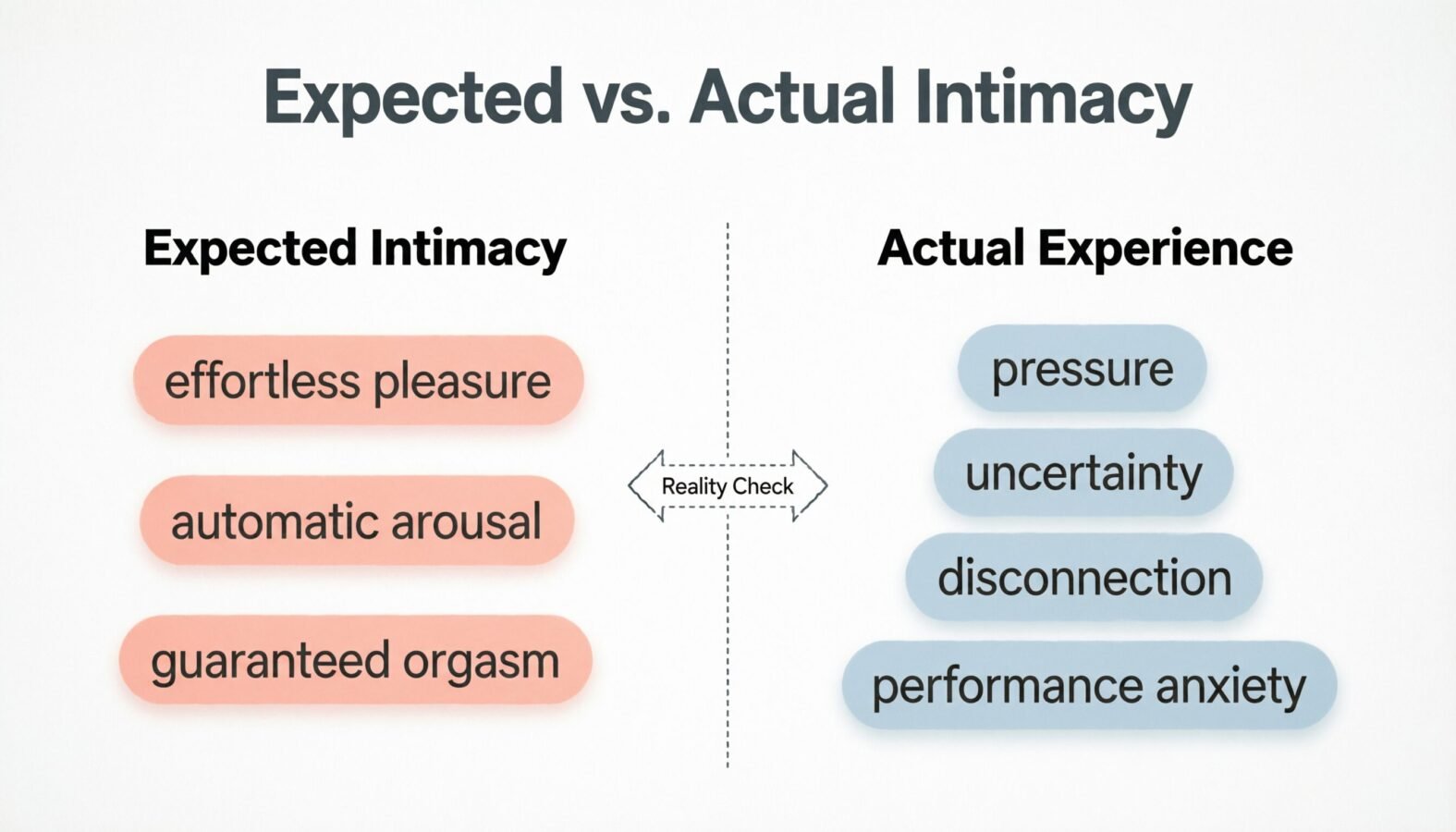
The pleasure gap refers to the difference between what intimacy is expected to feel like and what many women actually experience. When you understand this isn’t personal failure but a systemic pattern, shame can begin to soften, and healing can begin.
This guide explains what creates the pleasure gap, how it affects your body confidence, and provides five actionable steps to reclaim pressure-free intimacy. It also includes gentle scripts you can use tonight to start shifting the dynamic.
What Is the Pleasure Gap? A Clear Definition
The pleasure gap refers to the difference between what intimacy is expected to feel like and what many women actually experience. It encompasses the disconnect between cultural messages about how sex “should” feel and the reality of many women’s intimate lives. In this reality, pleasure is often secondary to performance, partner satisfaction, or simply getting through the experience.
This gap isn’t just about orgasm frequency, though that is part of it. It is also about education, communication, body confidence, emotional safety, and the invisible pressure many women carry inside intimate experiences. According to recognized sexuality education standards from organizations like the American Association of Sexuality Educators, Counselors and Therapists (AASECT), comprehensive sex education should address these dimensions. Yet, many women receive little to no guidance on their own pleasure.
How the Pleasure Gap Shows Up in Real Life
The pleasure gap manifests in ways that may feel familiar if you have experienced intimacy as more stressful than satisfying:
- Not feeling fully present during intimate moments.
- Feeling pressure to orgasm on command or within a certain timeframe.
- Feeling unsure what actually feels good for your body.
- Pretending to enjoy something to avoid awkwardness or hurt feelings.
- Staying silent about discomfort or pain.
- Feeling guilty for needing more time or different stimulation.
- Feeling disconnected from your body during intimacy.
- Measuring intimacy success only by whether climax occurred.
These experiences don’t mean you are broken or dysfunctional. They may mean your body is asking for more safety, more time, clearer communication, more knowledge about your own anatomy, or simply less pressure. When you learn more about why women feel disconnected from their bodies, you begin to understand that disconnection is often a protective response, not a personal failing.
Understanding the Orgasm Gap: The Bigger Picture
The orgasm gap—the statistical difference in orgasm frequency between men and women during partnered sexual activity—is a well-documented phenomenon that provides important context for understanding the pleasure gap. Research published in the Archives of Sexual Behavior (Frederick et al., 2018) has consistently shown that men orgasm significantly more frequently than women in heterosexual encounters, with some studies showing men orgasm two to three times more often.
This isn’t just a numbers problem. The orgasm gap reflects deeper issues about whose pleasure is prioritized, what kind of stimulation is considered “normal,” and how much education people receive about female anatomy and arousal patterns. When we talk about the orgasm gap, we are really talking about systemic patterns in how society approaches sexuality, not individual shortcomings.
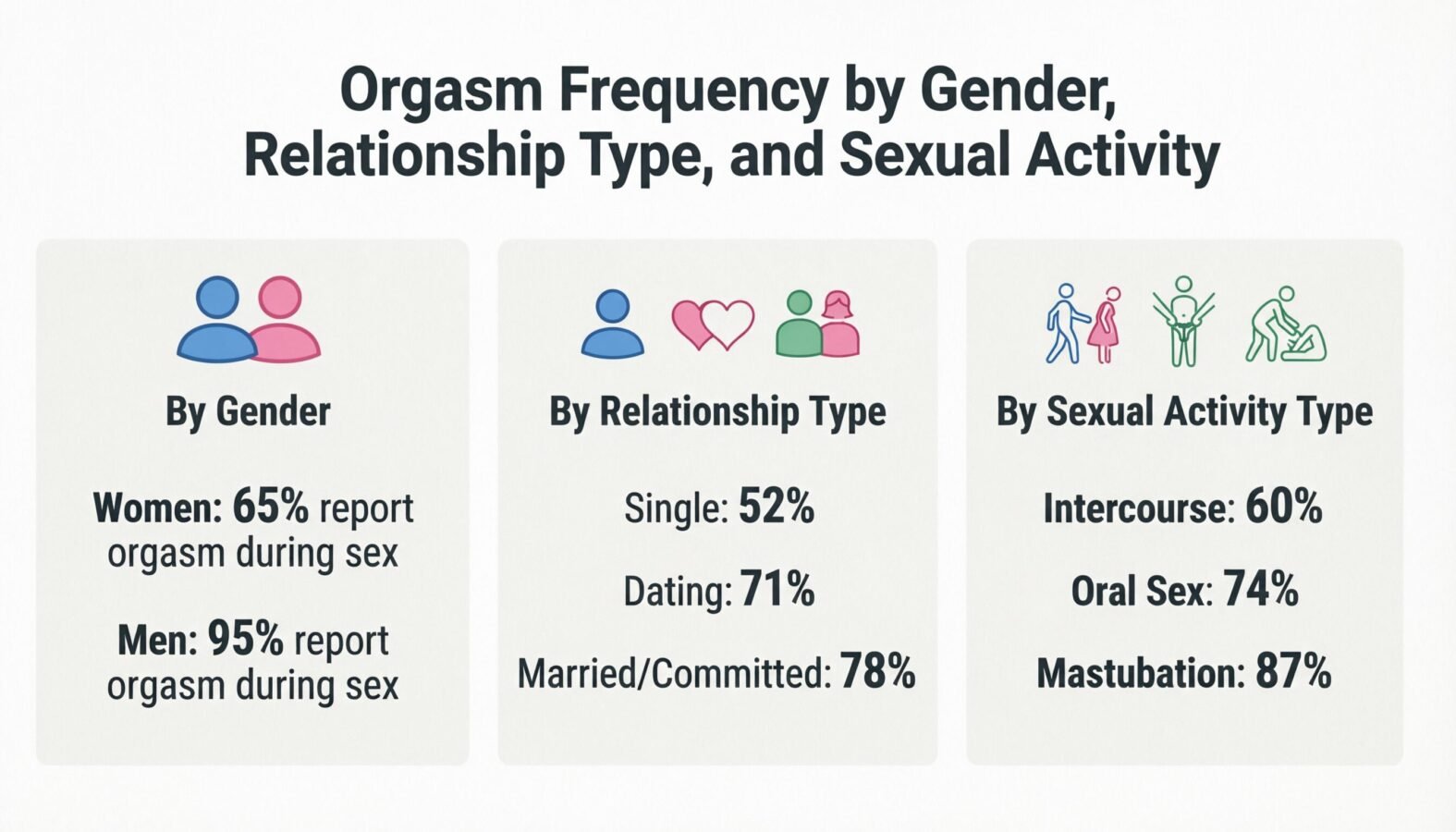
Understanding this broader context helps remove self-blame. If you are experiencing the pleasure gap, you are not alone, and it is not evidence that something is wrong with you. It is evidence that something is wrong with how we have been taught to think about and experience intimacy. For more on building intimacy confidence, it is essential to recognize these patterns as systemic rather than personal.
What Causes the Orgasm Gap?
Multiple interconnected factors create and maintain the orgasm gap:
- Inadequate Sex Education: Most sex education focuses on reproduction, STI prevention, and male anatomy. Clitoral anatomy, female arousal patterns, and pleasure-based education are rarely covered comprehensively.
- Cultural Scripts: Media, pornography, and cultural narratives often portray sex as something that happens to women rather than something they actively experience and direct.
- Physiological Misunderstanding: Many people don’t understand that most women require clitoral stimulation to orgasm, that arousal non-concordance is normal, or that desire often follows arousal rather than preceding it.
- Communication Barriers: Many women lack the language, confidence, or sense of permission to communicate their needs clearly.
- Performance Pressure: When orgasm becomes the measure of sexual success, both partners can become anxious, which actually inhibits the relaxation needed for pleasure.
Addressing these root causes requires education, patience, and a willingness to challenge old assumptions about how intimacy “should” work.
Pleasure Gap vs. Orgasm Gap: What’s the Difference?
While these terms are related, they are not identical:
| Pleasure Gap | Orgasm Gap |
|---|---|
| Broader concept encompassing overall satisfaction and enjoyment. | Specific statistical difference in orgasm frequency. |
| Includes emotional, psychological, and physical dimensions. | Primarily measured as a binary outcome (orgasm or not). |
| Can exist even when orgasm occurs. | Specifically about frequency disparity. |
| Focuses on the quality of the experience. | Focuses on a measurable outcome. |
| Addresses pressure, shame, and disconnection. | Addresses statistical inequality. |
Both gaps matter, and they often overlap. You can experience the pleasure gap even if you do orgasm, if the experience felt pressured, disconnected, or unsatisfying. True pressure-free intimacy requires addressing both the statistical reality of the orgasm gap and the experiential reality of the pleasure gap.
Why Pleasure Quietly Becomes Performance
Pleasure transforms into performance when intimacy stops being about your experience and starts being about meeting expectations. These expectations may come from your partner, society, or your own internalized standards. This shift happens gradually, often without conscious awareness, until you find yourself monitoring your responses instead of feeling them.
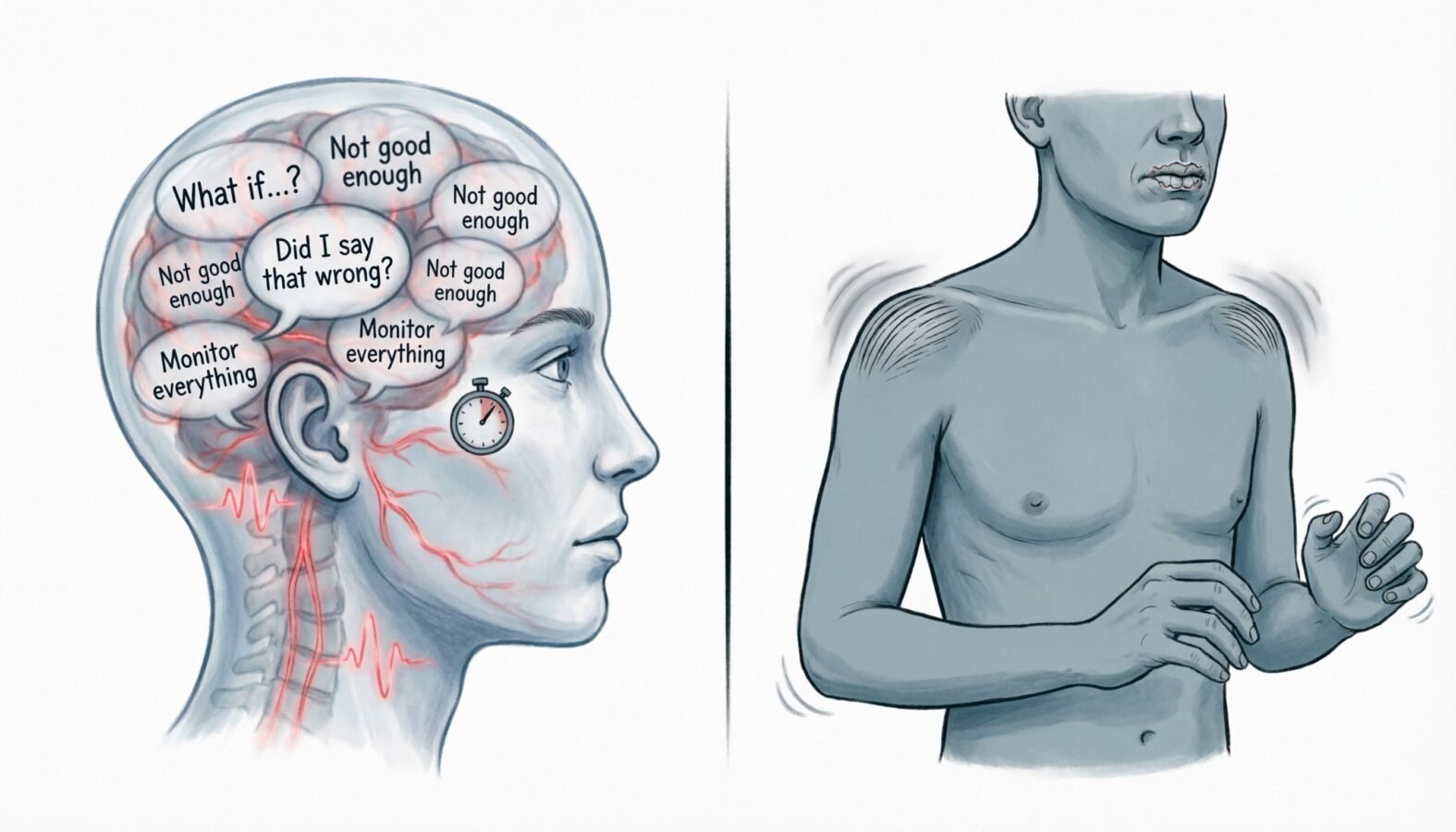
Many women report feeling watched, measured, rushed, or responsible for their partner’s emotional state during intimacy. When you are focused on whether you are “doing it right,” your attention moves from your body to your mind. Instead of receiving sensation, you are evaluating it. Instead of being present, you are performing.
This mental shift has real physiological consequences. When your brain is in evaluation mode, your body cannot fully relax into pleasure. Desire needs emotional safety, attention, trust, and space to arrive naturally. When pressure becomes too strong, the body may not feel free enough to respond, creating a frustrating cycle where trying harder actually makes things worse.
The Mental Scripts That Create Pressure
These internal thoughts are common among women experiencing the pleasure gap. Do any sound familiar?
- “Am I taking too long?” This assumes there is a correct timeline for arousal, ignoring that women’s arousal patterns vary widely.
- “Should I pretend?” This arises when you are trying to protect your partner’s feelings or avoid awkwardness, creating long-term distance.
- “Will my partner feel rejected if I don’t orgasm?” This places responsibility for your partner’s emotional state on your body’s response.
- “Why doesn’t my body respond faster?” This ignores the complex interplay of nervous system state, emotional safety, and mental presence required for arousal.
- “Is something wrong with me?” This internalizes systemic problems as personal failure, creating shame that further inhibits pleasure.
Recognizing these mental scripts is the first step toward rewriting them. They are learned responses, not character flaws.
How Pretending Creates Distance from Your Body
When you pretend to enjoy intimacy, you are often trying to protect something: the moment, your partner’s feelings, the relationship, or yourself from an uncomfortable conversation. This self-protection is understandable. However, over time, pretending creates a subtle but significant distance between you and your body.
Each time you override your authentic experience to present a different version, you teach your body that its signals don’t matter. You learn to disconnect from sensation to maintain the performance. Healing requires gently rebuilding trust with your body, learning that your authentic experience is valid and worthy of expression, even when it is messy or complicated.
The Physiology of Pressure: Your Nervous System Explained
Understanding what happens in your body when you feel pressure during intimacy is essential for healing the pleasure gap. Your nervous system plays a crucial role in sexual response. When it is in the wrong state, no amount of willpower or technique can create pleasure.
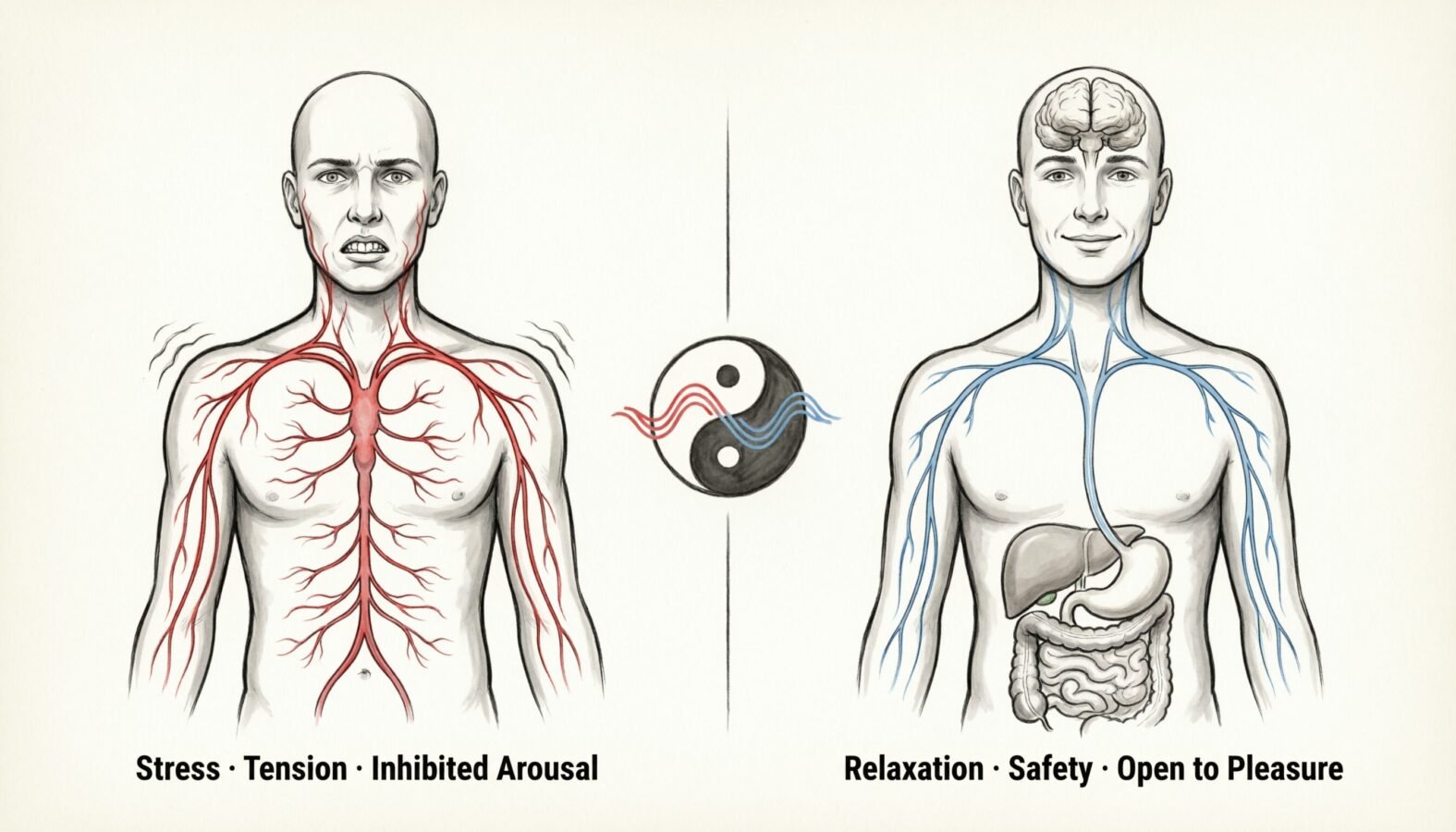
Your autonomic nervous system has two primary modes: sympathetic (fight-or-flight) and parasympathetic (rest-and-digest). Sexual arousal and pleasure require parasympathetic activation—a state of safety, relaxation, and present-moment awareness. When you are feeling pressured, anxious, or self-critical, your sympathetic nervous system activates, which directly inhibits sexual response.
This isn’t a flaw or weakness. It is intelligent physiology. Your body prioritizes survival over reproduction. When it perceives stress, it diverts resources away from sexual response. Blood flow changes, muscles tense, and sensation diminishes. You are not failing to respond; your nervous system is doing exactly what it is designed to do.
Understanding Arousal Non-Concordance
Arousal non-concordance is a crucial concept that many women find liberating once they understand it. It refers to the disconnect between your mental arousal (what you are thinking and feeling) and your physical arousal (your body’s physiological responses).
Research shows that women experience arousal non-concordance more frequently than men. You might feel mentally turned on but notice little physical response. Or, your body might show signs of arousal (increased blood flow, lubrication) while your mind feels distracted, anxious, or simply not interested. Both scenarios are completely normal.
Understanding arousal non-concordance prevents self-blame. It helps you focus on what actually feels good rather than what “should” be happening. It is one reason why comprehensive women pleasure education is so important. Knowledge about normal physiological variation reduces shame and increases body trust.
How Emotional Safety Affects Physical Response
The connection between emotional safety and physical sexual response isn’t just psychological; it is physiological. When you feel emotionally safe, your parasympathetic nervous system can activate, allowing blood flow to increase, muscles to relax, and sensation to heighten. When you feel unsafe, your body prioritizes protection over pleasure.
Emotional safety in intimacy includes:
- Feeling free to express your needs without judgment.
- Knowing your boundaries will be respected.
- Trusting that vulnerability won’t be used against you.
- Having space to change your mind without guilt.
Creating emotional safety requires honest communication, mutual respect, and often, a shift away from goal-oriented intimacy toward connection-oriented intimacy.
10 Signs Pleasure Has Become Pressure in Your Intimacy
Recognizing when pleasure has transformed into pressure is crucial for beginning to heal the pleasure gap. These signs don’t mean you are broken or that your relationship is failing. They are indicators that your body needs more safety, language, and pressure-free space.
If you notice several of these patterns, it is worth exploring what might help you feel safer and more present:
- You focus more on “performing” than feeling. Your attention is on whether you are responding “correctly” rather than on sensation.
- You feel anxious about whether you will orgasm. The question of orgasm dominates your mental space, creating pressure.
- You pretend to enjoy something to avoid awkwardness. You prioritize your partner’s feelings over your authentic experience.
- You feel guilty asking for more time. You worry that your natural pace is inconvenient or disappointing.
- You worry that honesty will disappoint your partner. You fear expressing your true needs will create conflict.
- You ignore discomfort to keep the moment going. You push through physical or emotional discomfort rather than pausing.
- You compare your body’s response to someone else’s. You measure your experience against cultural narratives about how sex “should” be.
- You feel disconnected from your body during intimacy. You notice you are “in your head” rather than present in your physical experience.
- You believe pleasure should happen automatically. You think pleasure should come easily without communication or exploration.
- You judge yourself when desire feels slow or unclear. You interpret variable desire as evidence of a problem rather than a normal pattern.
These signs indicate that your body may need more safety and pressure-free space, not that you are failing at intimacy.
How the Pleasure Gap Affects Your Body Confidence
The pleasure gap doesn’t just affect your intimate experiences; it ripples outward, influencing how you feel about your body in broader contexts. When intimacy consistently feels like a performance test you are failing, it is natural to start believing there is something wrong with your body.
This impact on body confidence can manifest in several ways:
- Feeling less confident in your body’s capabilities and responses.
- Avoiding intimate conversations because they feel too vulnerable or shameful.
- Thinking your body is too complicated, broken, or difficult.
- Comparing yourself to others and finding yourself lacking.
- Feeling ashamed of wanting pleasure (as if desire itself is selfish).
- Feeling ashamed of not experiencing pleasure (as if you are defective).
Both kinds of shame are painful, and both stem from the same root: the belief that your body should work differently than it does. This belief ignores the reality that bodies are diverse, that pleasure is complex, and that the pleasure gap is a systemic issue, not a personal failing.
The Two Types of Shame Women Experience
Women navigating the pleasure gap often experience two distinct but related types of shame:
- Shame about wanting pleasure: This shame tells you that wanting pleasure is selfish or demanding. It suggests that expressing your needs will burden your partner.
- Shame about not experiencing pleasure: This shame tells you that your body is broken or that you are failing at being a sexual being. It interprets the pleasure gap as evidence of personal inadequacy.
Healing requires recognizing that wanting pleasure is healthy and normal, and that not experiencing pleasure isn’t evidence of failure. It is simply information about what needs to change.
Why Women’s Pleasure Education Matters
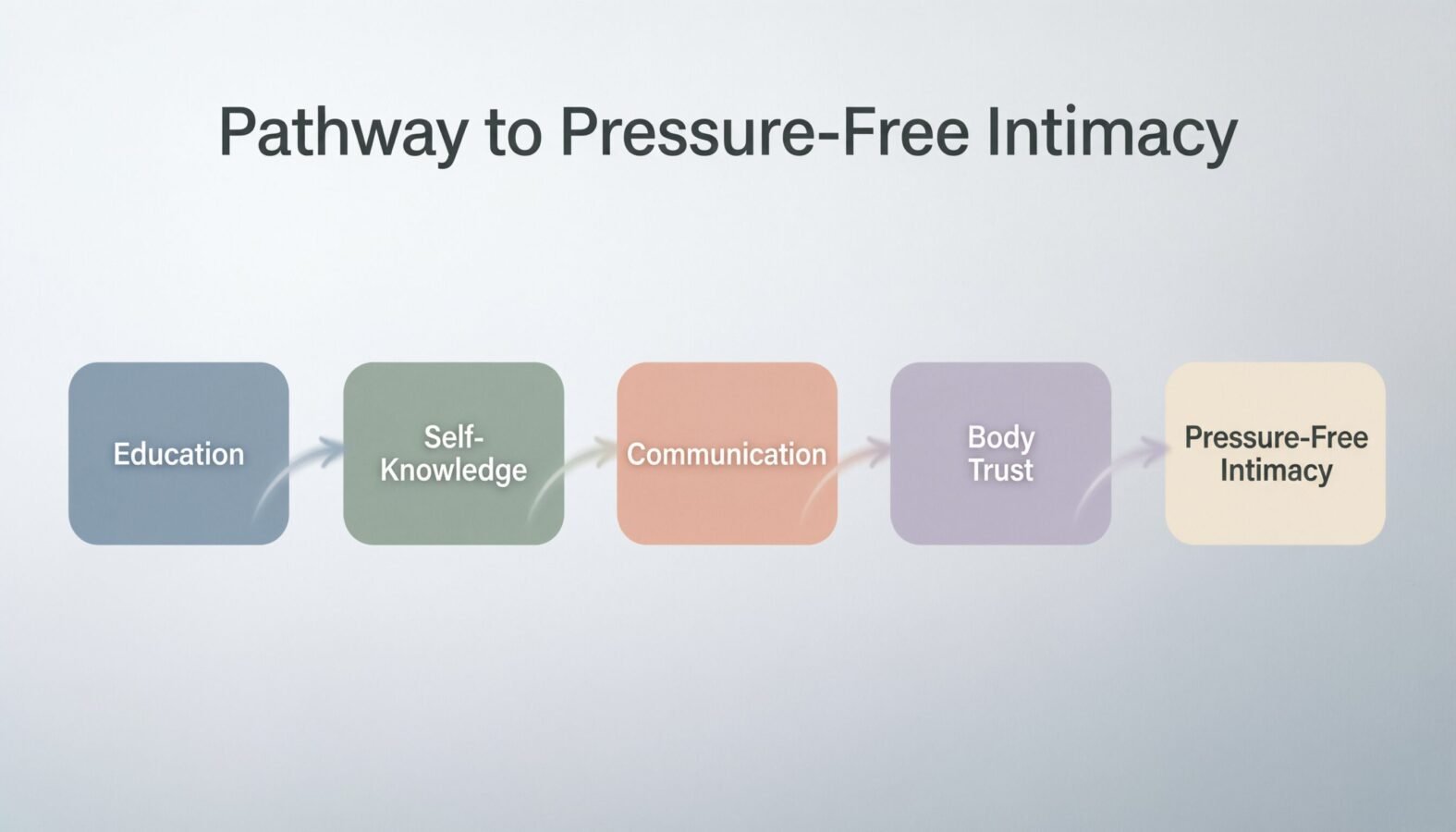
Addressing the pleasure gap requires education. Specifically, it requires education that centers women’s pleasure as valid, important, and worthy of study and exploration. When we talk about women’s pleasure education, we are talking about comprehensive learning that includes understanding your unique anatomy, recognizing normal variation in desire, developing language to communicate your experience, and learning about nervous system regulation.
This kind of education matters because it replaces shame with knowledge, confusion with clarity, and self-blame with self-compassion. It helps women understand that pleasure isn’t only about technique or outcome. It is also about self-knowledge, nervous system safety, communication, desire, body awareness, and emotional trust.
According to AASECT standards for comprehensive sexuality education, pleasure-based education should be inclusive, accurate, and shame-free. Yet, many women never receive this education, leaving them to navigate intimacy without essential knowledge about their own bodies and needs.
What Comprehensive Pleasure Education Includes
A well-rounded pleasure education curriculum addresses multiple dimensions:
- Anatomical Knowledge: Understanding clitoral anatomy and the fact that vaginal penetration alone doesn’t provide adequate stimulation for most women to orgasm.
- Physiological Education: Learning about arousal non-concordance, responsive versus spontaneous desire, and the role of the nervous system.
- Communication Skills: Developing language to express needs and practicing boundary-setting without shame.
- Emotional Literacy: Recognizing the connection between emotional safety and physical response.
- Practical Exploration: Learning about sensate focus exercises and how to create conditions that support pleasure.
- Cultural Critique: Examining how media and cultural narratives shape expectations about sex, and developing your own values.
This education is an ongoing process of learning, unlearning, and relearning. It is the foundation for closing the pleasure gap and building lasting intimacy confidence.
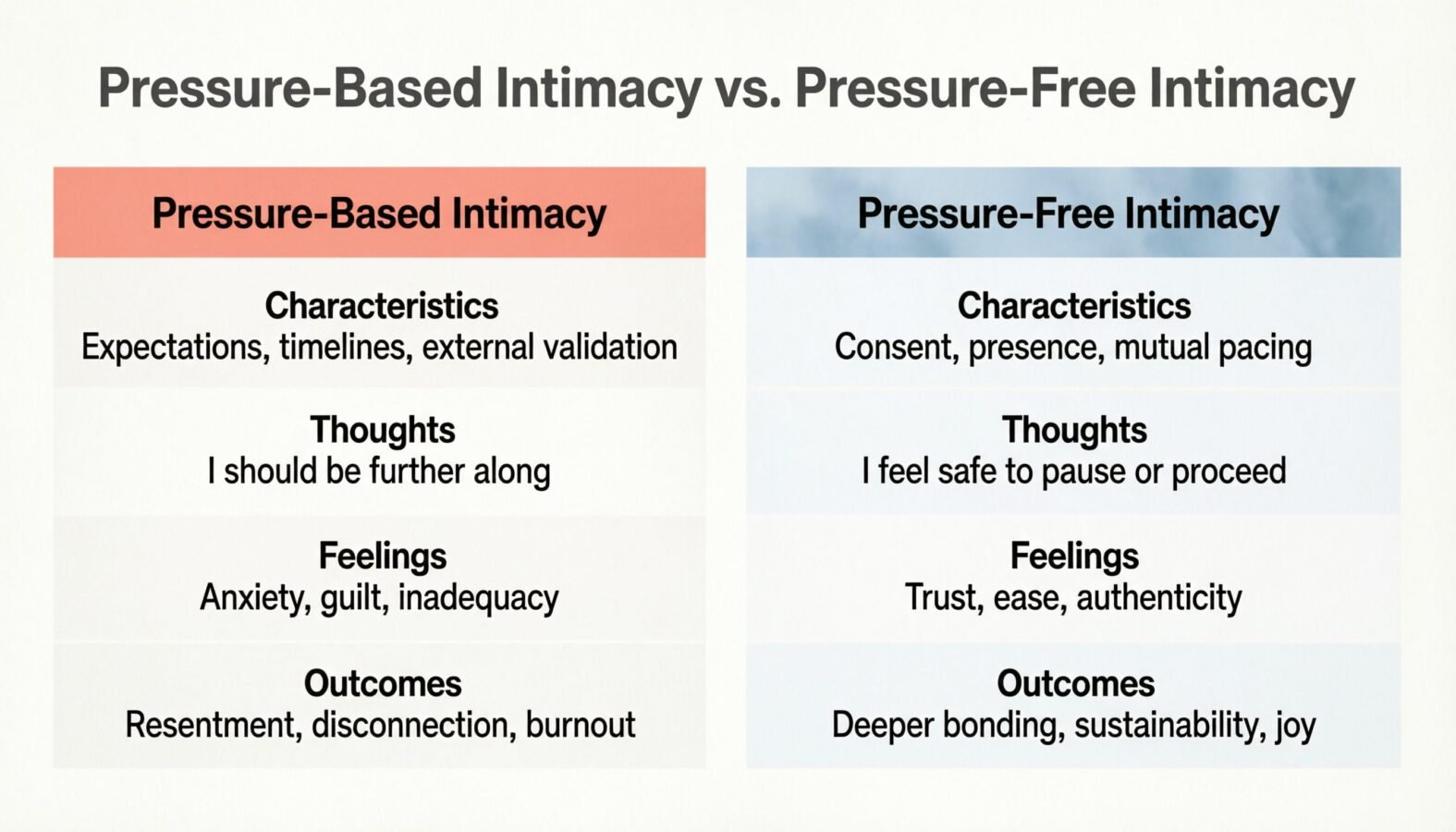
What Pressure-Free Intimacy Actually Looks Like
Pressure-free intimacy isn’t a specific set of behaviors or a guaranteed outcome. It is a quality of experience characterized by presence, safety, honesty, and exploration rather than performance and proof.
Pressure-free intimacy:
- Gives you permission to notice your body honestly, without judgment.
- Makes space for communication before, during, and after intimate moments.
- Allows desire to move at its real pace rather than an expected timeline.
- Respects both comfort and discomfort as valid information.
- Treats pleasure as something to explore, not prove.
- Focuses on connection and experience rather than specific outcomes.
Scripts for Pressure-Free Communication
One of the biggest barriers to pressure-free intimacy is not knowing what to say. These gentle scripts can help you communicate your needs without creating defensiveness or shame:
- “I want to slow down.” Use this when you are feeling rushed. It is simple, direct, and focuses on your experience.
- “I need more time to feel present.” This communicates that presence is important to you, rather than suggesting your partner is doing something wrong.
- “I feel pressure when orgasm becomes the goal.” This names the dynamic without blame, opening space for a different approach.
- “I want us to focus on connection, not performance.” This reframes the purpose of intimacy, shifting from outcome to experience.
- “I’m still learning what feels good for me.” This positions your journey as ongoing and normal, reducing shame.
- “Can we try [specific request]?” Direct, specific requests are often easier for partners to respond to than vague hints.
- “I’m not in the headspace for intimacy right now, but I’d love to [alternative connection activity].” This honors your current state while maintaining connection.
These sentences aren’t rejection. They are part of building intimacy confidence and creating the conditions where genuine pleasure can flourish.
5 Steps to Reclaim Pressure-Free Intimacy
Closing the pleasure gap and reclaiming pressure-free intimacy is a process, not a single event. These five steps provide a framework for beginning that journey. Remember, you don’t have to do them perfectly or in order. This is about exploration, not achievement.
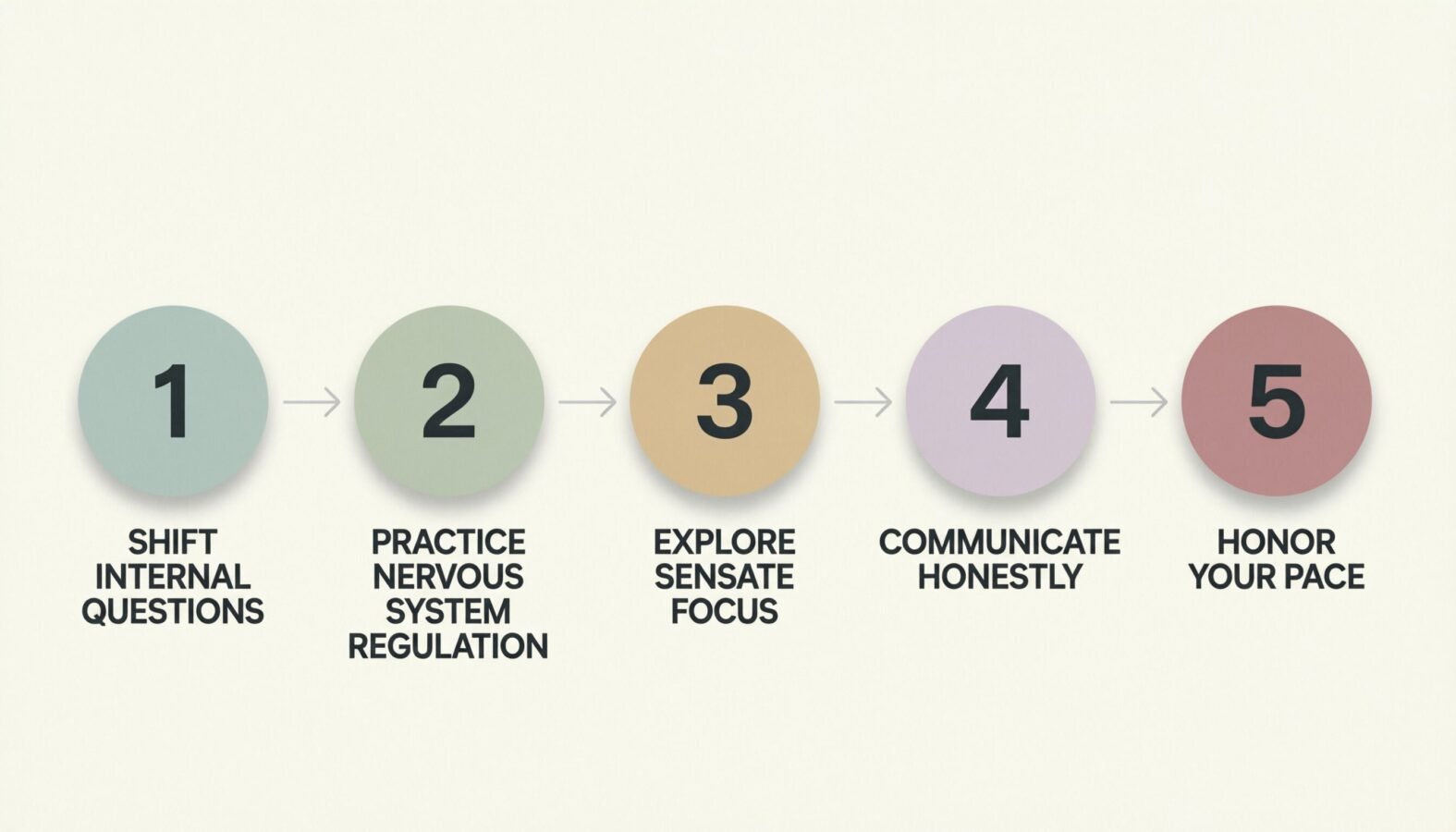
Step 1: Shift Your Internal Questions
The questions you ask yourself during intimacy shape your experience. When you are focused on “Did I orgasm?” you are measuring success by a single outcome, which creates pressure. Try asking different questions instead:
- “Was I present?”
- “Did I feel safe?”
- “Did I honor my pace?”
- “Did I feel respected?”
- “Did I communicate one honest truth?”
These questions shift the focus from performance to presence. They don’t say orgasm is unimportant. It is valid to want orgasm and to grieve when it doesn’t happen. But reducing pleasure to only one outcome places the body back under stress.
This small shift can reduce pressure significantly. Start by choosing one question to focus on for a week. Notice how it changes your experience.
Step 2: Practice Nervous System Regulation
Since pleasure requires parasympathetic nervous system activation, learning to regulate your nervous system is essential. Try these simple practices before or during intimate moments:
- Deep breathing: Slow, deep breaths (4 counts in, 6 counts out) signal safety to your nervous system.
- Grounding: Notice five things you can see, four things you can touch, three things you can hear. This brings you into the present moment.
- Progressive muscle relaxation: Tense and release different muscle groups, noticing the difference between tension and relaxation.
- Warmth: A warm bath or heating pad before intimacy can help your body relax.
Step 3: Explore Sensate Focus Exercises
Sensate focus is a technique developed by Masters and Johnson that removes performance pressure by focusing on sensation rather than orgasm.
- Solo practice: Set aside 10-15 minutes with no goal other than noticing sensation. Touch different parts of your body with varying pressure. Notice what feels neutral, pleasant, or uncomfortable without judgment. The goal isn’t arousal; it is awareness.
- Partner practice: Take turns touching and being touched, with the agreement that the goal is exploration, not arousal or orgasm. The person being touched guides the experience.
These exercises help you reconnect with sensation, build body trust, and practice honest communication—all essential for closing the pleasure gap. For structured guidance through these practices, consider using an intimacy reset workbook that provides step-by-step exercises and reflection prompts.
Step 4: Communicate Honestly
Use the gentle scripts provided earlier to express your needs. Start small. You do not need to have a massive, heavy conversation. A simple, “I’d love to just cuddle and explore touch tonight without any pressure for it to go further,” can completely shift the dynamic.
Step 5: Honor Your Pace
Give yourself unconditional permission to move at your own speed. If you need to pause, pause. If you need to stop, stop. Your pace is the correct pace.
When to Seek Professional Support
While self-education and practice can help many women heal the pleasure gap, there are times when professional support is important or necessary. Pressure-free intimacy means taking discomfort seriously, not pushing through it.
Consider seeking professional support if you experience:
- Pain during intimacy that doesn’t resolve with position changes or lubrication.
- Ongoing discomfort, distress, or emotional overwhelm related to intimacy.
- Trauma responses (flashbacks, dissociation, panic) during intimate moments.
- Relationship conflict around intimacy that you cannot resolve through communication alone.
- Persistent shame or anxiety that interferes with your well-being.
Educational reflection and self-guided work can support awareness, but they shouldn’t replace qualified medical or therapeutic care when it is needed. A healthcare provider can rule out or treat medical conditions, while a therapist—particularly one certified by AASECT or trained in sex therapy—can help you process trauma, challenge shame, and develop personalized strategies.
Self-Guided Workbooks vs. Professional Therapy
Both self-guided workbooks and professional therapy have value, and many women benefit from using both. Here is how to decide:
| Self-Guided Workbooks | Professional Therapy |
|---|---|
| Best for mild to moderate pressure. | Best for trauma, pain, or severe distress. |
| Provide structured reflection and exercises. | Offer personalized guidance and support. |
| More affordable and accessible. | More expensive but covered by some insurance. |
| Work well with a supportive partner. | Helpful when relationship dynamics are complex. |
| Allow you to move at your own pace. | Provide accountability and deeper processing. |
| Good for building foundational knowledge. | Essential for processing past trauma. |
Many women find that combining both approaches works best. Using The Confidence & Intimacy Reset For Women and workbook for daily practice and structured learning, while seeing a therapist for deeper emotional work and personalized support, is a highly effective path.
Key Takeaways: Your Path Forward
As you move forward in healing the pleasure gap and reclaiming pressure-free intimacy, keep these essential truths in mind:
- The orgasm gap and pleasure gap are real patterns, not proof of personal failure. They reflect systemic issues in education, culture, and communication.
- The pleasure gap can affect body confidence, desire, communication, and emotional intimacy, but these effects can be reversed with knowledge and practice.
- Pleasure becomes pressure when intimacy feels like a performance test. Removing the test doesn’t remove pleasure; it creates space for authentic experience.
- Women’s pleasure education should create clarity, not shame. Knowledge about your body, your nervous system, and normal variation is empowering.
- Pressure-free intimacy focuses on safety, presence, pace, and honest communication, not on specific outcomes or timelines.
- A small but powerful reset step is to ask, “Was I present, safe, and able to honor my pace?” instead of “Did I orgasm?”
- Healing is a process, not an event. Be patient and compassionate with yourself as you learn and grow.
For more resources and support on your journey, explore additional intimacy resources on our site.
Frequently Asked Questions About the Pleasure Gap
Here are answers to common questions women have about the pleasure gap, orgasm gap, and pressure-free intimacy:
What is the pleasure gap and how do I know if I’m experiencing it?
The pleasure gap refers to the difference between what intimacy is expected to feel like and what many women actually experience. You may be experiencing it if you feel pressure to orgasm, pretend to enjoy something, stay silent about discomfort, feel disconnected from your body, or measure intimacy only by climax. These signs indicate your body may need more safety, communication, and pressure-free space.
What causes the orgasm gap between men and women?
The orgasm gap is caused by multiple factors including inadequate sex education that doesn’t teach about clitoral anatomy, cultural scripts that prioritize male pleasure, lack of communication about women’s needs, physiological differences in arousal patterns, and performance pressure. Research shows this is a systemic pattern, not individual failure, and can be addressed through education and communication.
Why do I feel anxious during intimacy with my partner?
Intimacy anxiety often stems from performance pressure, fear of disappointing your partner, feeling watched or measured, past negative experiences, or your nervous system being in fight-or-flight mode instead of rest-and-digest. When pressure becomes too strong, your body may not feel safe enough to respond naturally. This is a physiological response, not a personal failing.
How can I talk to my partner about the pleasure gap without hurting their feelings?
Use “I” statements focused on your experience rather than their performance. Try scripts like: “I want to slow down and feel more present,” “I need more time to feel connected,” or “I’m still learning what feels good for me.” Frame it as a shared journey of exploration, not a problem to fix. Emphasize that this is about connection, not rejection.
Is it normal to pretend to enjoy intimacy?
Many women pretend to feel pleasure as a form of self-protection or to avoid awkwardness, protect their partner’s feelings, or keep peace. While understandable, pretending long-term can create distance from your body, increase shame, and prevent authentic connection. Recognizing this pattern is the first step toward more honest, pressure-free intimacy.
How do I close the pleasure gap in my relationship?
Closing the pleasure gap requires: shifting focus from orgasm to presence and safety, practicing nervous system regulation before intimacy, learning about your body through self-exploration, using gentle communication scripts with your partner, and giving yourself permission to move at your own pace. Consider structured resources like workbooks or professional support for guided practice.
What is arousal non-concordance and why does it matter?
Arousal non-concordance means your physical arousal (body responses) doesn’t always match your mental arousal (what you’re thinking or feeling). This is completely normal, especially for women. You might feel mentally turned on but not physically responsive, or vice versa. Understanding this prevents self-blame and helps you focus on what actually feels good rather than what “should” happen.
Should I see a therapist or can I work on this myself?
Both options are valid. Self-guided workbooks work well if you’re experiencing mild pressure, want structured reflection, and have a supportive partner. Professional therapy is recommended if you experience pain, trauma responses, ongoing distress, or if self-help isn’t creating change. Many women benefit from combining both approaches—using workbooks for daily practice and therapy for deeper processing.
What is pressure-free intimacy and how do I create it?
Pressure-free intimacy removes the “test” from physical connection. It focuses on presence, safety, honest communication, and exploration rather than performance or specific outcomes. Create it by: asking yourself “Was I present?” instead of “Did I orgasm?”, practicing nervous system regulation, using gentle communication scripts, and giving yourself permission to honor your pace without judgment.
Can the pleasure gap affect my body confidence?
Yes, the pleasure gap can significantly affect body confidence. When intimacy feels like a performance test, you may start believing your body is failing or too complicated. This can lead to shame about both wanting pleasure and not experiencing it, avoiding intimate conversations, and comparing yourself to others. Healing the gap helps rebuild body trust and confidence.
Ready to Begin Your Intimacy Reset?
If you are ready for structured guidance on healing the pleasure gap and reclaiming pressure-free intimacy, you don’t have to navigate this journey alone.
The Confidence & Intimacy Reset For Women provides comprehensive education on the orgasm gap, pleasure gap, nervous system regulation, communication skills, and practical exercises for building intimacy confidence. The main book offers research-backed context and frameworks for understanding your experience.
The Intimacy Reset Workbook Bundle (available in both A4 and US Letter sizes) gives you space for structured reflection, worksheets, and practice prompts to apply what you are learning. The workbook helps you:
- Identify your specific patterns and triggers.
- Practice nervous system regulation techniques.
- Develop personalized communication scripts.
- Track your progress with compassion.
- Build lasting body trust and intimacy confidence.
Together, the book and workbook bundle offer a complete pathway from understanding to transformation. You will move from shame to self-compassion, from pressure to presence, and from performance to authentic pleasure. Your pleasure matters. Your body is not a scorecard. And pressure-free intimacy is possible.
Medical Disclaimer
This article and related resources are for educational and informational purposes only. They are not a substitute for qualified medical, psychological, or therapeutic advice. If you are experiencing pain, ongoing discomfort, distress, trauma responses, or emotional overwhelm related to intimacy, please consult with a qualified healthcare provider or therapist. Educational reflection can support awareness, but it should not replace professional care when it is needed. The authors, Md. Rizwanul Haque and Md. Kawsharul Islam, are intimacy educators and researchers, not medical doctors or licensed therapists. Always seek the advice of qualified health providers with any questions you may have regarding a medical condition.
Last Updated: August 30, 2026