

Understanding the Pleasure Gap: A Gentle Guide to Reclaiming Your Intimacy Without Shame
Introduction: Your Journey Toward Pressure-Free Intimacy
Understanding the pleasure gap is the first step toward releasing intimacy shame and reclaiming your body confidence. Many women carry private confusion around pleasure, wondering why their bodies don’t respond the way they think they should. You may feel pressure to seem satisfied, compare yourself to what you imagine other women experience, or stay quiet because you don’t want to disappoint your partner or interrupt the moment.
Here’s what matters: the orgasm gap is not evidence that something is wrong with you. It’s a real pattern shaped by education, culture, physiology, communication, and old scripts—not personal failure. In this guide, you’ll discover 5 gentle steps to reclaim pressure-free intimacy and build genuine body confidence through honest self-awareness. Let’s begin with understanding what the pleasure gap actually is and why it affects so many women.
What Is the Pleasure Gap? A Clear Definition
The pleasure gap, also called the orgasm gap, describes the difference many women experience between expected intimacy and actual pleasure, satisfaction, or climax. Research published in the Archives of Sexual Behavior has documented that heterosexual women report orgasming significantly less frequently than their male partners during sexual encounters—a pattern that persists across age groups and relationship types.
But this guide is not about turning orgasm into another performance goal. The point is not to pressure your body into a specific outcome. The point is to understand your body with more honesty, patience, and care. Your pleasure is not extra, and your body is not a scorecard. That is the foundation of pressure-free intimacy.
Pleasure matters. But your worth is not measured by one outcome.
Pleasure Gap vs. Orgasm Gap: Understanding the Difference
While these terms are often used interchangeably, there’s a subtle distinction worth understanding. The orgasm gap specifically refers to the statistical difference in orgasm frequency between men and women during partnered sexual activity. It’s a measurable pattern that researchers can track.
The pleasure gap is broader. It encompasses differences in overall satisfaction, enjoyment, emotional fulfillment, and the quality of intimate connection—not just whether climax occurs. Some women may experience pleasure without orgasm; others may feel the gap in both areas. Both describe real patterns that deserve attention without shame, and both point to the same underlying issues: inadequate women pleasure education, cultural scripts, and communication barriers.
The Reality of the Orgasm Gap: What Research Shows
The orgasm gap isn’t just anecdotal—it’s well-documented in scientific literature. Multiple studies, including landmark research published in the Archives of Sexual Behavior, have consistently found that in heterosexual encounters, men report orgasming 85-95% of the time, while women report orgasming 60-70% of the time. This 15-30 percentage point difference represents millions of women experiencing less consistent pleasure than their partners.
What’s particularly important: this gap persists even in long-term relationships where partners know each other well. It’s not simply about unfamiliarity or newness. The research suggests the gap is shaped by multiple interconnected factors including anatomical understanding, communication patterns, cultural expectations about male versus female pleasure, and the prioritization of certain sexual acts over others.
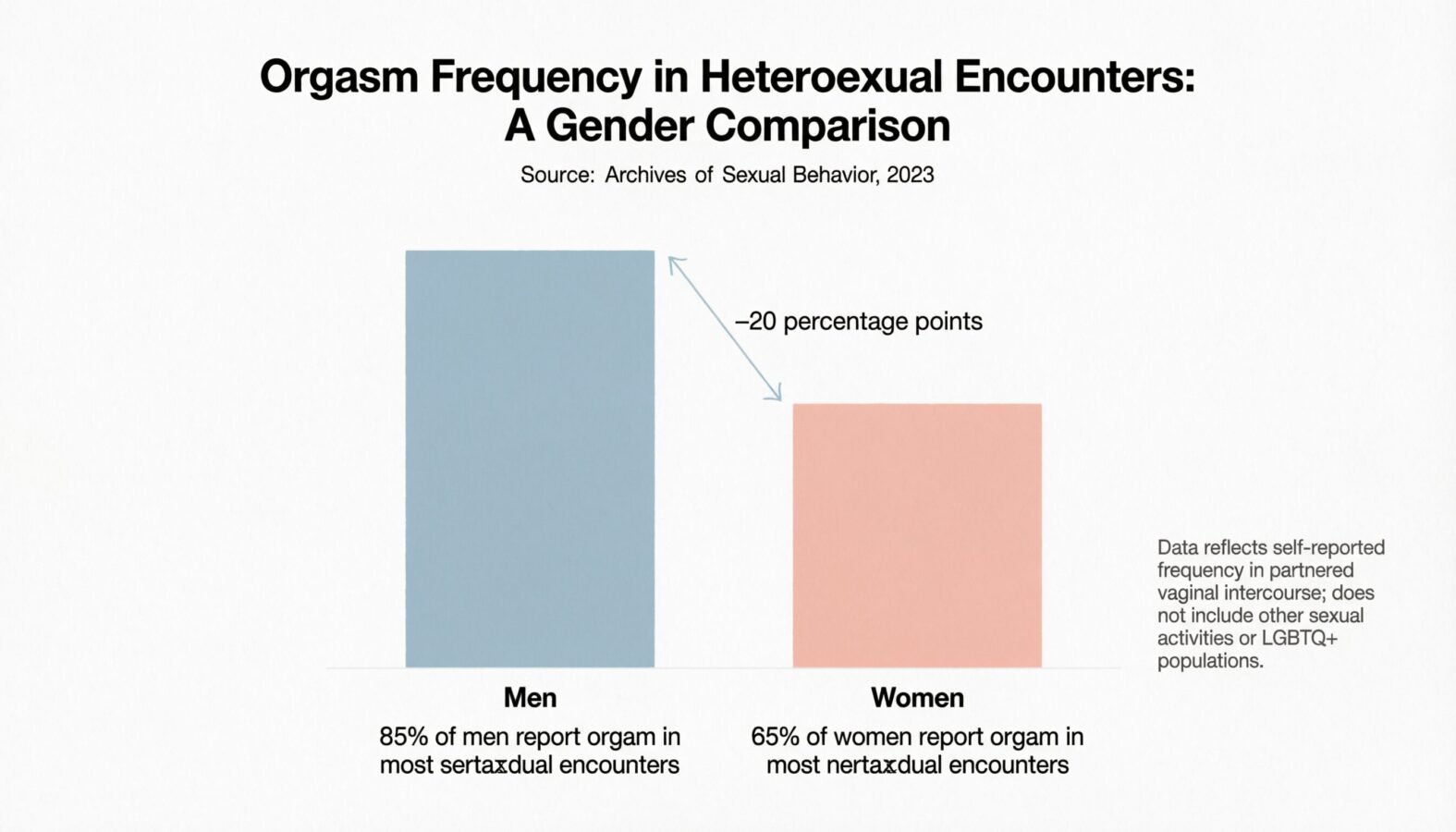
Understanding these statistics isn’t about creating despair—it’s about validation. If you’ve experienced this gap, you’re not alone, and it’s not your fault. The data shows this is a widespread pattern requiring systemic change in how we approach female sexual satisfaction, not individual women fixing themselves.
Why the Pleasure Gap Can Create Shame
The pleasure gap becomes emotionally painful when you believe you should already know what your body wants. You may feel embarrassed asking questions, pretend to feel okay, ignore discomfort, rush your own body, or believe that a slower response means failure. You might think pleasure should happen naturally without communication.
But pleasure is not always automatic. It’s often connected to safety, stress levels, body awareness, emotional trust, clear communication, and enough time. When these elements are missing, the gap widens—and shame fills the space.
Common Shame-Based Thoughts Women Experience
When the pleasure gap creates self-doubt, certain thoughts tend to surface repeatedly. Recognizing these patterns is the first step toward releasing them:
- “Something is wrong with me.”
- “I should be able to orgasm by now.”
- “My partner must be disappointed in me.”
- “Other women don’t struggle with this.”
- “If I ask for what I need, I’ll seem difficult.”
- “I’m broken or defective.”
- “Maybe I’m just not that into my partner.”
- “I should fake it to protect their feelings.”
These thoughts aren’t facts—they’re symptoms of inadequate women pleasure education and cultural silence around female sexuality. A kinder starting point is: “Maybe I was never properly taught.”
The Cultural and Educational Roots of the Pleasure Gap
What causes the female orgasm gap? The answer lies in multiple interconnected systems. The pleasure gap is shaped by education gaps, cultural messaging, physiological misunderstandings, communication barriers, outdated relationship scripts, partner expectations, and performance pressure.
Many women grow up without comprehensive women pleasure education. Schools may teach reproduction but skip pleasure. Families may stay silent about sexuality altogether. Media portrays female pleasure as mysterious or secondary. The result: women enter intimate relationships without the language, knowledge, or permission to understand their own bodies.
For deeper exploration of how education shapes intimacy, visit our guide on women pleasure education and body confidence.
How Lack of Body Education Affects Women
Without proper education about female anatomy and arousal patterns, women may not understand the central role of clitoral stimulation in orgasm. They may not know that arousal takes time, that stress blocks pleasure, or that emotional safety is a prerequisite to physical response. This knowledge gap creates intimacy anxiety and performance pressure that actually prevent the very pleasure women are seeking.
Body awareness becomes difficult when you’ve never been taught what to notice or how to interpret your body’s signals. You might miss early signs of tension, discomfort, or the need to slow down—until you’ve already shut down completely.
Partner Expectations and Old Relationship Scripts
Many relationships operate on unspoken scripts inherited from culture: that sex should progress in a certain order, that penetration is the “main event,” that women should be ready quickly, or that asking for specific stimulation is awkward. These scripts prioritize male pleasure patterns while treating female pleasure as optional or complicated.
When partners don’t communicate openly about these expectations, sexual communication breaks down. Emotional trust erodes. The pleasure gap widens. Breaking these old scripts requires conscious effort, honest conversation, and a willingness to prioritize mutual satisfaction over assumed norms.
How Performance Pressure Affects Women’s Bodies
Pressure can make your body guarded. When intimacy becomes a test, your mind may start monitoring instead of feeling. This mental surveillance activates your nervous system’s stress response, which directly blocks arousal and pleasure.
The Monitoring Mind vs. The Feeling Body
When performance pressure takes over, your internal dialogue might sound like:
- “Am I responding fast enough?”
- “Is my partner disappointed?”
- “Should I pretend?”
- “Why is this taking so long?”
- “What if something is wrong with me?”
These questions create tension instead of connection. They pull you out of your body and into your head—exactly where pleasure cannot flourish. Pressure-free intimacy asks different questions that support body awareness and emotional trust instead of sabotaging them.
Why Pressure-Free Intimacy Matters
Pressure-free intimacy is an approach to sexual connection that prioritizes safety, presence, honesty, and honoring your body’s pace over achieving specific outcomes like orgasm. It asks “Do I feel safe and respected?” instead of “Am I performing well?” This reduces intimacy anxiety and allows genuine pleasure to emerge naturally.
When you release the demand for a particular result, your nervous system can relax. Your body can respond authentically rather than defensively. Connection deepens because you’re present with your actual experience instead of managing your partner’s expectations.
Questions That Build Connection Instead of Tension
Pressure-free intimacy shifts the internal conversation toward curiosity and care:
- “Do I feel safe?”
- “Do I feel present?”
- “Do I feel respected?”
- “Do I need more time?”
- “Can I be honest without shame?”
- “What would feel good right now?”
These questions aren’t about performance—they’re about presence. They create space for honest communication and genuine connection.
The Science Behind Female Sexual Response
Understanding how female arousal actually works is essential to closing the pleasure gap. Female sexual response is complex, involving physiological, psychological, and relational factors. Unlike the linear model once taught (desire → arousal → orgasm), contemporary research shows that women’s arousal often follows a more circular, responsive pattern.
Stress, distraction, and pressure directly inhibit arousal by activating the sympathetic nervous system (fight-or-flight). For pleasure to emerge, the parasympathetic nervous system (rest-and-digest) needs to be engaged—which requires safety, relaxation, and emotional connection.
For evidence-based information about female anatomy and sexual health, resources like Planned Parenthood offer medically accurate education.
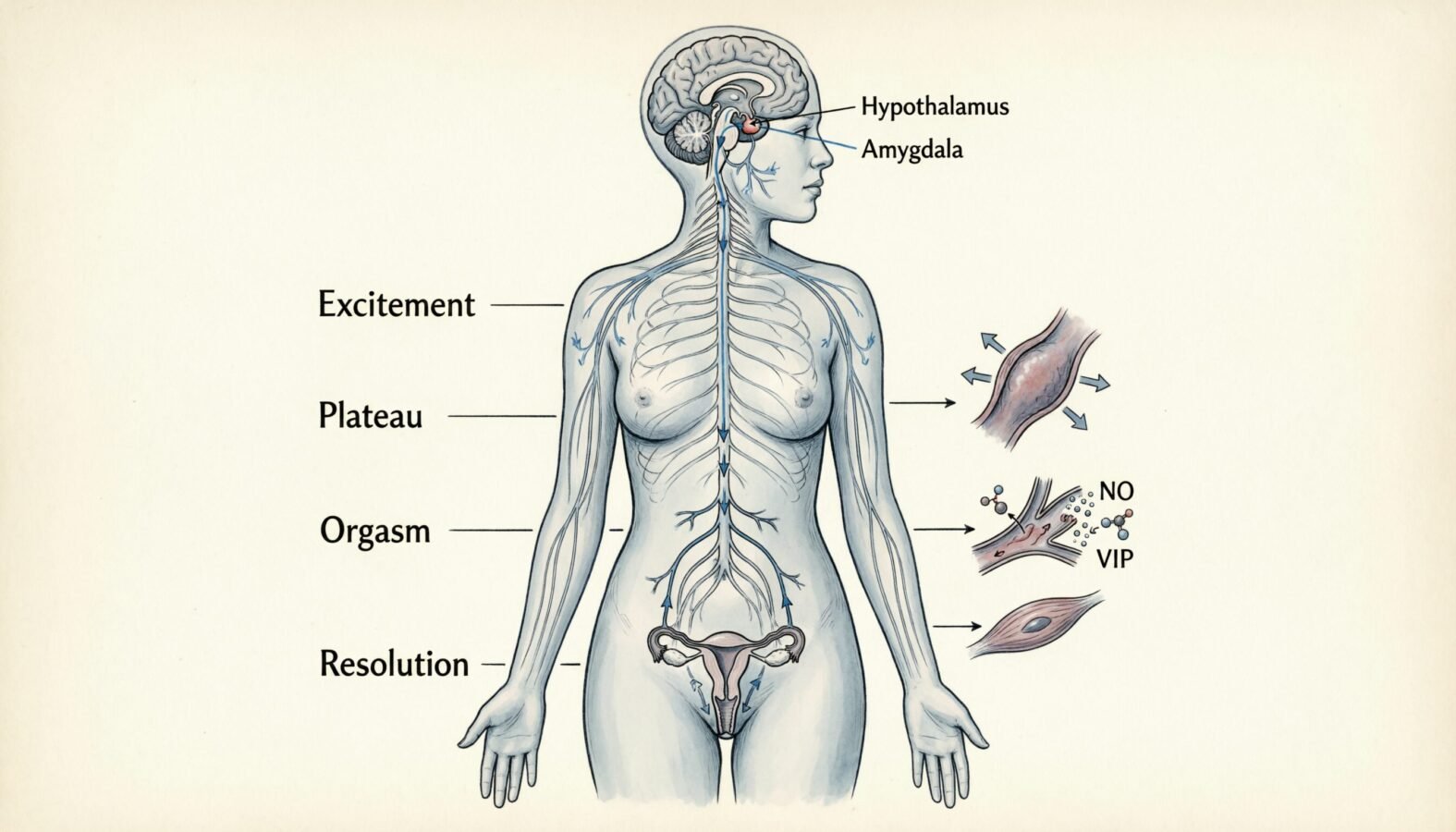
Understanding the Role of Clitoral Stimulation
Clitoral stimulation is essential for most women to reach orgasm. The clitoris contains approximately 8,000 nerve endings—more than any other part of the human body—and its sole function is pleasure. Yet many sexual encounters don’t include adequate clitoral stimulation, either because partners don’t know this is necessary or because cultural scripts prioritize penetration over other forms of touch.
Understanding this anatomical reality isn’t clinical—it’s liberating. It removes the mystery from why certain activities lead to orgasm while others don’t. It gives you permission to request what your body actually needs for female sexual satisfaction.
How Body Awareness Supports Intimacy Confidence
Intimacy confidence does not mean always knowing what you want. It means feeling safe enough to learn. Body awareness helps you notice your experience in real-time so you can communicate needs, adjust course, and create conditions where pleasure can flourish.
When you develop body awareness, you build a foundation for intimacy confidence that isn’t dependent on performance. You learn to trust your experience. To explore more about building this foundation, read our article on intimacy confidence and self-trust practices.
Signs Your Body Is Giving You
Body awareness means noticing subtle signals before they become overwhelming:
- When you feel tense or tight.
- When you feel emotionally distant or checked out.
- When you feel rushed or pressured.
- When you need softness or gentleness.
- When you need communication before touch.
- When your body feels present and open.
- When pressure makes you want to shut down.
These signals aren’t problems—they’re information. Learning to read them is a form of self-respect.
Expressing Your Body’s Needs Without Shame
Once you notice what your body needs, sexual communication becomes possible. You might say:
- “I need more time.”
- “This creates pressure for me.”
- “I want to slow down.”
- “I’m still learning what feels good for me.”
- “I want intimacy without feeling tested.”
- “Can we try this differently?”
These sentences aren’t rejection. They’re honest communication that builds emotional trust and creates conditions for genuine connection.
Communication Scripts: How to Talk About Sexual Needs
Learning how to talk about sexual needs without shame is a skill that can be practiced. Sexual communication feels vulnerable, but it’s the bridge between isolation and connection. The goal isn’t perfect words—it’s honest expression delivered with kindness toward yourself and your partner.
Starting the Conversation With Your Partner
Choose a calm, non-sexual moment to begin. Frame it as a shared journey toward better connection, not criticism. You might say:
- “I’ve been thinking about our intimacy, and I want us both to feel satisfied and connected. Can we talk about what feels good for each of us?”
- “I’m learning more about my body and what I need to feel pleasure. I’d love to share that with you and hear what you need too.”
These openings create safety and emotional trust before specific requests.
Responding to Partner Questions or Concerns
Your partner may have questions or feel uncertain. That’s normal. Respond with patience and reassurance:
- “This isn’t about anything being wrong—it’s about us both feeling good.”
- “I’m sharing this because I trust you and want us to be closer.”
- “We’re learning together. There’s no pressure to get it perfect.”
Honest communication strengthens intimacy; it doesn’t diminish it.
5 Gentle Steps to Close the Pleasure Gap
If you’re wondering how to close the pleasure gap with your partner, these five gentle steps provide a practical framework. They’re designed to reduce performance pressure, build body awareness, and create pressure-free intimacy through consistent, compassionate practice.
Step 1: Redefine What Success Means
Shift your definition of successful intimacy from orgasm to presence, connection, and honesty. Ask yourself: “Did I feel safe? Did I honor my pace? Did I communicate one truth?” This reframe removes the pleasure gap from being a measure of failure.
Step 2: Practice Sensory Awareness
Before and during intimacy, tune into neutral sensations: temperature, texture, pressure, breath. This sensory awareness practice grounds you in your body without demanding pleasure. It builds the foundation for body awareness without performance pressure.
Step 3: Honor Your Pace
Your body has its own timeline. Honor it. If you need more time to warm up, more gentleness, or a different approach—request it. Pressure-free intimacy means respecting your unique rhythm instead of rushing toward an outcome.
Step 4: Communicate One Truth at a Time
You don’t need to share everything at once. Start with one honest statement: “I need more time,” or “This feels good,” or “Can we slow down?” Sexual communication builds gradually through consistent, small acts of honest communication.
Step 5: Practice Post-Intimacy Reflection
After intimate moments, reflect without judgment. Ask yourself:
- “Was I present?”
- “Did I feel safe?”
- “Did I honor my pace?”
- “Did I communicate one truth?”
- “Did I listen to my body without judgment?”
This gentle practice reinforces body awareness and celebrates progress over perfection.
One Gentle Practice: Redefine Success
Here’s one practice you can begin today to address the pleasure gap without adding pressure. After an intimate or emotionally close moment, resist the urge to ask only: “Did I orgasm?”
Instead, ask yourself these questions about presence, safety, and honoring your pace:
- “Was I present?”
- “Did I feel safe?”
- “Did I honor my pace?”
- “Did I communicate one truth?”
- “Did I listen to my body without judgment?”
This practice doesn’t erase the importance of pleasure. It protects pleasure from becoming pressure. It shifts the goal from performance to presence—which paradoxically creates better conditions for female sexual satisfaction to emerge naturally.
Common Myths About the Orgasm Gap
Misconceptions about the pleasure gap perpetuate shame and silence. Let’s address the most common myths directly.
Myth: “If I Don’t Orgasm, Something Is Wrong With Me”
This is false. The orgasm gap is a documented pattern affecting many women—it’s not evidence of a personal defect. Your body isn’t broken. The gap reflects systemic issues: inadequate education, anatomical misunderstandings, cultural scripts, and communication barriers. Healing begins with self-compassion, not self-blame.
Myth: “Pleasure Should Happen Naturally Without Communication”
This is unrealistic. Pleasure often requires knowledge, communication, and intention. Just as you wouldn’t expect to play an instrument without practice or learn a language without study, expecting pleasure to happen automatically ignores the reality that women pleasure education and sexual communication are learned skills.
Myth: “The Pleasure Gap Only Affects Certain Women”
This is incorrect. The pleasure gap is a normal experience for many women across ages, relationship types, and backgrounds. Research shows it’s widespread, not exceptional. Recognizing this normalizes your experience and reduces isolation.
When to Seek Extra Support
Pressure-free intimacy includes knowing when to seek professional help. While educational resources and self-practice help many women, certain situations require specialized care.
Consider reaching out to a qualified therapist, sex therapist, or medical provider if you experience:
- Ongoing physical pain during intimacy.
- Trauma responses or flashbacks.
- Severe distress or anxiety.
- Relationship fear or emotional overwhelm.
- Depression affecting intimacy.
- Medical concerns about sexual function.
Educational reflection can help, but it should not replace medical or therapeutic care when needed. For professional support, organizations like Planned Parenthood can connect you with qualified providers who specialize in sexual health and wellness.
Key Takeaways: Your Path Forward
As you continue your journey with the pleasure gap, remember these essential points:
- The orgasm gap is not proof of personal failure—it’s a pattern shaped by education, culture, communication, pressure, and old scripts.
- Women pleasure education should reduce shame, not create another test.
- Pressure-free intimacy focuses on safety, presence, pace, and honest communication.
- Intimacy confidence grows through body awareness and gentle practice.
- A useful reset question is: “Did I feel safe, present, and respected?”
- Your worth is not measured by one outcome.
These truths form the foundation for reclaiming your body confidence and creating intimacy that honors your whole self.
Frequently Asked Questions About the Pleasure Gap
What causes the female orgasm gap?
The female orgasm gap is caused by multiple factors including lack of comprehensive pleasure education, cultural shame around female sexuality, performance pressure, insufficient communication with partners, physiological differences in arousal patterns, and outdated relationship scripts. Research shows these factors combine to create a pattern where women experience less consistent pleasure than their partners.
Is the pleasure gap a normal experience?
Yes, the pleasure gap is a normal and common experience for many women. Studies show that heterosexual women report orgasming less frequently than men in partnered sexual encounters. This pattern is shaped by education, culture, and communication—not by personal failure. Understanding this can help reduce shame and self-blame.
How do I talk about sexual needs without shame?
Start by acknowledging your feelings are valid. Use “I” statements like “I need more time” or “I want to slow down.” Choose a calm, non-sexual moment to talk. Frame it as a shared journey toward better connection, not criticism. Remember: honest communication strengthens intimacy; it doesn’t diminish it.
How to close the pleasure gap with your partner?
Close the pleasure gap by: (1) redefining success beyond orgasm, (2) practicing body awareness and sensory presence, (3) honoring your unique pace, (4) communicating one honest need at a time, and (5) reflecting on presence and safety rather than performance. This requires patience, self-compassion, and open communication with your partner.
Why don’t women orgasm as often as men?
Women don’t orgasm as often due to anatomical factors (clitoral stimulation is often insufficient), lack of education about female pleasure, performance pressure that blocks arousal, inadequate communication about needs, and cultural scripts that prioritize male pleasure. Research shows these are systemic issues, not individual failures.
How does the pleasure gap affect long-term relationships?
The pleasure gap can create emotional distance, resentment, shame, and dishonesty in long-term relationships. Women may pretend satisfaction to protect their partner’s feelings, leading to intimacy without connection. However, addressing the gap through honest communication and pressure-free intimacy can actually strengthen relationship trust and emotional closeness.
Can body awareness really improve sexual satisfaction?
Yes, body awareness improves sexual satisfaction by helping you recognize tension, emotional distance, and pressure before they block pleasure. When you notice these signals early, you can communicate needs, slow down, or adjust. This self-knowledge transforms intimacy from performance into presence-based connection.
What is pressure-free intimacy?
Pressure-free intimacy is an approach to sexual connection that prioritizes safety, presence, honesty, and honoring your body’s pace over achieving specific outcomes like orgasm. It asks “Do I feel safe and respected?” instead of “Am I performing well?” This reduces anxiety and allows genuine pleasure to emerge naturally.
Should I see a therapist for the orgasm gap?
Consider professional support if you experience ongoing pain, trauma responses, severe distress, relationship fear, or emotional overwhelm. While educational resources and self-practice help many women, qualified therapists or medical professionals can address underlying issues that require specialized care. Educational reflection should not replace professional treatment when needed.
Does the pleasure gap mean my relationship is failing?
No, the pleasure gap does not mean your relationship is failing. It’s a common pattern shaped by broader cultural and educational factors, not a reflection of your relationship’s quality. Many strong, loving relationships experience the pleasure gap. Addressing it together through honest communication can actually deepen your connection.
What is the difference between pleasure gap and orgasm gap?
The terms are often used interchangeably. “Orgasm gap” specifically refers to the statistical difference in orgasm frequency between men and women. “Pleasure gap” is broader, encompassing differences in overall satisfaction, enjoyment, and emotional fulfillment—not just climax. Both describe real patterns that deserve attention without shame.
How long does it take to overcome intimacy shame?
There’s no fixed timeline for overcoming intimacy anxiety—it’s a personal journey that varies for everyone. Some women notice shifts in weeks through gentle practice; others need months of consistent work. What matters is progress, not speed. Be patient with yourself; healing happens through repeated reflection, not perfection.
Continue Your Journey: The Confidence & Intimacy Reset
This guide offers a starting point, but deeper transformation happens through structured reflection, consistent practice, and supportive guidance. If you’re ready to move from understanding to action, The Confidence & Intimacy Reset For Women by Md. Rizwanul Haque, co-authored by Md. Kawsharul Islam, provides comprehensive resources for your journey.
The Confidence & Intimacy Reset For Women offers workbook exercises, reflection prompts, communication scripts, and action steps designed to help you close the pleasure gap through pressure-free intimacy and body awareness.
These resources provide the structured guidance, intimacy workbook exercises, and practical tools you need to transform understanding into lasting change.

Conclusion: Your Pleasure Matters
The pleasure gap is real, but it doesn’t define your worth or your capacity for fulfillment. Remember: redefining success beyond orgasm reduces performance pressure, body awareness creates the foundation for honest communication, pressure-free intimacy prioritizes safety and presence, and small, consistent practices create lasting change.
This guide offers a starting point. For deeper transformation through structured exercises, reflection prompts, and actionable guidance, explore The Confidence & Intimacy Reset workbook and resources. Your journey toward body confidence and intimacy confidence is worth investing in.
Your pleasure matters. Your worth is not measured by one outcome. Your body is not a scorecard. You deserve intimacy that honors your whole self—with patience, compassion, and without shame.