

Pleasure Feels Like Performance: 5 Steps to Heal & Reset
For many women, pleasure feels like performance, turning intimacy into a source of anxiety rather than connection. Instead of feeling present in your body, you might find yourself watching from the outside, monitoring every response, and wondering if you are “doing it right.” This silent struggle is not a personal failure. It is a common response to pressure, cultural conditioning, and a lack of shame-free pleasure education.
The good news is that healing begins when you shift your focus from outcome to experience, and from performance to presence. This article will help you understand exactly why this happens and provide concrete, actionable steps to reclaim your body and your pleasure.
Quick Answer: Why Does Pleasure Feel Like a Test?
Pleasure feels like performance due to “spectatoring”—a state of self-monitoring where you mentally step outside your body to watch and judge your sexual responses instead of feeling them. This phenomenon, first described by researchers Masters and Johnson, occurs when pressure to orgasm, cultural expectations, or fear of disappointing a partner creates anxiety that pulls you out of the present moment.
When pleasure feels like performance, your nervous system may shift into a stress response, making it harder to relax into sensation. Healing involves recognizing this pattern without shame, practicing grounding techniques to reconnect with your body, and shifting your focus from achieving a specific outcome to experiencing presence and safety.
The path forward is not about trying harder. It is about creating conditions where your body can feel safe enough to let go of monitoring and simply feel.
The Phenomenon of Spectatoring: Watching Instead of Feeling
Spectatoring is more than just overthinking during sex. It is a specific psychological pattern where you become an observer of your own sexual experience rather than a participant. According to Psychology Today, spectatoring occurs when you mentally step outside your body to monitor your performance, appearance, or responses.
Instead of feeling sensations, you are thinking about them. Instead of being present with your partner, you are evaluating whether you are “doing it right.” Your mind races with questions: Am I aroused enough? Do I look good? Is this taking too long? Should I have orgasmed by now?
This self-monitoring creates a feedback loop that kills pleasure. The more you watch yourself, the less you feel. The less you feel, the more you worry something is wrong. The more you worry, the more you monitor. It is exhausting, and it is incredibly common.
Masters and Johnson, pioneering sex researchers, identified spectatoring as a primary contributor to sexual dysfunction. When you are busy performing, your body cannot relax into receiving. Your nervous system stays in a subtle state of alert, preventing the deep relaxation necessary for authentic pleasure and arousal.
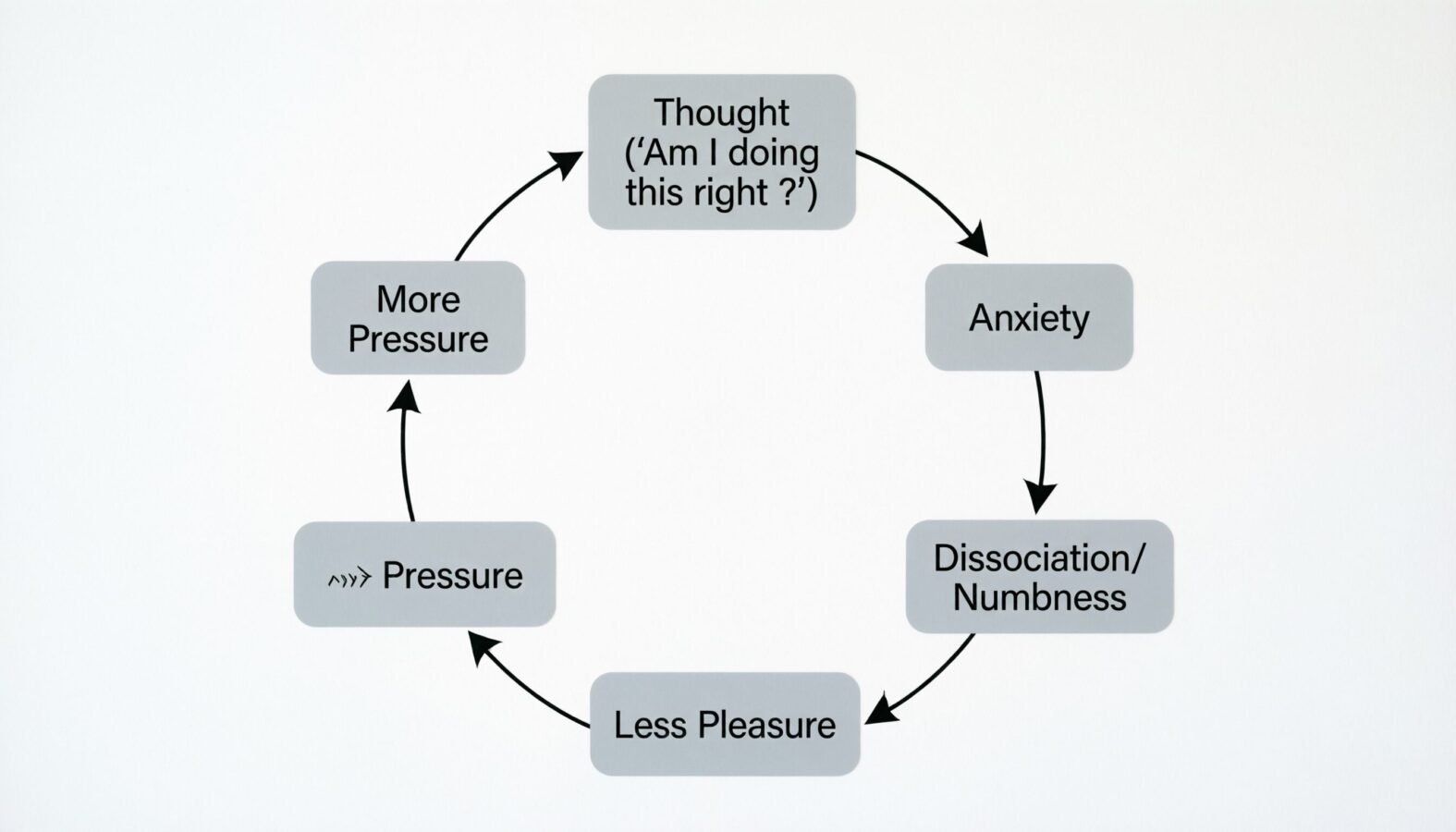
How Spectatoring Creates Emotional Disconnect
When pleasure feels like performance, the consequences extend beyond just difficulty reaching orgasm. You may experience body dissociation—a sense of feeling numb, distant, or disconnected from physical sensations. This is not your body failing you; it is your body protecting you from the stress of constant self-evaluation.
Emotional disconnect happens because your brain cannot fully process pleasure when it is preoccupied with monitoring. The parts of your brain responsible for judgment and analysis (the prefrontal cortex) become overactive, while the areas responsible for sensation and emotion receive less attention. You are literally thinking your way out of feeling.
This numbness can feel confusing or even frightening. You might wonder, “Why can’t I feel anything?” or “Is something wrong with me?” But this response makes perfect sense from a physiological perspective. When your nervous system perceives pressure or threat—even subtle emotional pressure—it can activate a freeze response. Numbness is often that freeze response in action.
Recognizing this pattern is the first step toward healing. Your body is not broken. It is responding exactly as designed when it feels unsafe or pressured.
Understanding the Gaps: Orgasm vs. Pleasure
When discussing why pleasure feels like performance, it is essential to understand two related but distinct concepts: the orgasm gap and the pleasure gap. While these terms are sometimes used interchangeably, they represent different aspects of sexual experience and satisfaction.
| Aspect | Orgasm Gap | Pleasure Gap |
|---|---|---|
| Definition | Disparity in orgasm frequency between partners or compared to expectations | Broader disconnect involving emotional safety, communication, comfort, and presence |
| Focus | Physical climax and physiological response | Overall experience including emotional, mental, and physical dimensions |
| Primary Causes | Physiological factors, lack of stimulation, anatomical differences | Pressure, shame, poor communication, lack of body awareness, fear of judgment |
| Solutions | Education about anatomy, different types of stimulation, patience | Creating safety, honest communication, reducing performance pressure, body reconnection |
| Measurement | Frequency of orgasm | Quality of experience, sense of connection, ability to be present |
Research from institutions like the Kinsey Institute has documented the orgasm gap extensively, showing that women experience orgasm less frequently than men in heterosexual encounters. However, focusing solely on orgasm can inadvertently reinforce performance pressure. The pleasure gap offers a more holistic framework for understanding sexual satisfaction.
The Orgasm Gap: It’s Not Just About Climax
The orgasm gap refers to the difference many women experience between expected intimacy and actual climax or satisfaction. It is a real, documented pattern. However, it is crucial to understand that this gap is not evidence of personal failure or a “broken” body.
Statistics show that in heterosexual encounters, men orgasm significantly more often than women. Yet, these numbers do not tell the whole story. The gap is not just about physiology; it is shaped by education, cultural scripts, communication patterns, partner expectations, and the pressure to perform. When pleasure feels like performance, orgasm becomes another metric to achieve rather than a natural response to arousal and connection.
It is also important to recognize that orgasm is not the only valid outcome of sexual intimacy. Many women do not orgasm from penetration alone, and that is completely normal. The body’s capacity for pleasure is complex and varies from person to person, day to day.
The Pleasure Gap: Safety, Communication, and Presence
The pleasure gap is a wider, more inclusive concept. It encompasses orgasm but also includes:
- Emotional safety: Feeling secure enough to be vulnerable and honest.
- Communication: Being able to express needs, desires, and boundaries.
- Comfort: Physical and emotional ease in your body and with your partner.
- Body awareness: Understanding your own sensations, desires, and responses.
- Desire: Having space for arousal to develop naturally.
- Pace: Moving at a speed that feels good, not rushed.
- Honesty: Freedom from pretending or performing.
The pleasure gap may show up when:
- You do not know what feels good for your body.
- You feel pressure to respond quickly or “keep up.”
- You pretend to enjoy something to avoid awkwardness.
- You feel guilty needing more time or different stimulation.
- You avoid telling the truth to protect a partner’s feelings.
- You feel disconnected from your body during intimacy.
- You measure intimacy only by orgasm.
- You feel shame for wanting pleasure, or shame for not experiencing it.
This is why women’s pleasure education is so important. It helps women understand pleasure without pressure, fear, or self-blame, creating space for authentic experience rather than performance.
Root Causes: Why Pleasure Feels Like Performance
Understanding why pleasure feels like performance requires looking at multiple interconnected factors: cultural conditioning, nervous system responses, and survival mechanisms. None of these are your fault, but all of them are within your power to address.
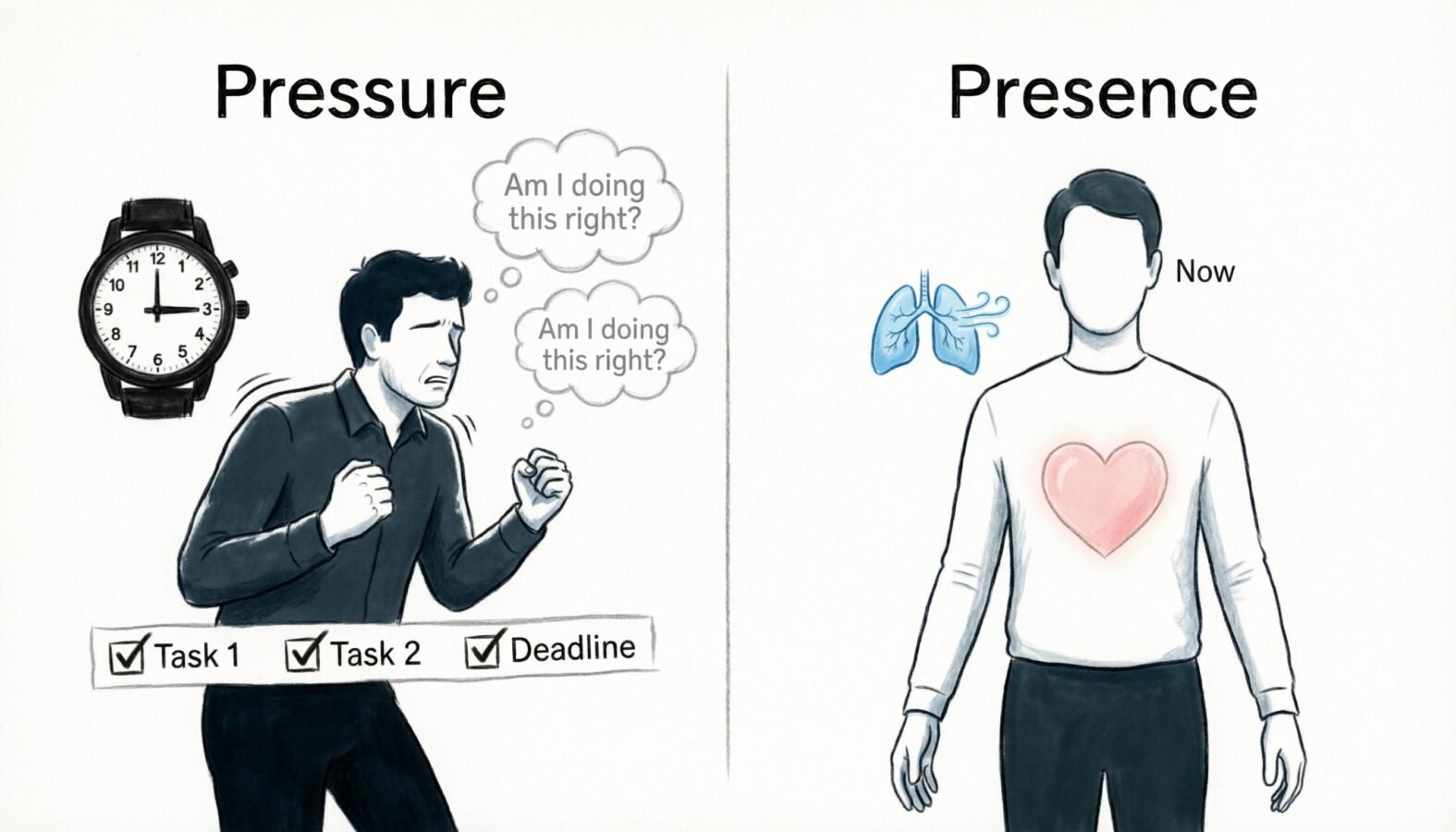
Cultural Scripts and the Fear of Disappointment
From a young age, many women absorb cultural messages about sex that prioritize their partner’s pleasure over their own, equate worth with sexual performance, or frame female desire as something to be managed rather than celebrated. These scripts create an internal pressure cooker where intimacy becomes less about connection and more about meeting expectations.
You might have learned that:
- A “good” partner makes their partner orgasm.
- Needing guidance or time is “high maintenance.”
- Saying what you really want is selfish or embarrassing.
- Your body should “just know” what to do.
- Disappointing your partner is worse than disappointing yourself.
These beliefs are not conscious choices. They are absorbed from media, peer conversations, lack of comprehensive sex education, and societal messaging. But they create real pressure that makes pleasure feel like performance. When you are worried about disappointing someone or failing a test you never agreed to take, your body cannot relax into sensation.
The fear of disappointment creates a subtle but constant vigilance. You are not just having an experience; you are managing it, monitoring it, and evaluating it in real-time.
The Nervous System: Fight, Flight, or Freeze in Bed
Your nervous system plays a crucial role in whether pleasure feels like performance or flows naturally. When you experience pressure, anxiety, or fear during intimacy, your body can activate its stress response systems: fight, flight, or freeze.
For sexual pleasure to occur, your body needs to be in a state of safety and relaxation. Researchers call this the “rest and digest” or “social engagement” state. But when you are worried about performance, monitoring your responses, or fearing disappointment, your nervous system may shift into a subtle state of alert.
This is not dramatic panic; it is often a low-grade activation that you might not even consciously notice. But your body notices. Blood flow shifts away from non-essential functions (including sexual arousal) toward muscles and systems needed for survival. Muscles tense. Breathing becomes shallow. Sensation dulls.
The freeze response is particularly common in sexual situations where you feel you cannot leave or speak up. Numbness, dissociation, or feeling “checked out” are often freeze responses. Your body is protecting itself from perceived threat by reducing sensation and emotional engagement.
Understanding this physiological reality is crucial. When pleasure feels like performance, it is not just “in your head”—it is in your nervous system. Healing requires creating conditions of safety that allow your body to shift out of stress response and into receptivity.
Pretending to Enjoy: A Survival Mechanism
Pretending to feel pleasure is more common than most people realize, and it almost always begins as self-protection rather than deception. You might pretend because you:
- Want to protect the moment from becoming awkward.
- Fear hurting your partner’s feelings or confidence.
- Do not know how to express what you actually need.
- Feel pressure to “finish” so the encounter can end.
- Worry that honesty will create conflict or rejection.
- Have learned that your needs are less important than keeping peace.
This does not make you a bad person or a liar. It often means you were trying to survive the moment emotionally, navigating complex feelings about intimacy, relationships, and self-worth with limited tools or support.
However, while pretending might protect you in the short term, it creates distance, shame, and dishonesty over time. Each time you pretend, you reinforce the belief that your authentic experience is not acceptable or safe to express. This makes pleasure feel like performance even more intensely, creating a cycle that is hard to break without conscious intervention.
Healing begins when you no longer have to perform. You can trust that your honest experience, whatever it is, is valid and worthy of respect.
The Impact on Confidence and Desire
When pleasure feels like performance, the effects ripple far beyond the bedroom. The orgasm gap and pleasure gap can significantly affect your confidence, self-trust, and capacity for desire.
You might find yourself thinking:
- “My body is too complicated.”
- “I should already know what I want.”
- “I am taking too long.”
- “I am disappointing my partner.”
- “I am not normal.”
- “Something is wrong with me.”
These thoughts turn intimacy into stress. Instead of relaxing into connection, your mind starts monitoring your body like a project that needs fixing. This self-surveillance creates a feedback loop: the more you judge your responses, the less safe your body feels, and the harder it becomes to experience pleasure.
This pressure also affects desire. Desire often needs safety, trust, attention, and enough emotional room to arrive. When pressure is high, your body may feel guarded instead of open, making it difficult for desire to emerge naturally.
Many women experience responsive desire. This is arousal that develops in response to positive, pleasurable stimulation rather than appearing spontaneously. But responsive desire requires conditions of safety and absence of pressure to flourish. When pleasure feels like performance, those conditions do not exist, making it harder for desire to develop.
The impact on confidence extends beyond sex. When you repeatedly feel like you are failing at something as fundamental as intimacy, it can erode your overall sense of self-trust and worth. You might start avoiding intimacy altogether, creating distance in your relationship, or feeling broken in ways that affect other areas of life.
Here is the crucial reframe: self-knowledge helps women understand and express the true needs of their bodies. Bridging the gap takes learning, noticing, talking, and practicing—not self-criticism or trying harder. That is a much kinder and more effective path forward.
5 Steps to Heal: From Performance to Presence
Healing when pleasure feels like performance is not about fixing your body or trying harder. It is about creating new conditions, learning new skills, and practicing new ways of relating to yourself and your experiences. Here are five concrete steps to begin this journey.
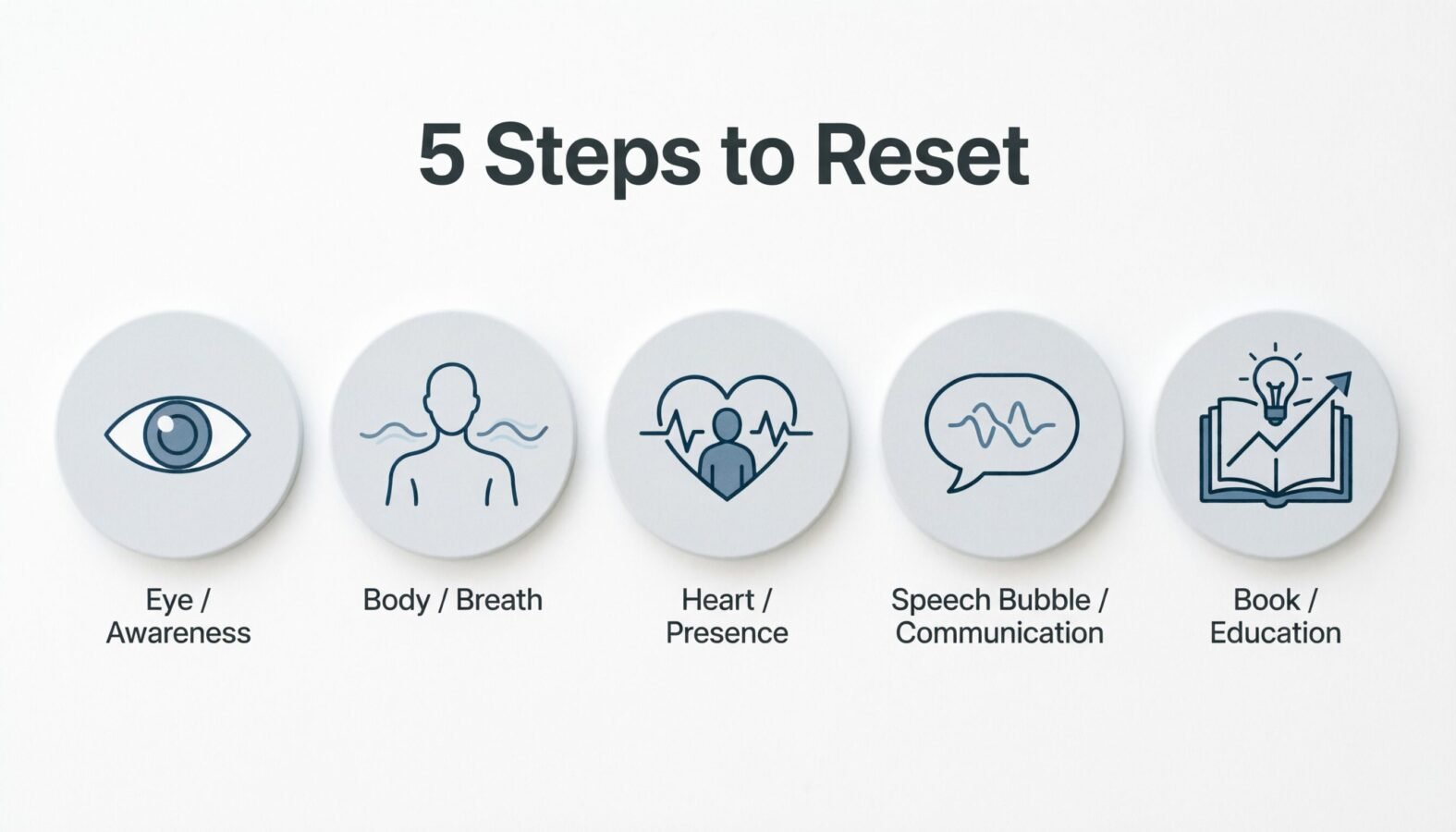
Step 1: Recognize the Pressure Without Judgment
The first step is simply noticing when pleasure feels like performance without adding another layer of criticism. Awareness without judgment creates space for change.
Practice this: During or after an intimate moment, check in with yourself. Ask:
- “Am I monitoring my responses right now?”
- “Do I feel pressure to achieve a specific outcome?”
- “What thoughts are running through my mind?”
- “Where do I feel tension in my body?”
Do not try to change anything yet. Just notice. If you catch yourself spectatoring, gently acknowledge it: “Oh, there is that monitoring again.” Not “I am doing it wrong again,” but “There is that pattern.”
This non-judgmental awareness is powerful because it interrupts the automatic cycle. You cannot change what you do not notice, and you cannot notice if you are too busy judging yourself for noticing.
Step 2: Somatic Grounding Exercises for Immediate Relief
When pleasure feels like performance, your nervous system needs support to shift out of stress response. Somatic (body-based) grounding exercises can help you reconnect with sensation in the present moment.
Try these exercises:
Before intimacy:
- Belly breathing: Place one hand on your belly. Breathe in slowly through your nose for 4 counts, feeling your belly expand. Hold for 2 counts. Exhale through your mouth for 6 counts. Repeat 5-10 times.
- Body scan: Starting at your toes, slowly bring attention to each part of your body. Notice sensations without trying to change them. Move slowly up through your legs, torso, arms, and head.
- Grounding touch: Place both hands on your heart or belly. Feel the warmth and pressure. Remind yourself: “I am here. I am safe. I can feel.”
During intimacy:
- Anchor to sensation: When you notice your mind racing, pick one physical sensation to focus on. This could be the feeling of sheets against your skin, your partner’s hand, or your own breath. Return to it whenever you drift into monitoring.
- Slow your breathing: Consciously lengthen your exhales. This signals safety to your nervous system.
- Name what you feel: Silently label sensations: “warmth,” “pressure,” “softness.” This keeps you in your body rather than in your thoughts.

These exercises to reconnect with body sensations are not about achieving a specific result. They are about creating conditions where your body can feel safe enough to let go of performance and simply experience.
Step 3: Redefine Success (Presence > Orgasm)
One of the most powerful shifts you can make is redefining what “success” means in intimacy. When pleasure feels like performance, success is often defined narrowly: Did I orgasm? Did I respond “correctly”? Did I meet expectations?
Try this reframe instead: Success is presence. Success is honesty. Success is feeling safe enough to experience whatever you experience without judgment.
After an intimate or emotionally close moment, ask yourself different questions. Instead of “Did I orgasm?”, ask:
- “Was I present?”
- “Did I feel safe?”
- “Did I honor my pace?”
- “Did I communicate one truth?”
- “Did I feel respected?”
- “Did I notice any moments of genuine connection?”
This does not make orgasm unimportant. It is completely valid to want orgasm and valid to grieve not having one. But reducing pleasure to only one outcome places your body back under stress. When you expand your definition of success, you create room for pleasure to exist in many forms: connection, touch, intimacy, vulnerability, and joy.
The healing question becomes: Not “Did I perform correctly?” but “Did I feel safe enough to be honest?”
Step 4: Communicate Boundaries and Truths
When pleasure feels like performance, honest communication often feels risky or impossible. But learning to communicate honestly is essential for creating pressure-free intimacy.
Start small. You do not need to have a big, vulnerable conversation all at once. Practice with low-stakes truths:
Try these scripts during intimacy:
- “I am enjoying this, and I would love to go slower.”
- “Can we try this position instead?”
- “I need a minute to just breathe and be present.”
- “That feels good. Can you keep doing that?”
- “I am not sure what I need right now. Can we just pause?”
Outside the bedroom, practice:
- “I have been feeling some pressure around sex lately, and I want to talk about it.”
- “I am learning to be more present in my body, and it would help if we could focus less on orgasm and more on connection.”
- “Sometimes I pretend because I am worried about disappointing you. I want to work on being more honest.”
Use “I” statements. Focus on what you need rather than what is wrong. Practice these conversations when you are both calm, not in the middle of intimacy.
Remember: Your partner cannot meet needs they do not know about. Honest communication is not criticism; it is an invitation to deeper connection.
Step 5: Practice Shame-Free Education
When pleasure feels like performance, it is often because you were never given adequate, shame-free pleasure education. Many women learn about sex from sources that prioritize male pleasure, frame female bodies as mysterious or problematic, or treat orgasm as a performance metric.
Reclaiming your pleasure requires learning on your own terms. This means:
- Exploring your body without pressure to achieve anything.
- Reading evidence-based resources about female anatomy, arousal, and pleasure.
- Understanding responsive desire and how it differs from spontaneous desire.
- Learning about the nervous system and how safety affects arousal.
- Discovering what actually feels good for your unique body.
Women’s pleasure education should reduce shame, not create another test. It is not about learning the “right” way to have sex. It is about understanding your body well enough to advocate for what you need and release what does not serve you.
Consider working with resources that emphasize presence over performance, curiosity over achievement, and self-trust over external validation. The goal is not to become an expert at sex. It is to become an expert at listening to yourself.
When Extra Support Is Needed: Trauma and Pain
While the steps above can help many women shift from performance to presence, it is important to acknowledge that pressure-free intimacy also means taking pain, discomfort, fear, trauma responses, or emotional overwhelm seriously.
If you experience any of the following, please consider seeking professional support:
- Physical pain during intimacy.
- Flashbacks or trauma responses.
- Severe anxiety or panic.
- Complete inability to feel arousal or pleasure.
- History of sexual trauma that feels unprocessed.
- Relationship dynamics that feel unsafe or coercive.
Educational reflection can support awareness, but it should not replace qualified medical or therapeutic care. A healthcare provider can rule out physiological causes of pain or discomfort. A therapist, especially one specializing in sexual health or trauma, can help you process experiences that keep your nervous system in protective mode.
Seeking help is not failure. It is an act of self-respect and a commitment to your wellbeing. Healing from trauma or addressing physical pain often requires specialized support, and there is no shame in accessing the care you deserve.
Real Stories: From Performance to Connection
Note: This is a composite story based on common experiences shared by women working through performance anxiety. Names and details have been changed to protect privacy.
Sarah’s Story
Sarah, 34, came to this work exhausted. For years, sex had felt like a test she was failing. She would lie there, watching herself, monitoring her arousal, calculating how long it had been, and wondering if she should just fake it to move things along.
“I felt like a fraud,” she shares. “Like my body was broken and I was just going through the motions to keep my partner happy.”
The turning point came when Sarah learned about spectatoring. “Hearing that there was a name for what I was experiencing—that it was a recognized pattern, not a personal failing—was huge. It softened the shame.”
She started practicing the grounding exercises, at first feeling silly and skeptical. But slowly, she noticed shifts. “One night, I caught myself monitoring, and instead of spiraling into self-criticism, I just took a deep breath and focused on the feeling of my partner’s hand on my skin. It wasn’t magical or transformative, but it was real. And that felt like enough.”
Sarah also began communicating with her partner. “I told him I had been feeling pressure and wanted to try focusing less on orgasm. He was relieved, honestly. He had been worried he was ‘failing’ too. We both had been performing for each other.”
Six months into this work, Sarah’s relationship with her body has shifted. “I still catch myself monitoring sometimes. Old patterns do not just disappear. But now I notice it faster, and I am kinder to myself about it. Pleasure doesn’t always feel like performance anymore. Sometimes it just feels like connection. And that is everything.”
Sarah’s journey illustrates that healing is possible. It is not linear, and it requires practice, but when pleasure feels like performance, you can learn to reclaim presence, one small step at a time.
Frequently Asked Questions (FAQs)
Is sexual performance anxiety common in women?
What is spectatoring in sex?
How do I stop pretending to enjoy sex?
Why do I feel numb during intimacy?
What is the difference between the orgasm gap and the pleasure gap?
How can I relax during intimacy?
Is it normal to not orgasm every time?
How do I talk to my partner about my pleasure needs?
Conclusion: Reclaiming Your Body and Pleasure
When pleasure feels like performance, it is easy to believe something is wrong with you. But the truth is far more compassionate: your body is responding exactly as designed when it feels pressured, monitored, or unsafe. Healing is not about fixing yourself. It is about creating new conditions where your body can feel safe enough to let go of performance and simply feel.
You have learned that spectatoring is a common pattern, not a personal failing. You have explored the difference between the orgasm gap and pleasure gap, understood how cultural scripts and nervous system responses create pressure, and discovered concrete steps to shift from performance to presence.
Remember the five steps:
- Recognize the pressure without judgment.
- Practice somatic grounding exercises.
- Redefine success as presence over orgasm.
- Communicate boundaries and truths.
- Pursue shame-free pleasure education.
This work takes time. Old patterns do not disappear overnight. But each moment of awareness, each honest conversation, and each breath that brings you back to your body is a step toward reclaiming your pleasure.
If you are ready to deepen this work, explore The Confidence & Intimacy Reset workbook by Md. Rizwanul Haque and Md. Kawsharul Islam. It offers structured prompts, communication scripts, reflection exercises, and action steps to help you practice these principles daily. You can access the main book, A4 size workbook, US Letter workbook, or the complete bundle at The Confidence & Intimacy Reset and the Workbook Bundle. For more resources, visit Reset Intimacy.
Your body is not broken. Your pleasure is not a performance. And you deserve intimacy that feels like connection, not a test.